
Same-day & Next-day Delivery

Quality Guaranteed

Unlock Your Welcome Offers: FREE Delivery | Up to 80% OFF | Free 30-day JoyPlus trial
Download the APP
Chinese chive and egg dumplings are a convenient choice for a quick meal, lunch or snack. Take them straight from the freezer and cook them in a frying pan, a pan of boiling water or a steamer. However, vegetarian dumplings and chive and egg gyoza can vary considerably in their ingredients, size and cooking method.
If you judge a product by an appealing photo or the word “authentic” alone, you may be in for a surprise. For example, the filling may contain less egg or chives than you expect. And not all products containing chives are vegetarian: some varieties include prawns, chicken flavouring or oyster sauce. Always check the ingredients and allergen information on the product page and packaging.
Chinese vegetable dumplings can contain vermicelli, mushrooms, cabbage, tofu skin or flavour enhancers, as well as chives and egg. That’s not necessarily a problem, but it does affect the flavour and texture. Some chive and egg products also contain shellfish or animal-derived flavourings. For example, FRESHASIA Chives & Egg Dumplings lists cooked and dried prawns and chicken flavouring in its ingredients.
Most dumplings have a wrapper made with wheat flour. Egg, soya and sesame are also commonly found in the filling, soya sauce or sesame oil. Sanquan Chinese Chive & Egg Dumplings lists wheat, egg and soya as allergens. The product may also be made on a production line that handles sesame and peanuts. So if you have an allergy, “vegetarian” isn’t enough to go on.
Boiling, steaming and frying dumplings each produce a different result. Instructions for steaming aren’t automatically suitable for frying. Defrosting them too early can make the dough sticky and damage their shape. The products mentioned here generally state that they should be cooked from frozen, without defrosting first.
Don’t just look at the product name: check the percentages too. Synear Premium Chive & Egg Dumpling 400g lists 24% chives, 21% scrambled egg, 6% black fungus and 4% king oyster mushroom. Sanquan lists a total filling content of at least 45%, with chives, egg, vermicelli, cabbage, tofu skin and shiitake mushrooms.
These details won’t tell you everything about how much you’ll enjoy a product, but they can help you compare options. If you’re looking for a strong chive flavour, check the individual chive percentage. If you’d prefer a fuller, mixed filling, look for a product with vermicelli, mushrooms or cabbage.
Packs weighing 400 to 450 grams are practical for a meal with vegetables, rice or soup. For several people, a 600-gram pack may be more convenient. Bear in mind that weight doesn’t tell you how many dumplings are in the pack: their size and wrapper thickness vary from product to product.
So don’t just compare the price per pack; check the price per 100 grams too. Also check whether the packaging can be resealed securely once opened. Frozen products should be stored at -18 °C or below and must not be refrozen after defrosting.
Always follow the instructions on the packaging. The products contain uncooked dough or filling and must be thoroughly heated before eating.
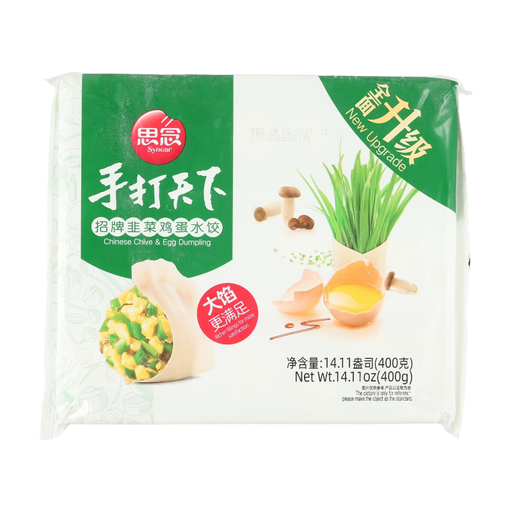
Why it suits this profile: A handy 400-gram pack with three cooking methods: boiling, steaming and frying. A good choice if you’re making Chinese dumplings for the first time.
The product information gives specific percentages for chives, egg and mushrooms. Wheat, egg, soya and sesame are also clearly listed as allergens.
400 grams, 141 kcal per 100 grams according to the product information, and it can be cooked from frozen.
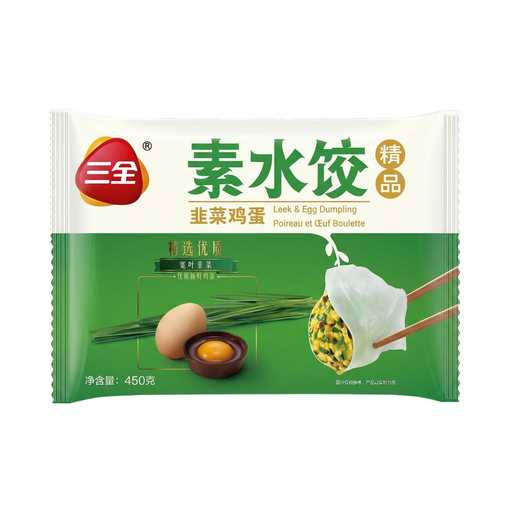
Why it suits this profile: A good option if you’re after a larger pack and a generously mixed filling for a family meal or sharing platter.
The product description states that the filling makes up at least 45% of the product and gives cooking options for boiling, steaming and frying.
450 grams, at least 45% filling according to the product information, and 204 kcal per 100 grams.
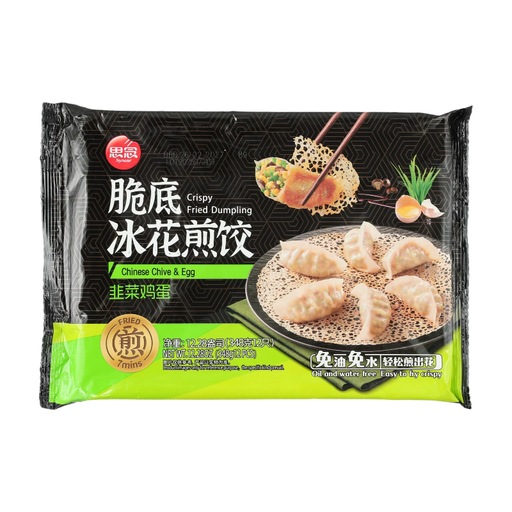
Why it suits this profile: Ideal if you’re after a crispy base for breakfast, a snack or a meal, and prefer to use a frying pan.
The cooking instructions are specifically for frying with starch water. So there’s no need to adapt general boiling times for a crispy result.
348 grams, no need to defrost, and instructions for a crispy “lace” base.
We’ve put together a complete, up-to-date list of products that meet these strict selection criteria and the applicable European safety regulations.
In most cases, cook them straight from frozen. Depending on the product, boiling takes about 5 to 8 minutes. Steaming usually takes 8 to 12 minutes. To fry them, add a little oil, fry the base until golden brown, then add water according to the product instructions. Never eat dumplings raw.
Not always. Check whether prawns, oyster sauce, chicken flavouring or other animal-derived ingredients have been added. A product containing egg may be suitable for vegetarians who eat eggs, but the full ingredients list is what matters.
Store them at -18 °C or below until the best-before date on the packaging. Once defrosted, they must not be refrozen. Check the packaging for damage and cook opened products according to the instructions provided.
