
Same-day & Next-day Delivery

Quality Guaranteed

Unlock Your Welcome Offers: FREE Delivery | Up to 80% OFF | Free 30-day JoyPlus trial
Download the APP
Fancy Chinese dumplings with chives, but not sure whether to choose pork, egg or a crispy chive filling? Many packs look alike in UK online shops. But dumplings can vary significantly in their ingredients, allergens, cooking methods and portion sizes.
If you go by an appealing product photo or the word “authentic” alone, you could end up with an inconvenient cooking method or the wrong filling. Use these practical pointers to compare jiaozi, chive gyoza and other savoury Chinese snacks based on verifiable product information.
A thin wrapper can be enjoyable, but it also calls for the right cooking method. Some frozen dumplings may split if you turn them too soon or thaw them first. Check whether the product can be cooked straight from frozen. For most products in this selection, there’s no need to defrost them.
The amount of chives varies between products. For example, TCT Pork Dumplings With Chives 360g contains 13% Chinese chives and 26% pork. FRESHASIA Pork & Chive Dumpling 600g contains 15% chives and 25% pork. Vegetarian options often combine chives with egg, vermicelli, mushrooms or tofu.
So, read the full ingredients list if you’re looking for a pronounced chive flavour or want to avoid certain ingredients.
Many Chinese dumplings contain wheat and soya. Depending on the variety, they may also contain egg, sesame, crustaceans or milk. For example, Freshasia Chives & Egg Dumplings contains dried prawns, while some egg and chive dumplings don’t list any crustaceans. Always check the packaging, especially if you have a food allergy or intolerance.
For a savoury meal, pork and chive dumplings are a natural choice. Product information usually lists the percentages of meat and chives. Also look out for other ingredients, such as cabbage, soya protein, ginger and sesame oil. These all contribute to the flavour and texture.
If you don’t eat meat, you could choose egg and chive dumplings. Synear Premium Chive & Egg Dumpling 400g contains 24% chives and 21% scrambled egg, as well as ingredients including black fungus and king oyster mushroom. Sanquan Chinese Chive & Egg Dumplings 450g has a filling content of at least 45%, with egg, vermicelli, cabbage and tofu skin.
Please note: don’t automatically assume a product is vegetarian if it contains egg. Check for oyster sauce, chicken stock, prawns or flavourings of animal origin too.
Boiling dumplings is usually the easiest method. Add frozen dumplings to boiling water; they’re generally ready when they float to the surface, but always follow the stated cooking time. TCT Pork Dumplings With Chives 360g gives a cooking time of 5 to 6 minutes from frozen. KUNGFU Pork & Chive Dumplings 400g gives a time of 6 to 8 minutes.
Frying dumplings gives you a crispy base. Some products need to be fried briefly first, then cooked with a little water in a covered pan. Synear Premium Chive & Egg Dumpling 400g can also be steamed for 12 minutes. A product that can be cooked in several ways gives you more flexibility for a quick lunch, evening meal or snack.
Compare the weight as well as the price per pack: packs in this selection range from around 320 to 600 grams. A 600g value pack may be more practical for a family or for several meals. If you’re trying dumplings for the first time, 360 or 400 grams may be easier to manage.
Store frozen dumplings at -18 °C or below and don’t refreeze them once thawed. When your order arrives, check that the packaging is intact and put the product in the freezer as soon as possible.
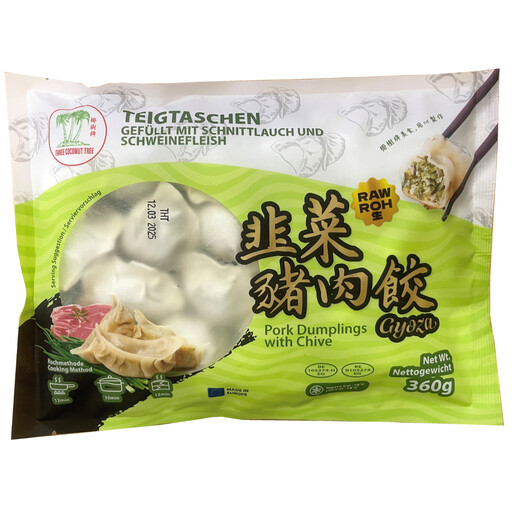
Why it suits this shopper: A compact pack for anyone wanting to try Chinese dumplings with pork and chives. The cooking instructions are straightforward: boil from frozen for 5 to 6 minutes.
The product information gives specific quantities: 26% pork and 13% Chinese chives. Wheat and soya are also listed as allergens.
360 grams, a thin wrapper according to the product description, and a clear cooking time from frozen.
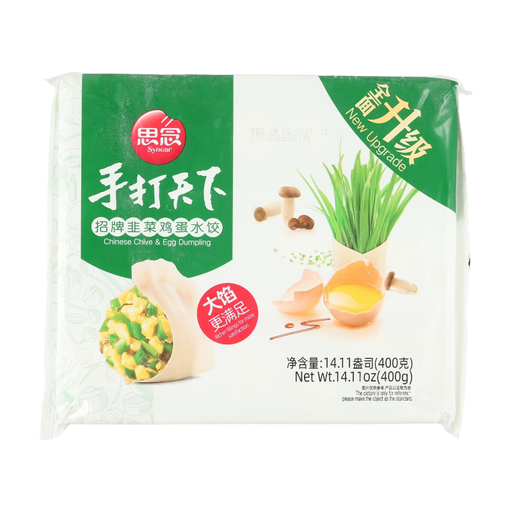
Why it suits this shopper: For anyone looking for egg and chive dumplings that can be cooked in several ways. The product information lists boiling, steaming and pan-frying.
The ingredients list specifies 24% chives and 21% scrambled egg. This makes it easier to compare the ingredients than a general flavour claim would.
400 grams, three cooking methods and a stated nutritional value of 141 kcal per 100 grams.
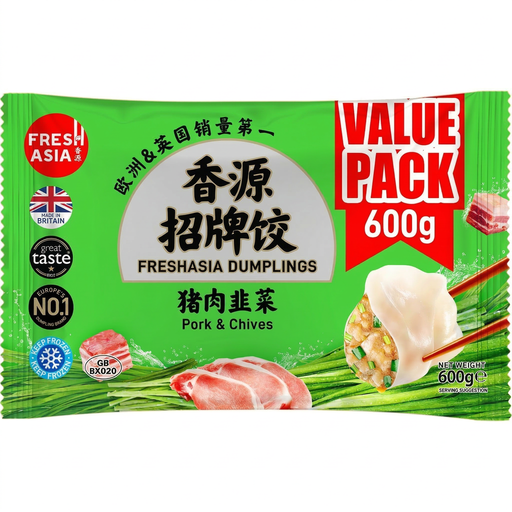
Why it suits this shopper: A larger pack for families, regular dumpling eaters or anyone wanting to keep several portions in the freezer.
The label lists 25% pork and 15% chives, as well as the allergens present: wheat, egg, soya and sesame.
600 grams, can be boiled from frozen, and has a nutritional value of 227 kcal per 100 grams according to the product information.
We’ve put together a full, up-to-date list of products that meet these strict selection criteria and the applicable European safety regulations.
Follow the cooking instructions on the pack and, in most cases, don’t defrost the dumplings first. Depending on the product, boiling takes around 5 to 8 minutes. When frying, you’ll often need to add a little water and cover the pan so the wrapper and filling cook through.
Not always. Egg and chive dumplings often contain no meat, but they may include oyster sauce, chicken stock, prawns or other animal-derived ingredients. So, check the full ingredients list and allergen information.
Store them at -18 °C or below until the use-by date on the pack. Once thawed, they must not be refrozen. The exact storage life varies by product and is shown on the label.
