
Vandaag of morgen in huis

Kwaliteit gegarandeerd

Welkomstaanbiedingen ontgrendelen: GRATIS bezorging | Tot 80% korting | Gratis 30 dagen JoyPlus-proefperiode
Download de app
A jar of Chinese chilli oil can instantly add more flavour to a simple bowl of noodles, rice or dumplings. Yet many varieties look the same at first glance. One is mainly a red oil, another contains plenty of chilli, peanuts, sesame, beans or garlic. The heat level and how you use them also differ.
If you only look at the colour or a well-known brand name, you could end up buying a product that doesn't suit your dishes or diet. With this guide, you can compare Sichuan chilli oil, chilli crisp, chilli garlic oil and mala oil based on verifiable information on the label.
The red colour can come from chilli, paprika extract or a combination of ingredients. So check the ingredients list and the stated percentage of chilli. In the products on offer, that percentage varies: some variants list, for example, 11.34%, 14%, 20%, 22% or 25% chilli.
An oil with a lot of chilli isn't automatically hotter. The type of pepper used, the preparation method and the presence of Sichuan pepper together determine the flavour profile. For a clear mala experience, look for Sichuan pepper (also known as prickly ash) alongside the chilli.
A smooth red oil works well as a dressing or finishing oil. Chilli crisp, on the other hand, contains solid bits such as fried chilli, peanuts, sesame, garlic, beans or onion. This gives more bite, but may be less suitable if you're after just a thin oil for a stir-fry.
Also check whether solid ingredients settle at the bottom. With several products, it states that you should stir or shake the jar or bottle before use. This helps distribute the oil and flavourings more evenly.
Many Chinese chilli oils contain peanuts, soya, sesame or wheat. Lao Gan Ma Peanut Chilli Oil, for example, lists 15% peanuts; the chilli crisp variant lists peanuts, soya, sesame and wheat among its ingredients. Ji Xiang Ju Handmade Chili Oil contains peanuts, sesame, soya and wheat.
The salt content also varies widely. In the available nutritional information, for example, Lao Gan Ma Spicy Crispy Oil has 2.9 g salt per 100 g, while Liupo Chili Oil lists 8.0 g. So compare the label if you're already using salty soy sauce, stock or hotpot base.
For a classic Sichuan spice oil, chilli and Sichuan pepper are key indicators. Sichuan pepper gives an aromatic, tingling sensation that differs from regular chilli pepper. Not every Chinese chilli oil contains this ingredient, so check the list if you're specifically after that flavour.
Want a crunchy topping for rice or noodles? Then choose a chilli crisp with visible bits. Lao Gan Ma Brand Peanut Chilli Oil lists 22% chilli flakes and 15% peanuts. For a smoother result, YiXian Sichuan Red Oil and Cui Hong Fragrant Spicy Red Chili Oil are more logical choices; these are described as ready-to-use red oils.
Most of the selected products are ready to eat and can be used directly over noodles, dumplings, rice or cold dishes. Zhongjing Pepper Oil is different: this product consists of rapeseed oil and Sichuan pepper corn extract and, according to the product information, is used during cooking or as a flavouring.
Also pay attention to the recommended application. A chilli oil for noodles doesn't need to have the same texture as an oil for stir-fries. For dumplings, you can mix an oil with black rice vinegar and soy sauce. For stir-fries, you usually add chilli oil at the end, so the aroma is exposed to high heat for less time.
The jars and bottles in this range typically contain around 200 to 330 grams, plus a 370 ml bottle and a 5-litre bulk pack. A small jar is practical for trying different flavours. Heavy users should look more closely at the content and shelf life.
Store unopened products in a cool, dry place away from direct sunlight. After opening, the advice varies by product: some varieties need to be refrigerated, others just need to be kept tightly sealed. Always follow the label on the specific packaging.
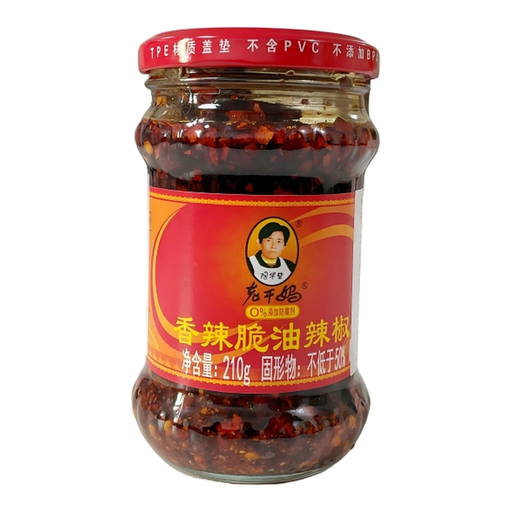
Why this fits the profile: A ready-to-use chilli crisp for anyone who wants to add flavour and texture to rice, noodles or dumplings without complicated preparation.
The product information clearly lists chilli, peanut, soya and sesame, plus 2.9 g salt per 100 g. This lets you compare flavour, allergens and salt more consciously.
210 g content, 20% stated chilli and a solid, crunchy texture. Ready to use as a topping or dipping sauce.
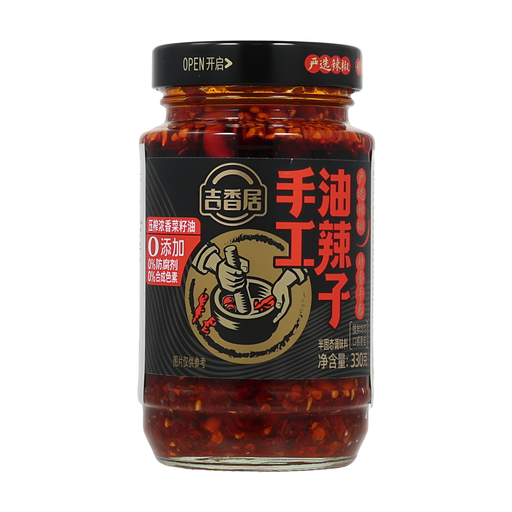
Why this fits the profile: Ideal for anyone looking for multiple uses: noodles, dumplings, cold dishes, stir-fries and dipping sauces.
The ingredients and allergens are listed in full. With 25% chilli flakes and solid spices, the texture doesn't rely solely on oil or colour.
330 g content, 25% chilli flakes and spices such as Sichuan pepper, star anise and cinnamon.
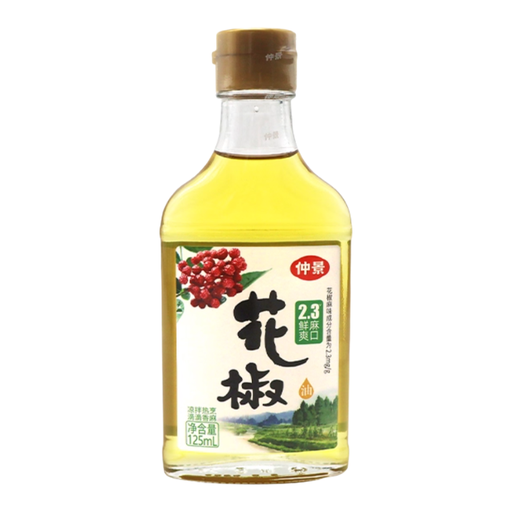
Why this fits the profile: For users who are mainly after the aromatic Sichuan pepper effect and want to control the amount of oil they add to a dish themselves.
This isn't a chilli crisp with unexpected bits. The ingredients list states rapeseed oil and 1.3% Sichuan pepper corn; so you know it's a concentrated pepper oil.
125 ml, 0 g carbohydrates, 0 g protein and 0 g salt per 100 ml according to the product information. Suitable for stir-frying, hotpot, cold dishes and noodles.
We've put together a full, up-to-date list of products that fully meet these strict selection criteria and comply with current European safety regulations.
Chilli oil is usually more liquid and works well as a dressing, marinade or cooking ingredient. Chilli crisp contains solid, often crunchy ingredients such as chilli, peanuts, sesame, garlic or beans. Check the texture and stir the jar before use if the oil and solid parts have separated.
Start with a small amount and combine it with black rice vinegar and soy sauce if you like. Check the allergens beforehand, especially if you choose a variety with peanut, sesame, soya or wheat. A chilli oil with Sichuan pepper gives a different aroma than a product with just chilli.
That depends on the product. Store the jar according to the label: some varieties need to be refrigerated after opening, others should be kept tightly sealed and away from light. Always use the best-before date and follow the storage advice on the packaging as a guide.
