
Same-day & Next-day Delivery

Quality Guaranteed

Unlock Your Welcome Offers: FREE Delivery | Up to 80% OFF | Free 30-day JoyPlus trial
Download the APP
Chinese bao buns are convenient for breakfast, lunch, dim sum or a quick snack. You can store them in the freezer and usually cook them straight from frozen. However, bao buns vary considerably in filling, size, cooking time and allergens. An attractive package therefore tells you little about what will ultimately end up on your plate.
As a Joybuy Product Recommendation Officer, I focus mainly on verifiable information: weight, ingredients, nutritional values, cooking method and storage advice. This helps you avoid buying a pack that does not suit your dietary preferences or kitchen.
Some Chinese steamed buns consist mainly of dough with only a small amount of filling. So check the ingredients list and the quantitative ingredient declaration. For example, MENGFU Pork Bao With Mushroom And Bamboo contains 31% pork, alongside 9% bamboo shoot and 6% shiitake or king oyster mushroom. This gives you a clearer indication than a general description such as ‘richly filled’.
With vegetarian bao buns, it is equally important to check which vegetables are actually listed. The Fresh ASIA Radish Handmade Vegetable Bun contains radish, carrot, vermicelli and shiitake mushroom, among other ingredients.
Frozen bao buns are usually steamed, but cooking times vary. Some products are ready after 8 to 10 minutes, while larger buns may need around 12 to 15 minutes. Cooking them for too little time can leave the centre cold.
Also pay attention to the difference between steaming and frying. SIJIA Kitchen’s mini pan-fried buns are designed to develop a golden-brown base in the frying pan. They are therefore not the same as ordinary Chinese steamed buns.
Wheat flour, soya and sesame are common in dim sum buns. Depending on the filling, they may also contain crustaceans, milk, egg, celery or molluscs. Always check the packaging label, especially if you have an allergy or food intolerance. Product information can change.
For a savoury snack, filled bao buns with pork, chicken, prawns or mushrooms are a good choice. A sweet variety, such as a bun with red bean paste, taro, custard or dates, is more suited to breakfast or dessert.
For a family, it is practical to combine several flavours. This allows you to serve savoury filled bao buns as a light meal and save sweet buns for later.
Packs range from 240 to 550 grams. A 300-gram pack is suitable if you want to try a flavour first. Larger bags, such as those weighing 450 or 480 grams, are more convenient when several people are eating.
Remember that the net weight is not the same as the number of buns. The size of each bun determines how many you need for breakfast, a snack or lunch.
Most products should be stored at -18 °C or below. Place them in a steamer basket above boiling water and make sure the buns do not touch one another. Use perforated baking paper or a suitable liner to help prevent sticking.
Follow the cooking instructions for the specific product. Some bao buns can be steamed straight from frozen, while others must be defrosted first if you want to fry them. A product containing raw dough must not be eaten raw. Do not refreeze defrosted products.
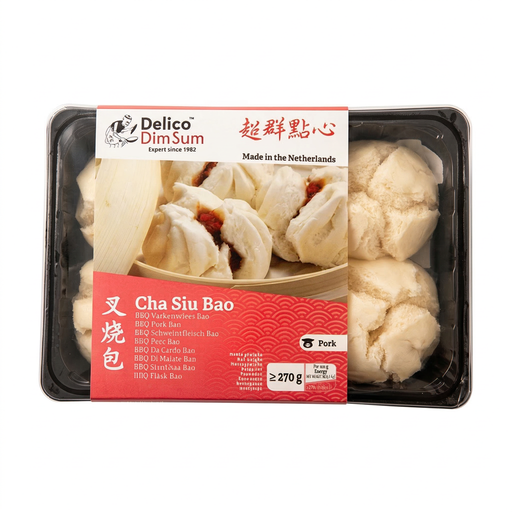
Why it suits this profile: This Cantonese-style bun has a savoury, slightly sweet char siu filling and, according to the product information, can be steamed from frozen in 8 to 10 minutes.
The filling and allergens are clearly listed. The cooking time is specific, so you do not have to rely solely on the wording on the packaging.
270 grams per pack; steam straight from frozen; suitable as a snack or light meal.
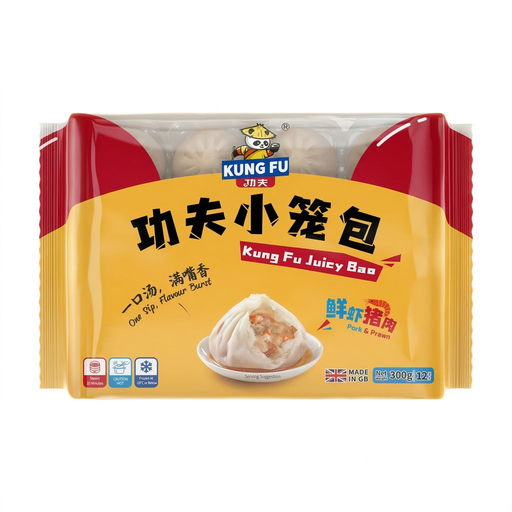
Why it suits this profile: The product description lists pork, prawns and stock. According to the stated cooking method, you steam these buns over high heat for 8 to 10 minutes.
The ingredients list specifies 23% pork and prawns. It also identifies soya, wheat, sesame, milk and crustaceans as allergens.
300 grams; combination of pork and prawns; serve with ginger and vinegar according to the product information.
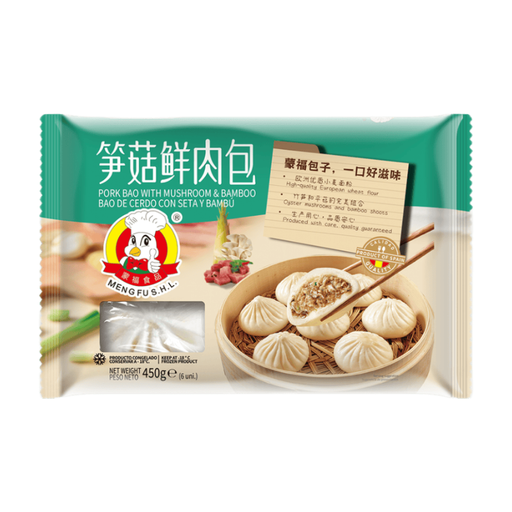
Why it suits this profile: The 450-gram pack is practical when serving several people. According to the product instructions, you can steam the buns or deep-fry them after defrosting.
The product information gives the quantities of pork, bamboo shoot and mushroom. This makes it easier to assess the balance of the filling.
450 grams; two cooking methods; steam from frozen for 15 minutes.
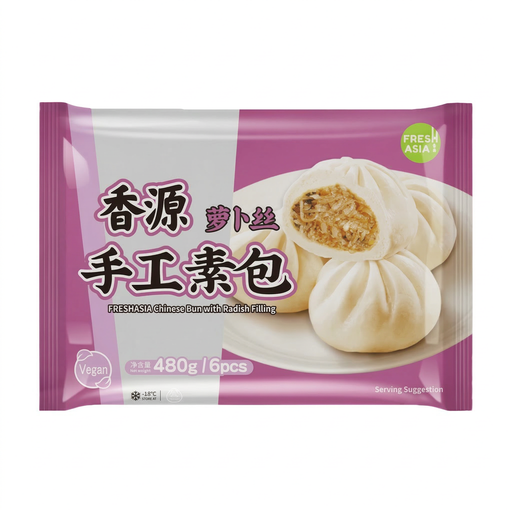
Why it suits this profile: According to the product information, the filling consists of radish, carrot, vermicelli and shiitake mushroom. The bun can be steamed or cooked in the microwave.
The vegetable ingredients are clearly listed. However, the product contains wheat, soya and sesame; check this when choosing for guests with allergies.
480 grams; vegetarian filling; steam for 10 to 12 minutes or microwave for 60 to 90 seconds according to the product information.
We have put together a complete, up-to-date list of products that fully meet these strict selection criteria and the applicable European safety regulations.
This depends on the size and filling. Many small or medium-sized buns are ready in 8 to 12 minutes. Larger varieties may need around 12 to 15 minutes. Always check the cooking instructions on the packaging and make sure the centre is thoroughly hot.
Some products are suitable for this, but not all. The Fresh ASIA Radish Handmade Vegetable Bun specifies a microwave cooking time of 60 to 90 seconds. Other Chinese steamed buns are intended exclusively for a steamer basket. Follow the instructions for the product you have chosen.
Unopened bao buns remain frozen until the best-before date on the packaging, provided they are stored at -18 °C or below. Do not refreeze them after defrosting. If in doubt, check the label and cook raw buns thoroughly before eating.
