
Cooking several portions of soup
You want to prepare several portions before the community meal. Plan how many batches you’ll need based on the jug’s usable capacity, and make sure you have enough fridge space to chill the soup.


A jug blender is a good choice for chilled tomato soup when a smooth texture and blending several portions at a time matter. Check the usable capacity, not just the jug’s total capacity. A hand blender is a practical option if you’d rather purée the soup directly in a large pan and avoid transferring it, although the result may be less smooth. For soup served cold, a heating function alone isn’t a reason to buy a particular appliance.
You want to prepare several portions before the community meal. Plan how many batches you’ll need based on the jug’s usable capacity, and make sure you have enough fridge space to chill the soup.
You’re prioritising an even texture and comparing a jug blender with puréeing the soup in a pan. The Consumers’ Association says blenders are particularly suitable for dishes with plenty of liquid and larger quantities.
You want to reduce transfers and washing up by puréeing the soup in a suitable pan. Bear in mind that a hand blender may produce a less smooth result.
| What to consider | What to look for | Who is this important for? |
|---|---|---|
| Usable capacity | Compare the permitted filling amount for the exact model with the total quantity of soup you want to make. | If I want to plan how many batches I’ll need for a group, I check how much I can actually blend at a time. Around 36% of consumers prioritise the usable capacity per batch. |
| Smooth texture | Check whether the appliance is designed to purée liquid ingredients, and whether a programme only blends or also heats. | If smooth chilled soup is my priority, I compare a jug blender with puréeing the soup in a pan. Around 29% of consumers prioritise an even texture without heating the soup unintentionally. |
| Ease of use and cleaning | Check which parts are removable or dishwasher-safe according to the manual. Use a pan that’s deep enough to help prevent splashing. | If I’d rather not transfer the soup several times, I want to be able to work directly in a suitable pan and know which parts need cleaning. Around 21% of consumers prioritise ease of use and cleaning. |
| Buying and aftercare | Decide which functions you’ll use beyond this meal, and check the seller’s and manufacturer’s warranty terms. | If I only use the blender occasionally for a community meal, I don’t want to choose functions without a clear purpose. Around 14% of consumers focus on buying an appliance that suits their needs and on aftercare. |
On some models, the total capacity is greater than the amount you’re allowed to blend in one batch. This could mean you need to plan for more batches.
Check the usable capacity of the exact model and keep any remaining soup chilled in the meantime. That way, you can plan your portions around the stated filling limit.
Extra batches can mean more preparation time.
Blending and heating are separate functions. For chilled tomato soup, heating alone isn’t a necessary reason to choose a particular appliance.
First decide which blending method and capacity you need. If a model has a soup setting, check whether it also heats the soup, and only buy that function if you’ll use it for other things too.
If you take all the portions out of the fridge in advance, they won’t stay chilled until serving time.
Store the soup covered in the fridge and, if needed, take out smaller amounts at a time. The Netherlands Nutrition Centre advises refrigerating prepared leftovers within two hours of cooking.
The PerfectMix+ BL871D31 is a jug blender with a stated usable capacity that can help you plan how many batches you’ll need.
The Blender Power 4 and Power 5 XL are jug blenders with stated processing capacities of 1,8 l and 2 l respectively.
The MultiQuick MQ10.201MWH is a hand blender to consider if you want to purée soup directly in a pan.
The VitaPower MMB6172S is a jug blender to compare if you’re looking for a glass jug and removable parts.
These product picks are jug blenders for making soup. Compare the listed capacities and features with the quantity you want to blend in each batch.
 No image available
A jug blender to consider if you want to make soup in the jug.
The jug has a capacity of 1,5 l. The model has two speeds and a pulse function; its removable parts are described as dishwasher-safe.
 No image available
A jug blender to compare if you want to make soup in a blending jug.
The bundle also includes a 600 ml travel bottle and a 300 ml chopper. The description mentions six blades and dishwasher-safe parts.
 No image available
A jug blender to consider if you want to compare its capacity per batch for chilled recipes.
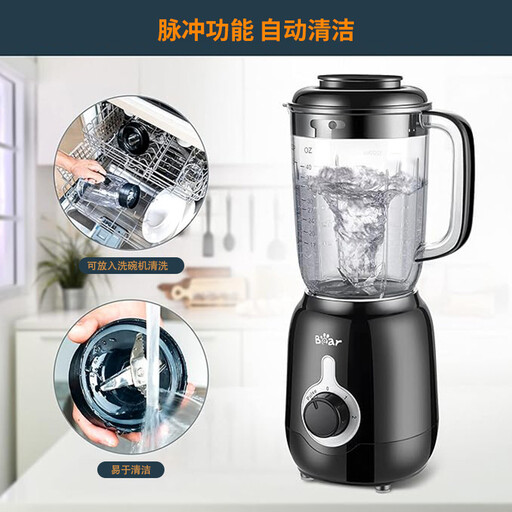
The product description lists a usable capacity of 1,5 l, removable blades and a dishwasher-safe jug. It also mentions an Auto-Clean programme.
 No image available
A countertop blender to consider if the stated jug capacity suits the portions you’re planning.
The model has two speeds and a pulse function. The product description lists a self-cleaning function and a 1,2 l jug.
 No image available
Add this jug blender to your comparison if you want to match its working capacity to the amount of soup you need.
The product description lists a working capacity of 1,5 l, three speeds and a pulse function. The blades are removable, and the removable parts are described as dishwasher-safe.
No, not if you’re serving the soup cold. A standard blender can purée it; a heating function is mainly useful if you also want to use the appliance for hot soup. Check whether the soup setting only blends or also heats.
Not without checking the usable capacity of the exact model. For example, Tefal lists a total jug capacity of 2 l and a usable capacity of 1,5 l for the PerfectMix+ BL871D31. Divide the quantity you plan to make by the permitted filling amount per batch.
The Netherlands Nutrition Centre advises setting your fridge to 4 °C and refrigerating prepared leftovers within two hours of cooking. Keep the soup covered and don’t leave all the portions out of the fridge at once.
No. Statutory rights also apply in the Netherlands. If a product doesn’t meet what you could reasonably expect under normal use, the seller is responsible for providing an appropriate solution. The period isn’t fixed for every appliance.