
Vandaag of morgen in huis

Kwaliteit gegarandeerd

Welkomstaanbiedingen ontgrendelen: GRATIS bezorging | Tot 80% korting | Gratis 30 dagen JoyPlus-proefperiode
Download de app
Colourful packaging, a sweet fruit flavour and words such as “multivitamin” do not automatically make a product suitable for every child. Parents often look for children’s multivitamins because tablets can be difficult to take, a child may eat very few different foods or a practical solution may be needed when out and about. However, children’s vitamins vary considerably in terms of age recommendations, ingredients, sugar content and ease of use.
The main pitfalls are easy to avoid:
Always start by checking the age recommendation on the packaging. Babies, toddlers and older children have different nutritional needs. A multivitamin for toddlers therefore does not have the same dosage as children’s vitamin gummies for children aged 6 to 12.
Pay attention to the difference between:
Extra care is needed for children under 1 year old. Do not give a product outside its stated age range. If you are unsure, or if your child takes medication, is unwell or has a restricted diet, it is wise to consult your GP, pharmacist or paediatrician.
Vitamin C for children is often highlighted prominently on the packaging, but also check which other nutrients are included. Some products contain vitamin D, B vitamins, vitamin E, vitamin K and minerals such as calcium, iron, iodine or zinc.
Vitamin D for children deserves particular attention. Check how many micrograms are present per recommended daily dosage and whether a separate vitamin D product is already being used. The product information for Davitamon Junior 1–3, for example, states that it contains 10 micrograms of vitamin D3 per daily dose of 2.5 ml. This is a product specification; always follow the current instructions for use and avoid combining it with other supplements that contain the same nutrient.
Also check for allergens. A soya drink, for example, contains soya, while a dairy drink may contain milk. “Free from the 14 main EU allergens” only applies when this is explicitly stated for the product in question.
A multivitamin drink for children can be handy for school, sports or a day out. However, the word “fruit” on the front says little about the actual fruit content. According to the product information, Capri-Sun Multivitamin Zero Sugar contains 7% fruit and 0 grams of sugar per 100 ml, but it does contain sweeteners such as sucralose, cyclamate and saccharin.
According to the label, regular Capri-Sun Multivitamin Juice contains 10% fruit and 7.1 grams of sugar per 100 ml. g’woon Multivitamin 10-Fruit Drink states that it contains 75% fruit juice and purée, but also 7.23 grams of sugar per 100 grams. These examples show why the nutritional information is more important than a claim on the front of the packaging alone.
Also check the pack size. A box containing 10 sachets of 200 ml is practical for individual use, while a bottle or sachet of powder requires a different storage method and has a different shelf life after opening.
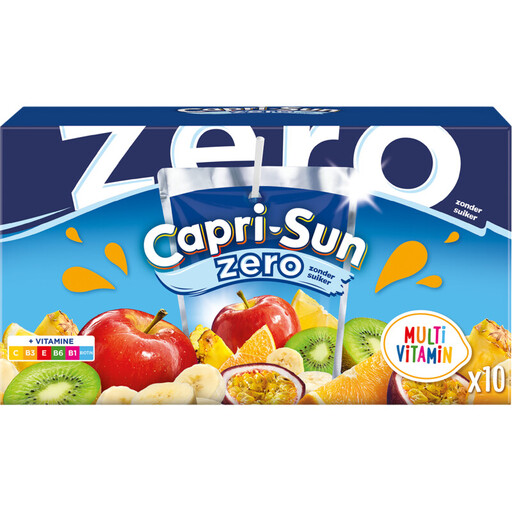
Why it suits this profile: The individual portions are easy to take with you and are suitable for families who want to try a practical multivitamin drink first.
The product information states 0 grams of sugar per 100 ml. However, check which sweeteners are listed and do not use it as a standard drink throughout the day.
10 x 200 ml packs, 3 kcal per 100 ml and vitamin C, niacin, vitamin E, B6, B1 and biotin according to the label.
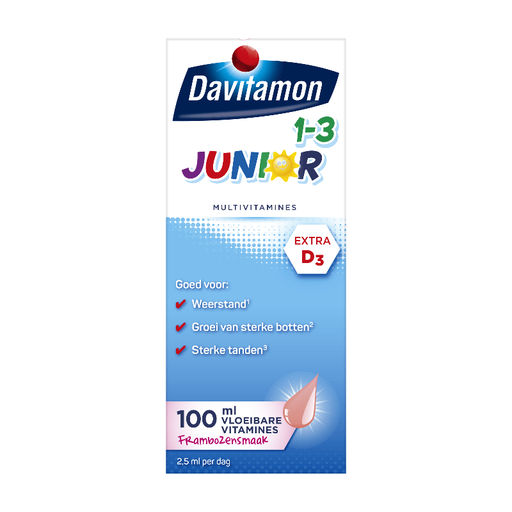
Why it suits this profile: For parents looking for a measured liquid dose for a child aged 1 to 3, without a tablet or gummy.
The dosage is clearly stated as 2.5 ml per day. The label also indicates that the product is not suitable for children under 1 year old.
13 vitamins according to the product information, 10 micrograms of vitamin D3 per daily dose and a measuring cap included.
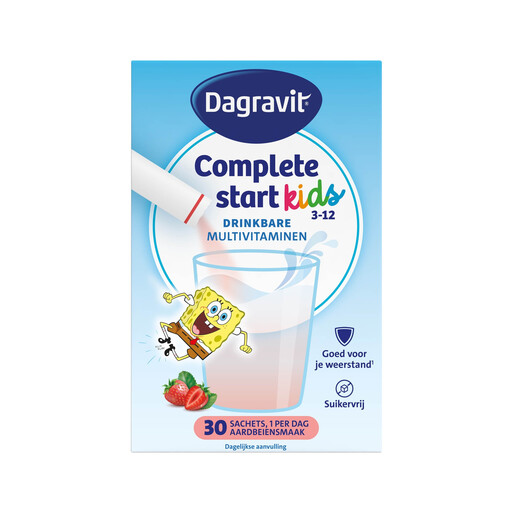
Why it suits this profile: For children aged 3 to 12 who would rather take a multivitamin drink than a tablet or gummy.
Each sachet is mixed with 200 ml of water and the product information states that it contains no sugar. This keeps the dosage easy to manage.
30 sachets, strawberry flavour and, according to the label, vitamins A, C, D3 and B vitamins, as well as calcium, iron, iodine and zinc.
We have put together a complete, up-to-date list of products that fully meet these strict selection criteria and the applicable European safety regulations.
Not always. A varied diet is the foundation. A supplement can be practical when a child consistently avoids certain foods, but the right choice depends on their age, diet and any supplements they are already taking. Check the label and ask a healthcare professional for advice if you are unsure.
For toddlers, liquid vitamins or melt-in-the-mouth tablets are often easier than gummies. Check the minimum age, the exact daily dosage and whether sweeteners are present. A product intended for adults or older children must not be adjusted without professional advice.
This varies from product to product. A liquid multivitamin may need to be refrigerated after opening and used within a specified period. Sachets are individually portioned, while gummies may sometimes need to be consumed within 60 days of opening. Always follow the date and storage instructions on the packaging.
Some gummies use maltitol or other sweeteners instead of sugar. “Sugar-free” therefore does not mean that no sweeteners are present. Also check the warning that excessive consumption may have a laxative effect. Keep gummies out of the reach of young children, as they may look like sweets.
