
Vandaag of morgen in huis

Kwaliteit gegarandeerd

Welkomstaanbiedingen ontgrendelen: GRATIS bezorging | Tot 80% korting | Gratis 30 dagen JoyPlus-proefperiode
Download de app
Children’s vitamins may seem straightforward to choose at first glance. However, products vary considerably in their age recommendations, dosage, ingredients and format. A cheerful package or a promise of energy and resilience does not automatically mean that a supplement is suitable for your child.
As a Joybuy Product Recommendation Officer, I focus mainly on verifiable information: age, nutrients per daily dose, ingredients, ease of use and warnings on the label. This helps you avoid paying for a product that is unsuitable or duplicating nutrients unnecessarily.
A children’s multivitamin may already contain vitamin D, magnesium, iron or zinc. If you then add vitamin D for children or magnesium for children without checking, the total daily intake may rise unnecessarily. Always check the complete composition of all children’s food supplements you use.
Chewable tablets with strawberry, raspberry or berry flavour are practical for children who struggle to swallow tablets. However, flavour does not determine whether the ingredients are suitable for the child’s age. Also look out for sweeteners such as sorbitol, xylitol or mannitol. According to the product information, excessive consumption may have a laxative effect.
Labels often show the RI, or reference intake, for adults. Some products state that a lower recommendation applies to children, with the exception of vitamin D. So do not look only at the percentage shown on the packaging; pay particular attention to the recommended dosage for your child’s age.
The age limit is the first point to consider:
Do not compare only the number of tablets in a tub. Compare the amount of nutrients per recommended daily dose. For example, a product containing 120 tablets may recommend taking one or two tablets a day. This affects how long the pack will last.
When choosing a children’s multivitamin, check for:
Claims relating, for example, to normal bone growth, cognitive function or the immune system come from the product information and refer to permitted nutrition claims for specific nutrients. According to the brands’ own product information, these claims describe the role of the nutrient; they are not a guarantee of an individual effect.
Follow the recommended maximum dosage exactly. Some products should be taken during or after a meal. Chewable tablets should be chewed thoroughly, while melt-in-the-mouth tablets dissolve in the mouth. Store the packaging in a dry, dark place and keep it out of the reach of young children. A supplement that looks like sweets requires extra supervision.
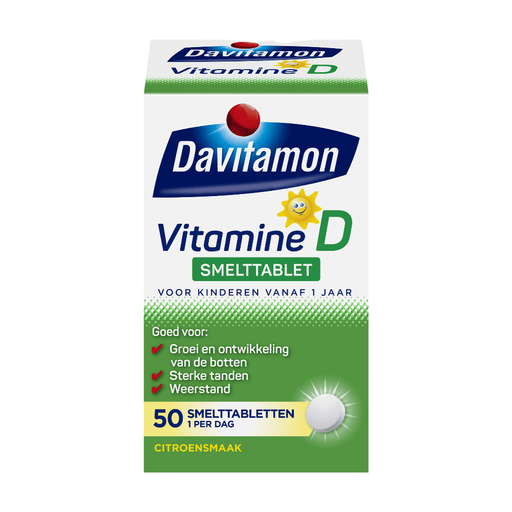
Why it suits this profile: A focused choice if you are not looking for a complete multivitamin, but specifically for a vitamin D supplement for a child aged 1 and over.
The product information states one melt-in-the-mouth tablet per day and 10 µg of vitamin D3 per tablet. This makes the dosage easy to understand.
Suitable from 1 year according to the label; lemon-flavoured melt-in-the-mouth tablet; 50 tablets per pack.
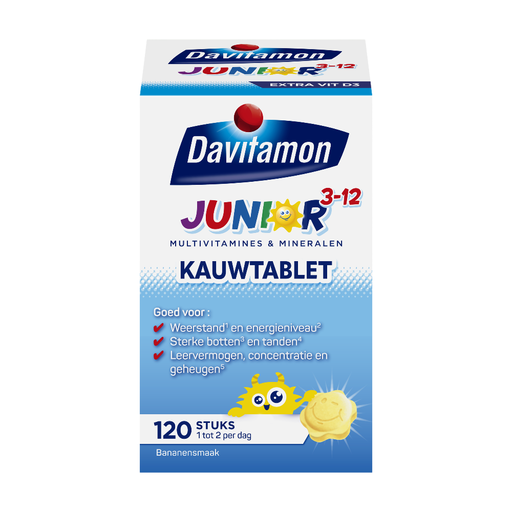
Why it suits this profile: For parents who want to compare one product containing several vitamins and minerals for children aged 3 to 12.
The ingredients and daily quantities are listed for both one and two chewable tablets. This makes it easier to compare with other children’s multivitamin chewable tablets.
120 chewable tablets; banana flavour; contains vitamin D3, C and B vitamins, iron, iodine and zinc, among other nutrients, according to the product information.
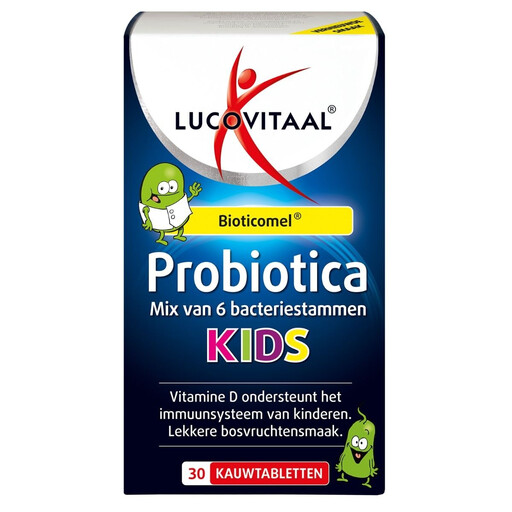
Why it suits this profile: For anyone considering probiotics for children alongside vitamins and wanting to check the bacterial strains and dosage.
The product information lists six bacterial strains, 20 mg of vitamin C and 5 µg of vitamin D3 per tablet. Do pay attention to the age recommendation: the safety information states that it is suitable from 5 years.
Berry flavour; one chewable tablet per day according to the usage information; a combination of bacterial cultures and vitamins.
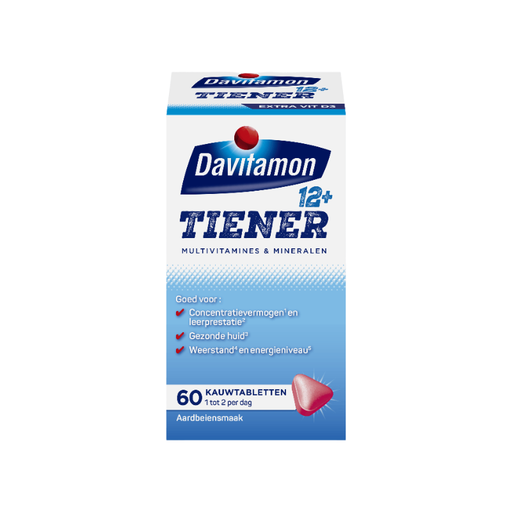
Why it suits this profile: Designed for young people aged 12 to 18 who want to take a chewable multivitamin containing vitamins and minerals.
The age limit and dosage are clearly stated: one to two chewable tablets per day, with adult supervision.
Strawberry flavour; 60 tablets; contains vitamin D3, C, iron, magnesium, iodine and zinc, among other nutrients, according to the label.
We have put together a complete, up-to-date list of products that fully meet these strict selection criteria and the applicable European safety regulations.
That depends on their age, diet, exposure to sunlight and personal circumstances. In the Netherlands, specific advice on vitamin D applies to young children and certain groups of older children. Check the latest information from the Nutrition Centre or the government, and consult a doctor or pharmacist if in doubt.
Not every chewable tablet is suitable for young children. Check the minimum age, the tablet’s size and texture, and the instructions regarding adult supervision. For children aged 1 to 3, a melt-in-the-mouth tablet may be more practical, but always follow the label of the product you choose.
Calculate the usage period by dividing the number of tablets by the daily dosage. For example, a tub containing 120 tablets lasts 120 days when taking one tablet a day, but 60 days when taking two tablets a day. Also check regularly whether your child now falls into a different age category or needs a different dosage.
