
Vandaag of morgen in huis

Kwaliteit gegarandeerd

Welkomstaanbiedingen ontgrendelen: GRATIS bezorging | Tot 80% korting | Gratis 30 dagen JoyPlus-proefperiode
Download de app
Children’s trainers need to withstand plenty of wear and tear, stay securely in place and suit the way they are used. However, an attractive photo online does not guarantee that a shoe is suitable for children. Especially when feet are growing quickly, the wrong size, an awkward fastening or a slippery sole can lead to a disappointing purchase.
In this guide from the Joybuy Product Recommendation Officer, we compare verifiable features of children’s trainers, including materials, fastenings, fit, sizing and soles. This will help you find boys’ trainers or children’s sports shoes more easily in European sizes 28 to 34.
Children grow quickly, but an overly roomy shoe can shift while walking. This makes a secure fastening particularly important. So do not just look at the EU size; also check the stated fit and width. A standard fit, as found in various Skechers models, is not automatically suitable for every foot.
When ordering online, check:
Many trainers have a sporty appearance, but that does not mean they are intended for every sport. A low-profile trainer with a rubber tread sole can be practical for school, outdoor play and everyday wear. Organised sports may have different requirements, such as a specific sole or support suited to the sports venue.
Therefore, read the product description and check the sole material. A rubber outsole with a tread is a verifiable feature that can provide grip on everyday surfaces, but it says nothing about performance on a specific sports floor.
Black children’s trainers are practical with school uniform, while blue or red children’s trainers have a more eye-catching appearance. However, colour and brand are less important than the fastening, upper material and care requirements. Suede combined with mesh can feel comfortable and breathable, but it generally requires more care when exposed to dirt and moisture than synthetic materials or textile.
Trainers with hook-and-loop fastenings are useful for young children who dress themselves. They can be secured quickly and make putting the shoes on easier. Models with elastic laces and hook-and-loop fastenings combine a sporty look with practical everyday use.
Trainers with laces offer more individual adjustment. They are worth considering for children who can already tie their own laces or who need a closer fit. Do check that the laces are not too long and that the child can use them independently.
Many models in this selection use a combination of:
A non-removable insole is found in several models. This is not necessarily a problem, but it does mean that the insole cannot be replaced or removed separately. Always follow the brand’s care instructions. For the models mentioned, cleaning with a damp cloth and mild soap is recommended, among other methods. Machine washing can damage materials and adhesive bonds.
Pay attention to three things:
For trainers intended for school and everyday wear, a standard fit, a secure fastening and an easy-to-clean exterior are often practical starting points.
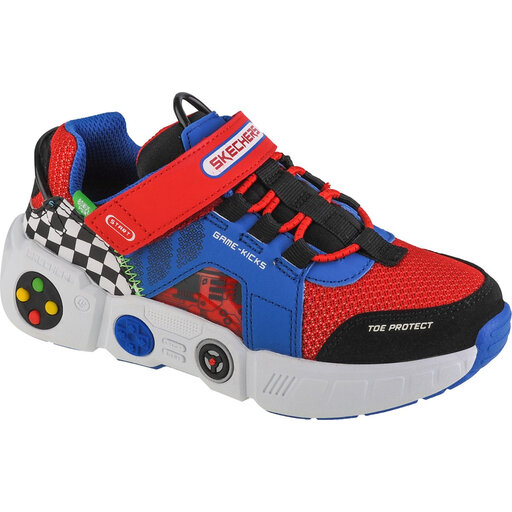
Why it suits this profile: This red boys’ model has a standard fit, D width and a hook-and-loop fastening. That makes it a straightforward choice for everyday wear in size 29.
The product information states the fit, width and size advice. This means you do not have to rely solely on the appearance.
Synthetic leather upper, rubber sole and hook-and-loop fastening; suitable for school, play and everyday wear.
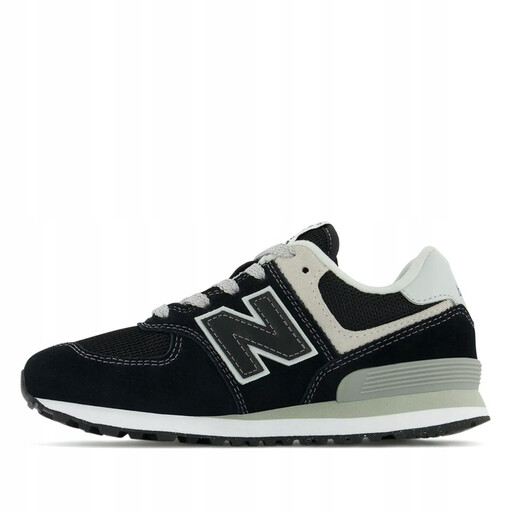
Why it suits this profile: The black New Balance 574 for children combines suede, synthetic material and textile mesh with an EVA midsole. The model is designed for school, play and everyday wear.
The specifications separately list the upper, EVA midsole, rubber outsole and lace fastening.
EVA foam midsole, rubber tread sole and classic black design; a statutory minimum two-year guarantee according to the product information.
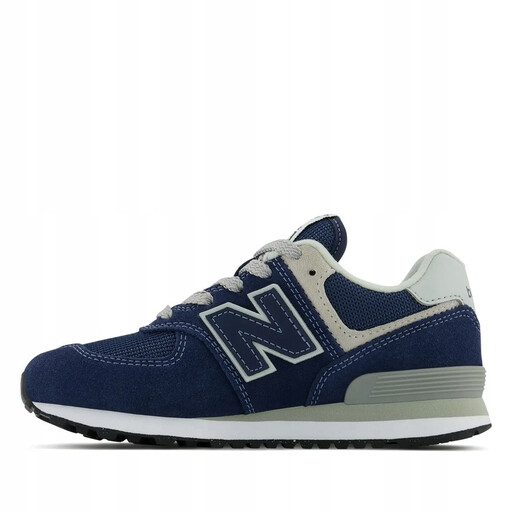
Why it suits this profile: This navy New Balance 574 has a hook-and-loop fastening and a low-profile design. It is well suited to children who want to put their trainers on independently and quickly.
The fastening is clearly specified as hook-and-loop. This prevents you from choosing a lace-up shoe for a child who cannot yet tie their own laces.
Suede, synthetic material and mesh; lightweight EVA midsole; rubber outsole with tread and size 28.5 according to the product name.
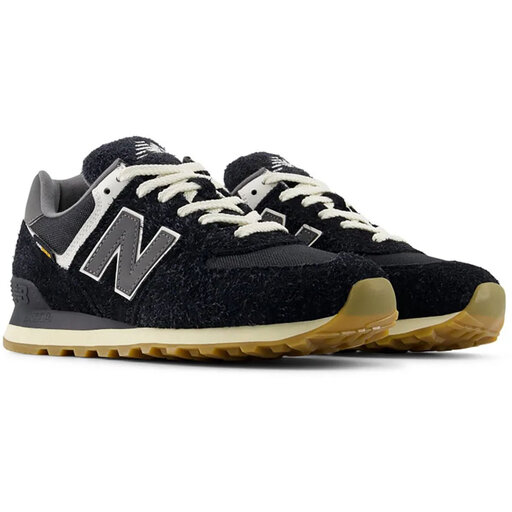
Why it suits this profile: This adult New Balance 574 in grey and navy has a classic low-profile design for casual and sporty occasions.
The product description specifies the suede and mesh upper and rubber outsole, rather than using only general comfort language.
Suede and breathable mesh, cushioned midsole and rubber outsole; suitable for everyday wear according to the product description.
A pair of children’s shoes will not automatically last for a full school year. Their lifespan depends on how quickly the child grows, how the shoes are used, the surfaces they are worn on and how well they are cared for. Check regularly that the toes can still move freely and that the sole is wearing evenly.
After a wet day, let the shoes dry at room temperature. Do not place suede shoes on a radiator, and do not use a washing machine if the manufacturer advises against it. With models that have non-removable insoles, airing them out is particularly useful. Store trainers somewhere dry and use a suitable care product for suede.
We have put together a complete, up-to-date list of products that fully meet these strict selection criteria and the applicable European safety regulations.
Choose a model with a standard fit, a fastening the child can use independently and a rubber sole with tread. Black, grey and navy models often work well with school uniform. Also check the care advice, as shoes worn to school and outdoors get dirty more quickly.
That depends on the child’s age and independence. Hook-and-loop fastenings are practical for putting shoes on and taking them off quickly. Laces can provide a more precise fit, but are less convenient if a child cannot yet tie them independently. Elastic laces combined with hook-and-loop fastenings offer a middle ground.
Check the fit regularly, particularly when a child is growing quickly or complains of pressure. Do not just look at the length; also check heel slippage, toe room and width. A new size should fit comfortably without the shoe sitting loosely around the foot.
