
Vandaag of morgen in huis

Kwaliteit gegarandeerd

Welkomstaanbiedingen ontgrendelen: GRATIS bezorging | Tot 80% korting | Gratis 30 dagen JoyPlus-proefperiode
Download de app
Children’s shoes need to withstand everyday knocks, stay securely in place and suit the way a child uses them. However, an attractive photo or well-known brand name does not guarantee a suitable purchase. Children’s trainers, boys’ trainers and girls’ trainers in particular can come with pitfalls that only become apparent after ordering.
Shoes with lights are popular, but lighting says nothing about the fit, fastening or grip. So check the sole material, fastening and stated size first. On some models, the lights work with an on/off switch; on others, they come on with every step. That difference may be relevant for wearing them at school.
A normal or regular fit is a product description, not a guarantee of a personal fit. Foot length, instep and width vary from child to child. So check the stated shoe width, such as D or G, and make sure the size matches the size chart. A child who is between two sizes will not automatically benefit from a larger shoe: too much room can actually make walking less stable.
Laces can offer good adjustability, but not every child can tie them independently. Hook-and-loop fastenings, elastic laces or a combination of the two are more practical for young children and busy mornings. Also pay attention to how secure the fastening is. A shoe that comes loose while running or playing outdoors is less useful, regardless of how it looks.
For children’s shoe sizes 27 to 35, checking the size is especially important, as half a size or a full size can make a noticeable difference. Ideally, measure the foot at the end of the day and compare the measurement with the size chart for the specific model.
Look out for these terms:
A removable insole can be useful for checking the internal space, but not every model has this feature. The Skechers models mentioned often have a non-removable insole.
Product information often associates a rubber sole with grip and everyday use. A synthetic sole may be lighter, but in that case check the tread pattern and intended use particularly carefully. For school, cycling and outdoor play, grip and flexibility are generally more important than an eye-catching design alone.
The upper also affects how the shoe should be cared for:
For everyday wear, trainers with hook-and-loop fastenings are often straightforward. A model with elastic laces and a hook-and-loop fastening combines a sporty look with easy independent dressing. Laces offer more adjustment options, but require greater dexterity.
Use the following practical guide:
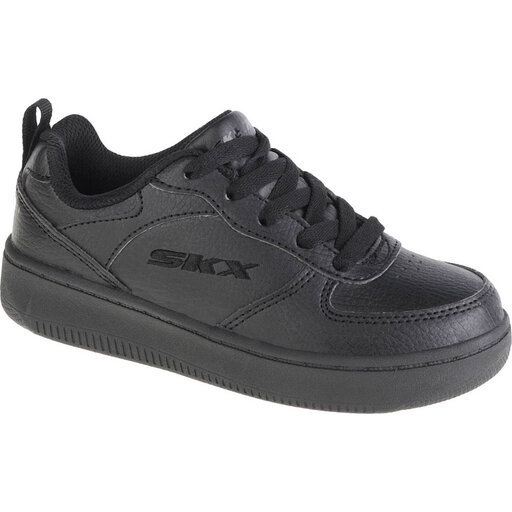
Why it suits this profile: These low-cut black trainers have a neutral look for school and everyday wear. The product information states a regular fit, shoe width D and lace fastening.
The specifications focus on size, width and fastening rather than appearance alone. The care instructions recommend cleaning with a damp cloth.
Synthetic leather upper, rubber sole, regular fit and a plain black colour.
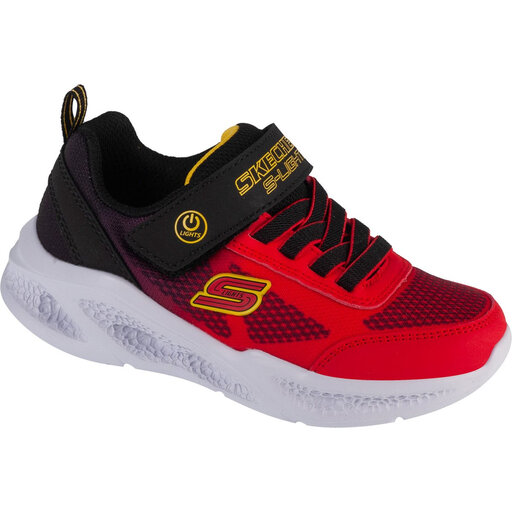
Why it suits this profile: This high-top model is designed for anyone looking for eye-catching red children’s trainers with a hook-and-loop fastening. The stated fit is regular with shoe width D.
The product details explicitly mention the hook-and-loop fastening, width and material composition. This lets you look beyond the eye-catching design.
High-top design, synthetic upper, rubber sole and size 32, described as true to size.
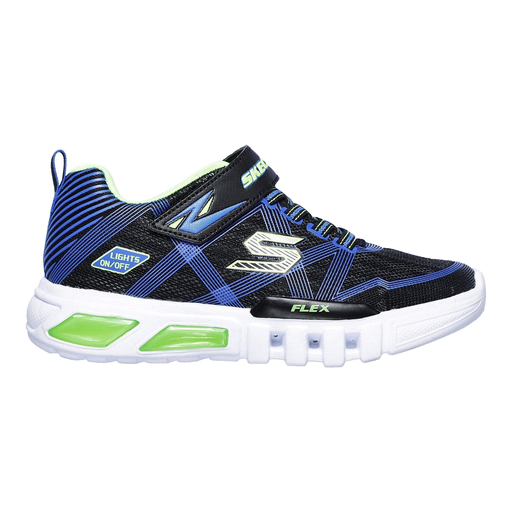
Why it suits this profile: This model is aimed at children who want sporty trainers with lights. The upper is made from mesh and the shoe uses elastic laces with a hook-and-loop fastening at the ankle.
The lights are not the only feature to consider: the description also states the fastening, fit and how the lights are operated. According to the size advice, this model runs small.
Mesh upper, elastic laces, hook-and-loop fastening, lights in the sole and a flat sole without a raised heel.
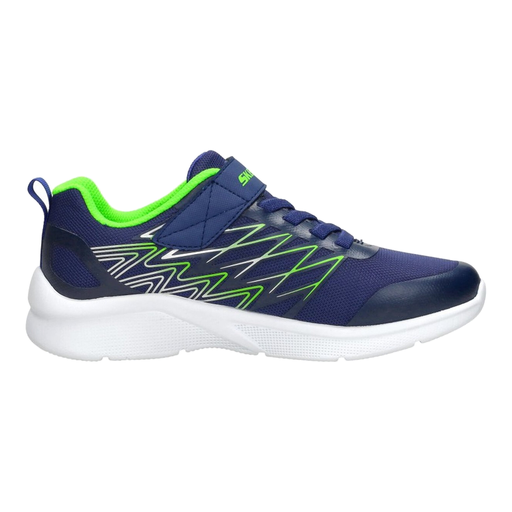
Why it suits this profile: The combination of elastic laces and a hook-and-loop fastening makes this model practical for children who want to put their shoes on independently.
The fastening is clearly described and the model has a regular fit. This helps prevent a child from remaining dependent on help when putting their shoes on.
Textile upper, rubber treaded sole, non-removable textile insole and size 32.
We have put together a complete, up-to-date list of products that fully meet these strict selection criteria and the applicable European safety regulations.
Measure both feet and use the size of the larger foot as your starting point. Then compare the measurement with the size chart for the chosen model. Also check the size advice: according to the product information, some children’s trainers are true to size, while others run small.
That depends on the school’s rules and how the shoes will be used. Check whether the lights can be switched off. The product description for the Skechers Flex Glow mentioned above includes on/off switches. Also consider the fastening, sole and care instructions; lights alone do not determine whether a shoe is practical.
Their lifespan depends on growth, how often they are worn, the surface they are used on and how well they are cared for. Regularly check that there is still enough room for the toes, that the sole is wearing evenly and that the fastening continues to work properly. Clean the shoes according to the label or product instructions and allow wet shoes to dry at room temperature. This helps prevent unnecessary wear and means you can spot in good time when a new pair is needed.
