
Vandaag of morgen in huis

Kwaliteit gegarandeerd

Welkomstaanbiedingen ontgrendelen: GRATIS bezorging | Tot 80% korting | Gratis 30 dagen JoyPlus-proefperiode
Download de app
Children grow quickly, wear their shoes hard and often want to put them on and take them off themselves. But good looks aren’t everything. When choosing children’s shoes, fit, fastening, material and intended use are just as important.
Marketing claims can also give a misleading impression. Look for specific product details rather than relying on words such as “comfortable”, “durable” or “ideal for every day”.
A child’s age tells you very little about the right shoe size. Feet don’t all grow at the same rate. A child who usually wears a size 30 may need a different fit in another brand.
Always check:
Shoes that are too small can quickly become uncomfortable. Shoes that are too roomy may feel less stable when running and playing.
Black children’s shoes are practical for school and everyday wear, as dirt is often less noticeable. White children’s shoes can look fresh, but usually need more frequent care. Colour, however, tells you nothing about fit or grip.
Look at the material and sole as well as the appearance. A textile upper, as found on various Skechers models, can feel lightweight and flexible. A rubber sole may be suitable for everyday wear, but how the shoe feels underfoot still depends on its construction and the child’s foot.
Shoes with elastic alone are quick to put on, but they won’t provide enough support for every child. A combination of elastic laces and hook-and-loop fastening can be practical for children who want to put their shoes on independently.
With clogs, it’s important to check that the heel strap is well positioned and adjustable. According to Crocs’ product description, the Classic Clog has a pivoting heel strap. This can help you wear the shoe loosely or secure it more firmly around the heel, depending on how it’s being used.
A regular fit won’t automatically suit every foot. According to the product specifications, the Skechers Microspec Texlor 403770L models have a regular fit and shoe width D. This gives you clear details to check, but trying the shoes on and walking in them is still important.
Look out for signs such as:
Your child should be able to move their foot without it sliding forwards in the shoe.
For young children, hook-and-loop shoes are often practical. They can open and fasten the shoes themselves without having to tie laces. Elastic laces combined with hook-and-loop fastening also provide a secure fit once the shoe has been adjusted properly.
A laceless clog is handy for the pool, garden, campsite or short trips out. According to the product information, the Crocs Classic Clog has ventilation ports, a heel strap and a lightweight Croslite construction. The manufacturer also says the model is easy to clean. These are product specifications; the experience may vary from child to child and depending on how the shoes are used.
Check the upper and sole separately. According to the product details, the Skechers Microspec Texlor has a textile upper and a rubber sole. The models don’t have a removable insole. This is worth bearing in mind if you usually use your own insoles.
According to the stated composition, the Crocs models are made from thermoplastic material, including Croslite, with an EVA sole. The care instructions recommend cleaning with a damp cloth, leaving the shoes to air-dry and avoiding prolonged exposure to heat or direct sunlight.
For lightweight children’s shoes and children’s summer shoes, a plastic clog can be practical. For school, cycling or long walks, a closed trainer with a more secure fastening may be better suited to the activity. So choose what you need the shoes for first, then pick a model.
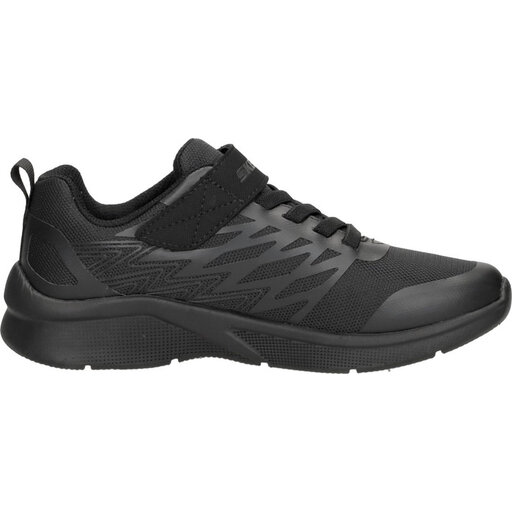
Why it suits this need: This black low-top trainer is designed for everyday wear, including school, play and trips out. The combination of elastic and hook-and-loop fastening makes it easier for children to put the shoes on by themselves.
The size, regular fit and width D are clearly stated, so you don’t have to rely solely on the model name or appearance.
Textile upper, rubber sole, regular fit and size 32. The insole isn’t removable.
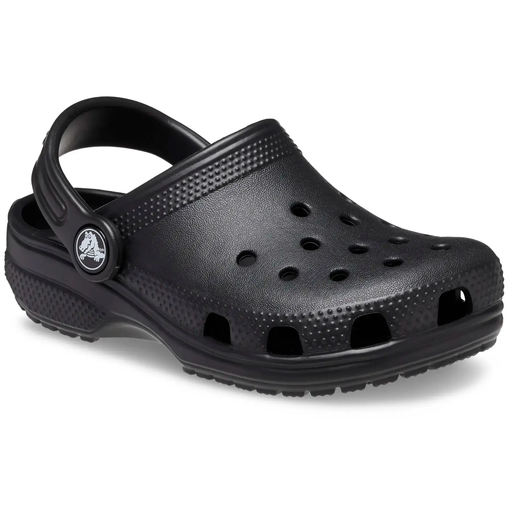
Why it suits this need: This black clog is designed for children who want a simple style for home, outdoor play, holidays or the pool. It’s quick and easy to slip on.
The product information lists ventilation ports, a pivoting heel strap and an easy-care construction. Be sure to check the sizing in centimetres.
Lightweight thermoplastic construction, EVA sole, ventilation ports and an adjustable heel strap.
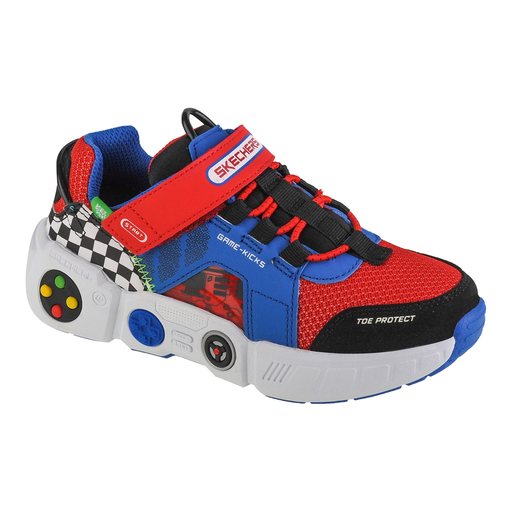
Why it suits this need: This low-top trainer in size 33 is designed for everyday wear and active moments. The hook-and-loop fastening is handy when a child wants to put their shoes on by themselves.
The specifications list a regular fit, width D and a rubber sole. You can compare these details directly with other children’s trainers.
Synthetic leather upper, rubber sole, hook-and-loop fastening and size 33. The insole isn’t removable.
We’ve put together a complete, up-to-date list of products that meet these strict selection criteria and the applicable European safety requirements.
Measure both feet while your child is standing and compare the longer foot with the size guide for the model you’ve chosen. Don’t look only at sizes 30, 32 or 33. Fit, shoe width and stated length can vary between brands. Also take your child’s foot shape and the space around the toes into account.
It depends on the activity. According to the product description, the clogs are lightweight, easy to clean and have ventilation ports and a heel strap. They can be practical for short trips out, outdoor play or summer wear. For school, long walks or active sports, a closed trainer with hook-and-loop fastening may be better suited to the situation.
Their lifespan depends on growth, how often they’re worn, the surface they’re used on and how well they’re cared for. Check the sole, fastening, heel and inside of the shoe regularly. Replace shoes when there’s no longer enough room for the toes, the sole is clearly worn or the shoe no longer fits properly. A more expensive model won’t necessarily last longer; consider its construction and how it will actually be used.
