Painting with children is a fantastic way to stimulate their creativity. But the search for the right children's paint can raise some questions. Is the paint safe for a toddler who puts everything in their mouth? Will I ever get these stains out of their clothes? And which type of paint is best suited to my child's age and skill level? The wrong choice can lead to unused supplies and frustration.
This guide will help you make an informed decision. We will cover the key criteria to consider and highlight a few specific products based on their features.
What to Look For When Choosing Children's Paint
Before you make a choice, it's helpful to consider a few objective criteria. These factors will help you find paint that is not only fun but also practical and safe.
1. Safety: CE Marking and Ingredients
Your child's safety is paramount. Within the European Union, toy products, including children's paint, must meet strict safety requirements.
- CE Marking: Always check that the packaging has a CE marking. This label indicates that the product complies with European legislation, specifically the EN 71 standard for toy safety.
- Non-Toxic: Look for products explicitly labelled as non-toxic. For the very young, it's an added bonus if the paint has a bitter taste to discourage ingestion.
- Allergies: Some paints are gluten-free or hypoallergenic, which can be an important factor if your child is sensitive to certain substances.
2. Paint Type and Age
Not every paint is suitable for every age. The choice depends on your child's motor skills and their preferred way of getting creative.
- Finger Paint: Ideal for the youngest artists (from around 2 years old). It's a sensory experience that stimulates fine motor skills. The texture is thick, so it doesn't drip right off the fingers.
- Paint Sticks for Kids: A clean and easy option. These sticks contain solid tempera paint that dries quickly and creates less mess. Perfect for toddlers and preschoolers who are just learning to hold markers.
- Poster Paint (Gouache): This opaque, water-based paint is a classic for painting with children on paper or cardboard. Suitable for children who can already handle a paintbrush (from around 4 years old).
3. Washability
One of the biggest concerns for parents is the clean-up afterwards. The term washable paint is crucial. Check the packaging for claims like "washable" or "easy to clean". Keep in mind that this usually applies to smooth surfaces and skin, and that stains on porous fabrics or furniture can be harder to remove, especially once they have dried.
Our Selection for Creative Fun in 2026
Based on the criteria above, we have selected a few products that cater to different needs and age groups.
1. SES Creative Finger Paint Set - 4 Colours
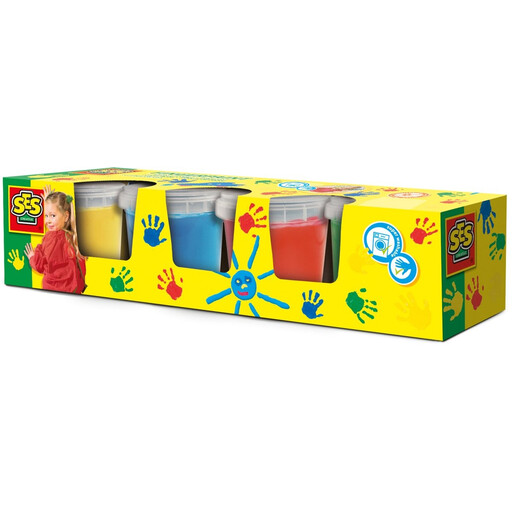
- Why this product: This set was specifically developed as a safe paint for toddlers. The focus is on safety and ease of use for the little ones, making it a popular choice for a first introduction to paint.
- Benefits:
- Safety: The paint is gluten-free and, according to the manufacturer, has a bitter taste to discourage consumption.
- Washability: Designed to be easily washed off skin and most types of fabric.
- Quality: The paint has a smooth consistency, and the colours are intermixable. The product carries the required CE marking.
- Who is it for: Toddlers and preschoolers from 2 years old who want a safe and sensory introduction to finger painting.
2. Jar Melo Paint Sticks - 30 Colours
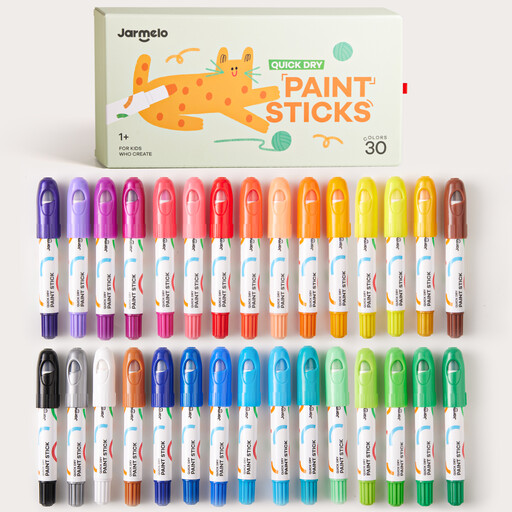
- Why this product: These paint sticks for kids offer a solution for those who want the creativity of paint without the mess. The solid form and quick-drying formula make it a highly practical creative toy.
- Benefits:
- Ease of Use: No water or brushes needed. The chunky sticks are easy for little hands to hold.
- Quick-Drying: The manufacturer states the paint dries in about 60 seconds, which minimises smudges and smears.
- Versatile: The set includes 30 colours and can be used on various surfaces like paper, wood, and stone. The formula is non-toxic and washable.
- Who is it for: Children from 3 years old. Ideal for use at home, at school, or on the go, and for parents who prefer a mess-free painting activity.
3. Jar Melo Kids' Paint Set - 24-Colour Poster Paint
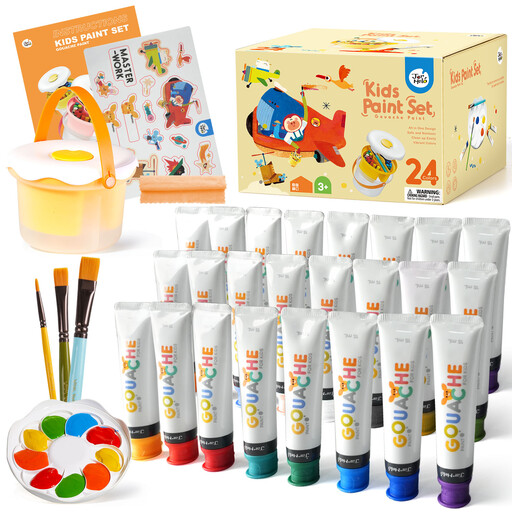
- Why this product: This is a complete starter set for the young artist who is ready for the next step. Everything is conveniently stored in a portable bucket, which simplifies organisation and clean-up.
- Benefits:
- All-in-One: The set includes 24 tubes of poster paint, 3 brushes, a rinsing cup, and a lid that doubles as a mixing palette.
- Portable and Organised: The bucket keeps all the materials together, making it ideal for taking on the go or storing neatly.
- Quality: The non-toxic gouache paint has good opacity, and the colours are bright and easy to mix.
- Who is it for: Children aged 4 to 12 who want to get more serious about painting with children and would appreciate their own complete set.
Didn't Find What You Were Looking For? Discover More Craft Paint
The products above are examples that suit specific situations. The best choice always depends on the child, their age, and the type of project you have in mind. You might be looking for a different colour, a larger pack size, or a special type of paint for fabric or glass.
For a broader overview of all types of craft paint, from individual pots of poster paint to complete painting sets, you can visit our main category.
See all our paint products here
Frequently Asked Questions about Children's Paint
1. From what age is children's paint safe? This largely depends on the type of paint. Finger paint is often suitable for children from 2 years old, provided there is supervision. For paints used with brushes, such as poster paint, an age of 3 or 4 years and up is often recommended. Always check the age recommendation on the packaging and ensure the product has a CE marking.
2. Is all children's paint truly washable? Most children's paint is designed to be washable from skin and smooth surfaces. For clothing, most stains will come out in the wash, especially if you act quickly. However, stubborn pigments (like red or blue) or dried-on stains on delicate fabrics can be a challenge. It is advisable to use an apron and perhaps test on a small patch of fabric beforehand.
3. What is the difference between poster paint and finger paint? The main difference lies in their consistency and intended use. Finger paint has a thicker texture, so it clings to the fingers without dripping immediately. It is meant for direct contact with the skin. Poster paint (or gouache) is more fluid and is intended to be applied with a brush. It has stronger opacity and is typically used by slightly older children.
Joybuy Product Recommendation Officer