
Vandaag of morgen in huis

Kwaliteit gegarandeerd

Welkomstaanbiedingen ontgrendelen: GRATIS bezorging | Tot 80% korting | Gratis 30 dagen JoyPlus-proefperiode
Download de app
A night light for children needs to do more than look good. It should provide a suitably soft light, be easy to use and work well wherever you plan to put it. A light for night feeds needs different features from a decorative children's lamp beside a toddler's bed.
Most disappointing purchases come down to three common pitfalls:
Use the checks below to compare LED night lights based on practical features, not just their appearance.
Adjustable brightness is useful in a nursery or child's bedroom. A dimmable night light can be set low while your child sleeps, then turned up for a quick check or night feed.
Look out for the difference between:
Claims such as “eye-friendly” or “soothing” aren't guaranteed results. The brand's product description may say that a particular lighting technology is designed to provide these benefits, but it's best to compare the available settings and technical specifications.
A plug-in night light is straightforward: there's no need to charge it, but you'll need a power socket nearby. A rechargeable night light is more flexible for a bedside table, hallway or trip away.
For cordless models, check:
Operating time depends on brightness, colour setting and sensor activity. Treat any stated figure as a product specification based on particular conditions, not a guarantee for every situation.
A night light with a timer switches off automatically after a set period, so it won't stay on all night. A motion-sensor night light can be useful in a hallway or by a changing table, but check its detection range and the light conditions it needs to work.
Also check:
A silicone night light may feel soft, but that doesn't automatically mean it's designed to be used as a teething toy. Always follow the manufacturer's warnings. Babies must be supervised when a product contains small parts, batteries or a rechargeable battery.
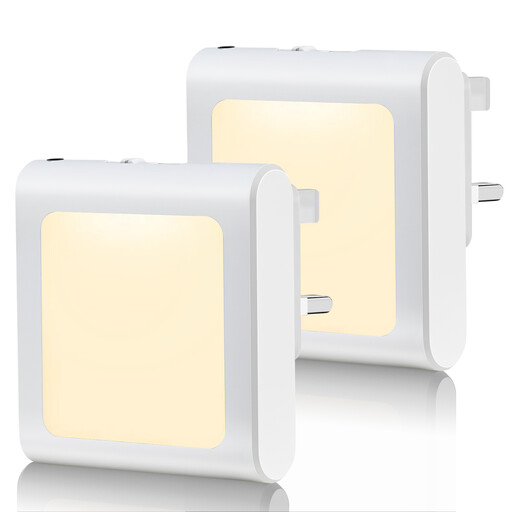
Why it suits this need: The pack includes two compact lights, ideal for spaces such as a child's bedroom and hallway. They're easy to use and designed to plug into a power socket.
You're getting a practical two-piece set, rather than choosing based only on a character or colour. Before buying, check the position of your power sockets and read the full product information.
Two lights per pack; ABS+PC casing; suitable for bedrooms, hallways and nurseries according to the product description.

Why it suits this need: This model combines cordless use with adjustable brightness and three colour temperatures. It's a good fit for parents who want one light for different occasions.
You're not limited to one fixed light setting or a power socket. According to the product information, the sensor works within 3 to 5 metres and in low ambient light.
500mAh battery; USB charging at 5V-1A; five brightness levels; motion sensor and steady-light mode.
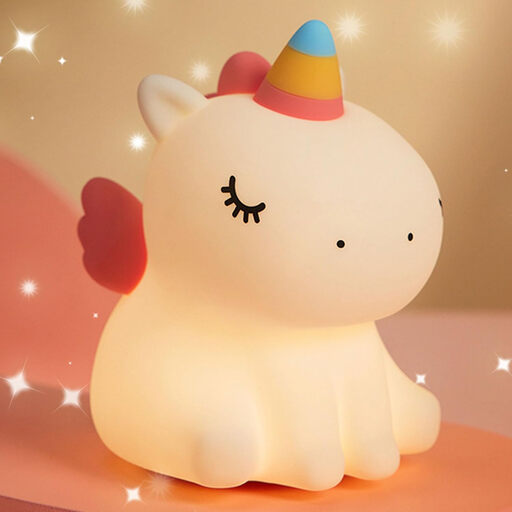
Why it suits this need: A cordless silicone night light is handy for night feeds, moving between rooms or as a bedside light for children who meet the stated age recommendation.
There's no complicated remote control: tap control lets you choose from three brightness levels. The 30-minute timer prevents the light from staying on longer than needed.
1200mAh battery; stated operating time of 8 to 10 hours; three dimming levels; USB charging and a soft silicone casing according to the product description.
We've put together a complete, up-to-date list of products that meet these strict selection criteria and the applicable European safety requirements.
It can be useful in a hallway, by a changing table or when checking on your baby at night. Position the sensor so that it won't detect movement constantly. Also check the age recommendation, power source and warnings for the specific model. A motion sensor is no substitute for supervision.
It depends on the battery capacity, brightness and mode of use. The product information may, for example, state an operating time of 8 to 10 hours. If you use a brighter setting or a colour mode, the actual operating time may be shorter. Check the charging time and cable type too.
LED models often have a low stated wattage. A 0.5 W or 1 W light uses less energy when left on continuously than many traditional light sources, but the exact amount depends on how long it's on. A timer or sensor can stop the light from staying on unnecessarily.
