
Vandaag of morgen in huis

Kwaliteit gegarandeerd

Welkomstaanbiedingen ontgrendelen: GRATIS bezorging | Tot 80% korting | Gratis 30 dagen JoyPlus-proefperiode
Download de app
A children's night light should be more than just cute. In a nursery, what matters most is whether the light is soft enough, the controls are practical and the material is suitable for your child's age. For night-time feeds, a quick check or a child who is afraid of the dark, small differences can make a big difference.
Marketing copy often focuses on colour, shape or terms such as “baby-safe”. Always check the technical details and warnings too. A children's night light that looks appealing may be inconvenient, for example, if it only works from a socket when you want to use it beside the bed.
A lamp with a high light output may be useful in a hallway, but less suitable as a night light for a bedroom or nursery. Check the value in lumens and the colour temperature in kelvin. Warm white light around 2700 to 3200 K generally creates a softer atmosphere than cool daylight of around 6500 K.
A night light with a sensor can switch on automatically when it gets dark or detects movement. This is handy in a hallway or along the route to the nursery. In a bedroom, however, a motion sensor may come on unexpectedly when your child turns over. Check which type of sensor is built in and whether you can switch the lamp off manually.
A soft silicone animal may look suitable for holding, but that does not automatically mean it is a toy. Check the recommended age, small parts, battery compartment and cleaning instructions. The Little Dutch Forest Friends night light, for example, states a recommended age of 3 years and over and warns about small parts and batteries.
For a night light in a child's bedroom, a low setting is often sufficient. A dimmable night light offers greater flexibility: soft light while your child is sleeping and a brighter setting during a night-time nappy change. A product with three light settings, such as the VIVREAL Panda model, is easier to adjust than a lamp with just one fixed brightness level.
Consider the light colour too. Warm white is usually more pleasant for a calm atmosphere, while cool white may be more practical in a hallway or cupboard. Bear in mind that RGB colours are mainly decorative and are not always the most practical choice for night-time care.
A rechargeable night light is easy to move around and avoids having a cable next to the bed. Check the battery capacity, charging time and stated operating time. According to the product description, the VIVREAL Panda has an integrated 1200mAh battery and charges via USB.
A plug-in lamp, on the other hand, is straightforward: there is no battery to recharge. A model with a light sensor can respond automatically to its surroundings. Do pay attention to where you place it, though: a socket next to a curtain, bedding or a damp area is not suitable.
Check whether the product page provides information about the material, manufacturer, EU responsible person and safety warnings. For a lamp intended for young children, rounded shapes, a stable base and clear instructions are important. “BPA-free” or “food-grade silicone” are product specifications, but they do not automatically make a lamp suitable as a toy.
Also look out for:
Claims about light quality or how sensors work should be read as information provided by the manufacturer. According to information from the relevant brands or sellers, features may vary by model, so always check the latest product details before buying.
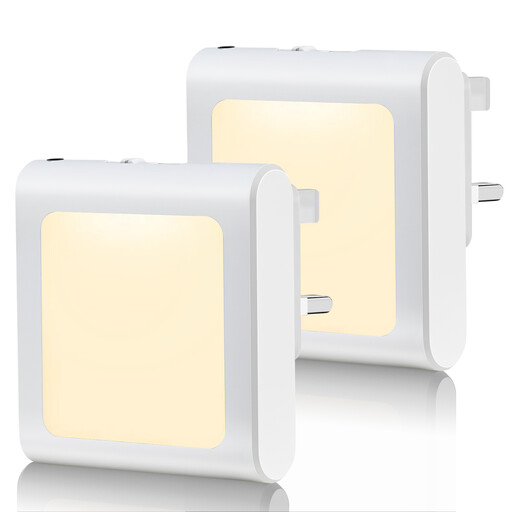
Why it suits this profile: The set contains two compact plug-in lamps, ideal for the child's bedroom and hallway, for example. They are simple to operate and do not need charging.
The product description mentions plug-and-play use and energy-efficient lighting. This means there are no separate batteries or charging times to keep track of.
ABS+PC housing, two lamps per pack and direct connection to the mains socket.
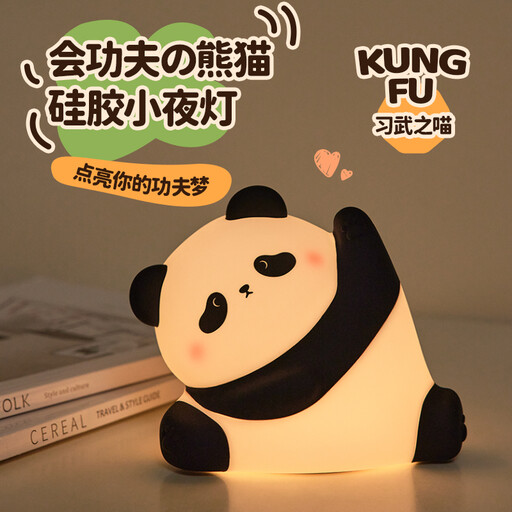
Why it suits this profile: This cute night light combines a soft silicone shape with touch controls. It is ideal for parents looking for a portable lamp for feeds, nappy changes and bedtime.
The three light settings mean you do not have to use the same brightness for every situation. The lamp runs on a built-in battery rather than having a cable next to the bed.
1200mAh rechargeable battery, three dimming settings, touch controls and silicone housing according to the product description.
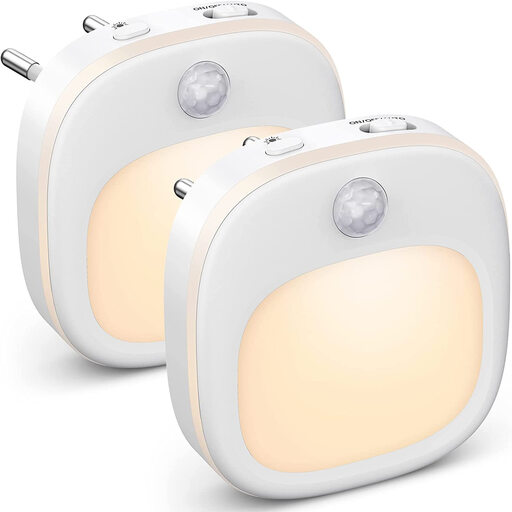
Why it suits this profile: The two lamps are designed for use in a bedroom, nursery or hallway where automatic lighting is wanted when movement is detected.
The product information lists five dimming levels and three colour temperatures. This allows you to adjust the light more effectively for pathway lighting or a calmer setting.
Two lamps, motion detection, five dimming levels and three colour temperatures according to the product specifications.

Why it suits this profile: The squirrel shape works well as a decorative feature and soft LED night light in a child's bedroom. The recommended age is 3 years and over.
The age limit and warning about small parts make it clear that this lamp is not intended for unsupervised use by babies.
Integrated LED, one-button operation and a decorative squirrel design. Clean with a soft, slightly damp cloth.
We have put together a complete, up-to-date list of products that fully meet these strict selection criteria and the applicable European safety regulations.
Focus primarily on low brightness and a warm colour temperature. A warm white baby night light may feel less harsh than cool daylight. There is no universal setting that works for every child. Ideally, choose a lamp with a dimming function and do not place it directly next to your child's face or cot.
This depends on the battery capacity, brightness setting and frequency of use. A higher brightness setting generally uses more energy. Check the stated operating time and charging time on the product page. A built-in 1200mAh battery, such as those found in some VIVREAL models, provides a more useful point of reference than a description with no battery details.
An LED night light generally uses little power compared with a traditional lamp, but actual consumption depends on the wattage and how long it is switched on. The Aigostar model, for example, lists 1 W, 40 lumens and stated consumption of 0.5 kWh per 1000 hours. With a plug-in lamp, the number of hours it is on each night also makes a difference. Check whether a sensor or timer is available to limit unnecessary use.
