
Vandaag of morgen in huis

Kwaliteit gegarandeerd

Welkomstaanbiedingen ontgrendelen: GRATIS bezorging | Tot 80% korting | Gratis 30 dagen JoyPlus-proefperiode
Download de app
Buying a children’s helmet might seem straightforward – until you have to choose between a children’s cycling helmet, a children’s skate helmet or a multi-activity model. A striking design says little about fit, ventilation or certification. And a higher price doesn’t automatically mean the helmet will suit your child.
The most common buying mistakes come down to three pitfalls:
So don’t rely solely on the age stated on the packaging. Measure the head, check the intended uses and see whether the product specifications match the activity.
Use a flexible tape measure around the head, roughly one to two centimetres above the eyebrows. Keep the tape measure horizontal and note the circumference in centimetres. Compare that measurement with the size range of the helmet.
An adjustable children’s helmet often has a dial or other size adjustment. That’s handy if the head circumference falls between two sizes, but the adjustment feature doesn’t replace a suitable base size. The helmet should:
The RoyalBaby model states an adjustable range of 20–23 inches, which converts to approximately 50.8–58.4 cm. According to the product information, this model is intended for children aged roughly 5 to 13 years. Always check the actual head circumference, as ages are only a guide.
For cycling, roller skating, inline skating and skateboarding, EN1078 is an important specification to check. This European standard covers helmets for cyclists, skateboarders and roller skaters. A product listing that says “tested to EN1078” should be read as a product specification from the brand or seller; if in doubt, check the conformity information and user manual.
The range includes the following materials, among others:
With in-mould models, the outer shell and EPS inner layer are fused together according to the product information. That says something about the construction, but no helmet can rule out all possible consequences of an impact. Replace a helmet after a significant impact or if there is visible damage, even if the outside still looks fine.
For everyday cycling, scooting or recreational skating, weight, fit and ventilation are usually the deciding factors. A children’s helmet with ventilation can be more comfortable on longer rides. The ACTION PW-903 models have seven ventilation openings according to the product specifications.
For BMX, dirt biking or more intensive use, a full-face children’s helmet can offer extra coverage for the face and chin. The RoyalBaby model has a removable chin guard and can be worn as a full-face or half helmet according to the product description. The helmet weighs 0.75 kg according to the listing. That’s more than a simple skate helmet, so consider whether your child is comfortable with the extra weight.
Also pay attention to the distinction between non-motorised activities and motorised sports. A product described as suitable for cycling, skateboarding, scooting and rollerblading is not automatically intended for every motorsport.

Why this fits the profile: A practical choice for children who are starting out with cycling, skating or other wheeled sports and want a simply adjustable helmet.
The product information mentions an adjustment mechanism, chin straps and EN1078 test information. This means you can check size and certification rather than relying on the print alone.
PVC outer shell, white EPS inner layer, adjustable head circumference and a model described as suitable for cycling and skating.
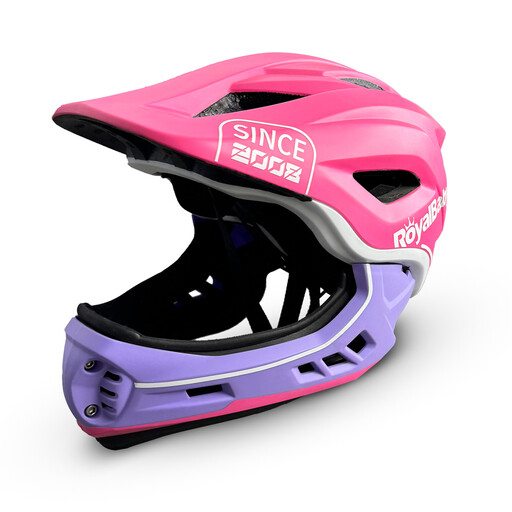
Why this fits the profile: Ideal for families who want one adaptable helmet for gentle scooting and activities like BMX or dirt biking, within the stated intended uses.
The removable chin guard makes the difference between full-face and half helmet clear. The adjustment range and fixed buckle help ensure a checkable fit.
2-in-1 design, multiple ventilation openings, removable and washable lining, and a built-in light on the size adjustment according to the product description.
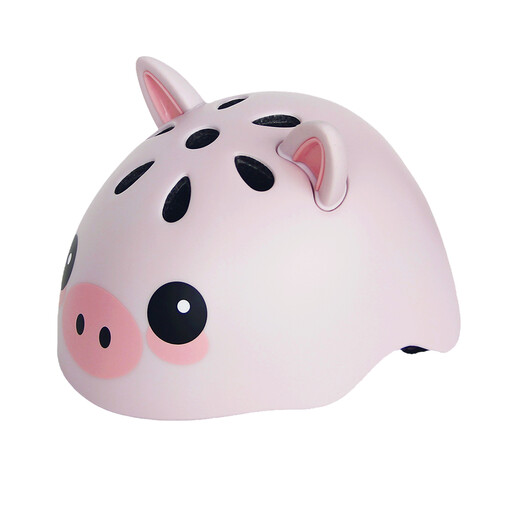
Why this fits the profile: An option for young children who often roller skate, cycle or scoot and value a recognisable design.
Alongside the animal print, the product specification lists PC, EPS, an adjustment mechanism, a quick-release buckle and EN1078 test information. This means the choice isn’t limited to appearance alone.
In-mould construction, seven ventilation openings, quick-release buckle and a pink pig print with soft 3D ears.
Adjust the helmet before you set off. The front should not sit too high above the forehead. Tighten the chin strap so that there is limited space left, without the strap feeling tight. Check again after a few minutes of riding to make sure the helmet hasn’t shifted.
Clean the outside and lining according to the instructions. Do not use harsh cleaning products and do not store the helmet for long periods in direct sunlight or extreme heat. A decorative feature, such as soft ears, must not interfere with the fit or fastening.
We’ve put together a full, up-to-date list of products that fully meet these strict selection criteria and the current European safety regulations.
Measure the head circumference above the eyebrows and compare the result with the range given in the product information. Do not choose based on age alone. Then check that the helmet stays straight and doesn’t move when the child shakes their head.
There is no fixed lifespan that applies to every helmet. Replace the helmet after a significant impact, if there is visible damage, or when the fit can no longer be adjusted properly. Check the helmet regularly for cracks, loose parts and damaged straps.
Yes, when the manufacturer explicitly lists these activities and the helmet meets the relevant specifications. EN1078 covers, among other things, cycling, skateboarding and roller skating. For intensive BMX activities, a model with a chin guard may better suit the intended use, but always check the specific product instructions.
