
Vandaag of morgen in huis

Kwaliteit gegarandeerd

Welkomstaanbiedingen ontgrendelen: GRATIS bezorging | Tot 80% korting | Gratis 30 dagen JoyPlus-proefperiode
Download de app
Buying a children’s helmet seems simple, until you have to choose between a children’s cycle helmet, a children’s skate helmet or a model for several sports. Many parents focus mainly on colour and price, while head circumference, fastening and intended use are what determine whether a helmet is comfortable and fits correctly.
Also pay attention to marketing claims. A helmet with lots of ventilation holes is not automatically suitable for every sport. An LED light can make a child more visible in certain conditions, but it does not replace lights on a bicycle or safe behaviour in traffic. And an adjustable children’s helmet will only fit properly if the size falls within the stated range.
Age is only a guideline. Children of the same age can have very different head circumferences. Measure with a flexible tape around the head, approximately one to two centimetres above the eyebrows and above the ears. Then compare the result with the manufacturer’s size chart.
A helmet that is too large may shift during a fall. A helmet that is too small will be uncomfortable and may be worn less often.
A multi-sport helmet for children can be practical for cycling, scooting, skateboarding, BMX and inline skating. However, the fit and construction vary from model to model. Always check which activities the manufacturer says the helmet is suitable for.
For example, a children’s scooter helmet may be convenient for everyday use, while a child who only skateboards may place greater value on a compact skate helmet. For intensive BMX or skate-park use, it is advisable to read the stated usage limitations. No helmet protects against every possible impact scenario.
A CE marking alone does not always tell you which product type or standard applies. For children’s cycle, skate and scooter helmets, EN 1078 is a relevant European standard for helmets for cyclists, skateboarders and roller skaters. Check that the marking and information are present on the product itself.
The product information for the ACTION PW-903-CB, for example, states that the model is EN1078 tested and CE certified, according to the description. Other models in this selection mention, among other things, a US CPSC standard. This is not the same as confirmation of EN 1078. Therefore, check the current product information, size and intended use before buying.
An adjustable children’s helmet should fit securely without creating pressure points. Look for:
Models with removable liners can be adjusted for a better fit. However, always measure the head first. Extra padding is not a substitute for the correct shell size.
Many children’s helmets use a hard outer shell made from PC or ABS, combined with a shock-absorbing EPS inner layer. The product description may refer to a dual-layer system or in-mould construction. These terms describe the design, but on their own they do not guarantee protection in every situation.
Also check the condition of the shell and liner. Cracks, deep dents, loose components or damaged straps are all reasons to stop using the helmet. Replace a helmet after a significant impact, even if there is little visible damage on the outside.
A children’s helmet with ventilation can feel more comfortable when cycling, scooting or inline skating. However, the number of openings does not tell the whole story: the shape of the channels and the liner also play a role. Removable, washable pads are practical for regular use.
According to the product information, the RoyalBaby Everest weighs approximately 213 grams and has 10 ventilation holes. The RoyalBaby Moon weighs 250 grams and has multiple ventilation holes plus a removable, washable liner. The OutdoorMaster models come with two removable liners.
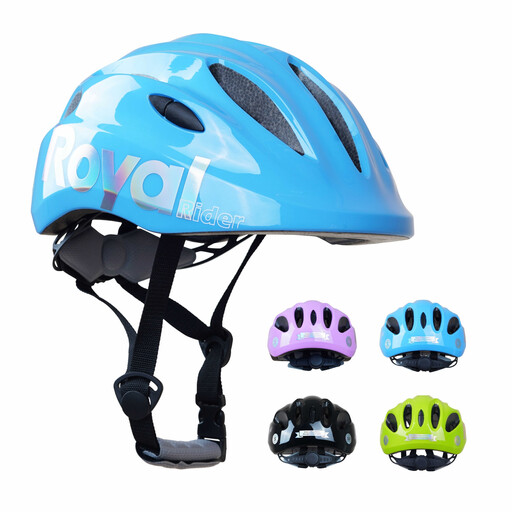
Why it suits this profile: According to the product description, this helmet is intended for children aged 5 to 13 and for cycling, scooting, skateboarding, inline skating and BMX. The adjustable headband covers approximately 52.05 to 55.88 cm.
The size is not linked to age alone: a specific adjustment range is provided. The washable liner is useful for regular use.
PC outer shell, EPS inner layer, approximately 213 grams and 10 ventilation holes.

Why it suits this profile: According to the product description, this children’s skate helmet is suitable for cycling, skateboarding, BMX, MTB, scooting and skating. Size M is specified for 51 to 58 cm.
The model uses two removable liners and a dial adjustment system. This allows you to fine-tune the fit more accurately than with an age indication alone.
ABS shell, EPS core, adjustable chin strap, ventilation and washable liners.
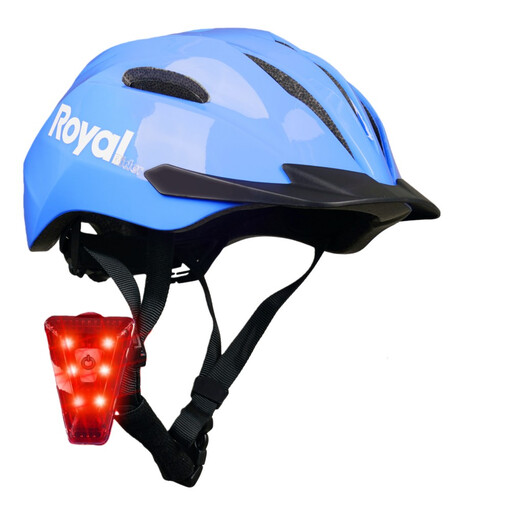
Why it suits this profile: This model is aimed at children who cycle, scoot, skateboard or roller-skate and want extra visibility. The product description mentions six red LED lights with three modes.
The LED function is described as a visibility feature, not as a replacement for bicycle lights. Check the battery before use and combine the helmet with suitable lighting.
PC shell with EPS foam, washable liner, multiple ventilation holes and an integrated visor.
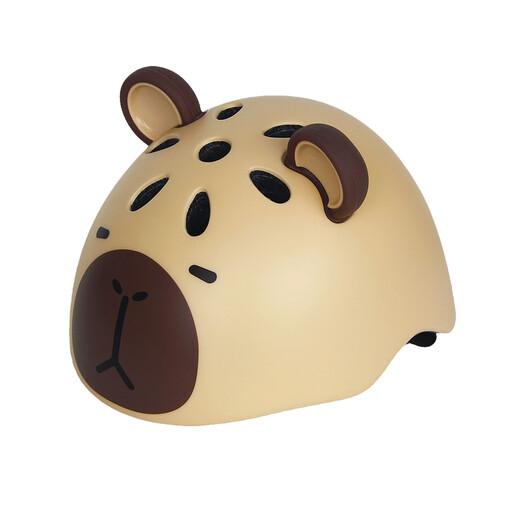
Why it suits this profile: The capybara print and soft 3D ears may make helmets more appealing to children who are reluctant to wear one. The model is intended for cycling, roller skating and scooting.
The product information specifies a concrete adjustment mechanism and states that it is EN1078 tested and CE certified. Nevertheless, check the fit and fastening before every ride.
PC outer shell, EPS liner, 7 ventilation holes, adjuster and quick-release fastening.
We have put together a complete, up-to-date list of products that fully meet these strict selection criteria and the applicable European safety regulations.
Clean the shell with a soft, damp cloth. Wash removable liners according to the instructions and allow them to air-dry completely. Do not use harsh cleaning products and do not modify the helmet.
There is no fixed size based on age. Measure the head circumference and compare it with the stated range. In this selection, for example, the listed ranges run from 46 to 51 cm, 51 to 58 cm and 54 to 60 cm. The right size is the one that actually fits securely.
Replace a helmet after a serious fall or collision, even if there is no visible damage. Also check the shell, EPS layer, liner, straps and fastening regularly. Some product information also recommends replacing the helmet after several years, as materials can deteriorate over time. Follow the manufacturer’s instructions.
No. According to the product description, a children’s helmet with LED lights can help improve visibility, but it is not a replacement for legally required bicycle lights, reflectors and attentive behaviour in traffic. Check that the LED function works before setting off and use additional lighting when necessary.
