
Vandaag of morgen in huis

Kwaliteit gegarandeerd

Welkomstaanbiedingen ontgrendelen: GRATIS bezorging | Tot 80% korting | Gratis 30 dagen JoyPlus-proefperiode
Download de app
A lovely colour or well-known brand does not necessarily mean that children’s clothing is suitable for everyday use. Parents often only notice a scratchy label, an incorrect size or a fabric that is difficult to care for after buying. This can quickly lead to a poor purchase, especially when it comes to baby clothes.
So keep an eye out for these three common pitfalls:
For children’s clothing in sizes 50 to 164, the number generally refers to body length in centimetres. For example, size 056 is intended for approximately 56 cm and size 098 for approximately 98 cm. Age is only an indication.
If you are unsure, measure:
Babies grow quickly, but too much extra room can be awkward when moving or changing. Also check that a set or T-shirt has a comfortable neck opening.
100% cotton is listed in the product information for several Chicco models. This applies, for example, to several short-sleeved T-shirts and a vest top. A Chicco short-sleeved T-shirt in medium blue is available in size 068, with a stated age range of 68 to 09 months. The product description lists 100% cotton and recommends following the care label.
A blend of 95% cotton and 5% elastane can provide more stretch. This is relevant for a baby T-shirt, a short-sleeved children’s T-shirt or a T-shirt and shorts set. The Chicco set in medium light blue lists this composition and is available in various sizes, including 050, 056 and 062.
For organic cotton children’s clothing, also look at the precise wording. According to Tommy Hilfiger’s product information, the Essential hoodies and sweatshirts are made from organic cotton; independent certification is mentioned for some models. This is a product claim made by the brand and is not a general guarantee for every clothing choice. Always check the current specifications on the product page.
In the Netherlands, a garment is often washed several times a week. Therefore, check:
For example, the product information for the Tommy Hilfiger Essential Hoodie in light grey states that it should be washed at 30 °C, not tumble dried and ironed at a low temperature. Other product variants only refer to the label. So do not automatically use the same washing routine for similar styles.
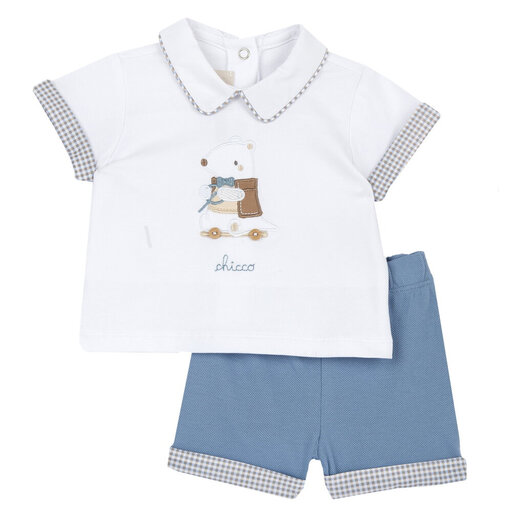
Why it suits this profile: This T-shirt and shorts set combines two garments in one purchase and, according to the product information, is intended for size 050, approximately 50 cm and 01 month.
The size and age indication are listed together. The composition of 95% cotton and 5% elastane also provides more stretch than a model made exclusively from cotton.
T-shirt and shorts set; 95% cotton and 5% elastane; available in several baby sizes.
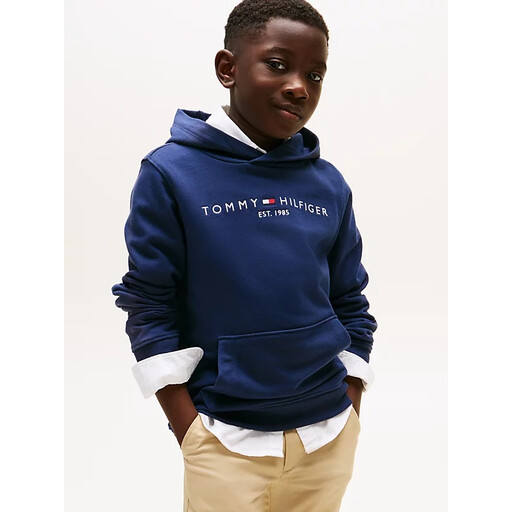
Why it suits this profile: This children’s hoodie is designed for everyday wear at school, on outings and at weekends. According to the product information, the size chart runs from EU size 98 to 152.
The description mentions a hood, kangaroo pocket and ribbed trims. This makes the construction easy to check instead of relying solely on a style claim.
Organic cotton according to the product information; kangaroo pocket; rib-knit cuffs and hem.
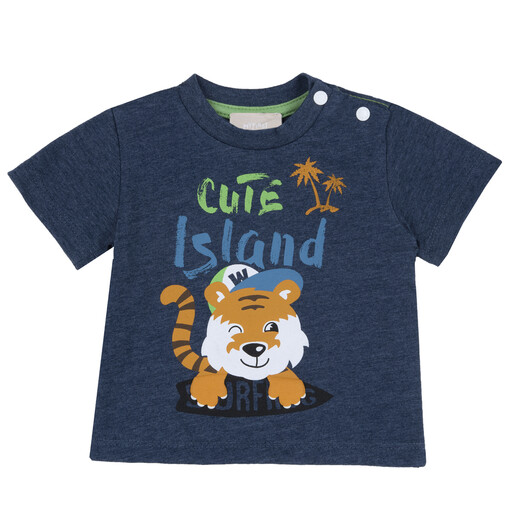
Why it suits this profile: A simple short-sleeved T-shirt is practical for a child who often plays outside or gets their clothes dirty quickly.
The product information lists 100% cotton, size 068 and an age indication of 68 to 09 months. This allows you to check the material and size separately.
100% cotton according to the product details; short sleeves; easy to mix and match, with the care label taking priority.
We have compiled a complete, up-to-date list of products that fully meet these strict selection criteria and the applicable European safety regulations.
Measure your child’s body length and compare it with the brand’s size chart. Size 50 usually corresponds to approximately 50 cm, while size 164 is generally intended for a much taller child. Use age only as an additional indication.
That depends on the style, weave and care label. The products in this selection list either 100% cotton or a cotton blend. Also check whether the neck, seams and fastenings are practical for the child and for caring for them.
A children’s hoodie has a hood and often a kangaroo pocket. A children’s sweatshirt usually has a crew neck. A hoodie is useful as an extra layer outdoors, while a sweatshirt is easier to wear under a coat or gilet.
