
Vandaag of morgen in huis

Kwaliteit gegarandeerd

Welkomstaanbiedingen ontgrendelen: GRATIS bezorging | Tot 80% korting | Gratis 30 dagen JoyPlus-proefperiode
Download de app
Buying children’s clothing online may seem straightforward, but an attractive photo tells you little about the fit, fabric or practicality. A shirt may become less comfortable after a few washes, a hoodie may come up too loose, and a set may not match the size you are used to.
Use these checks to compare children’s clothing online sensibly. That way, you can find clothes for babies, toddlers and older children that suit everyday use, the season and your budget.
Age guidelines are useful, but they are not always enough. A size 110 may fit differently from one brand to another. So first check your child’s height in centimetres, then compare their chest, waist or hip measurement where available.
The difference between a close and a roomy fit is particularly noticeable with children’s clothing sizes 80 to 164. For baby clothes, body length may also be more important than the age shown on the label.
Words such as “soft”, “breathable” or “sustainable” are not always a complete material specification. Check the exact fibre percentages. A product made from 100% organic cotton is different from a fabric containing only a small proportion of cotton.
According to the product descriptions, the Tommy Hilfiger products in this selection are listed as containing organic cotton. The Chicco tank tops and sets are listed as being made from 95% cotton and 5% elastane. This gives you more useful information than a general comfort claim. Do not automatically regard a brand’s claim about production or environmental impact as proven performance or results.
Children often wear clothes intensively: at school, while playing and during outdoor activities. So always check the care label. The recommended washing temperature, drying method and ironing instructions may vary from one product to another, even when two items appear similar.
Ideally, measure your child while they are wearing thin clothing. Note down:
A long-sleeved children’s shirt should provide enough room around the shoulders and arms. A children’s sweatshirt or children’s hoodie can have a slightly roomier fit, leaving space for a shirt underneath if needed. However, too much extra room can be awkward when playing or cycling.
Also pay attention to size notation. Chicco uses sizes ranging from 44 to 140 for babies and children in its product information. Tommy Hilfiger lists sizes such as 80, 92, 98, 104, 116, 128, 140, 152 and 164 for certain models. So compare the size chart for the specific product rather than ordering based on age alone.
The fabric affects how a garment feels, stretches and needs to be cared for.
“Organic cotton” describes the stated fibre and certification of the product. It does not automatically mean that the garment will offer the same fit or lifespan for every child. So also check the seams, cuffs, fastenings and care instructions.
First decide what the garment is needed for. Girls’ clothing and boys’ clothing are not the only categories: gender-neutral styles may suit several children and be easy to combine with other items.
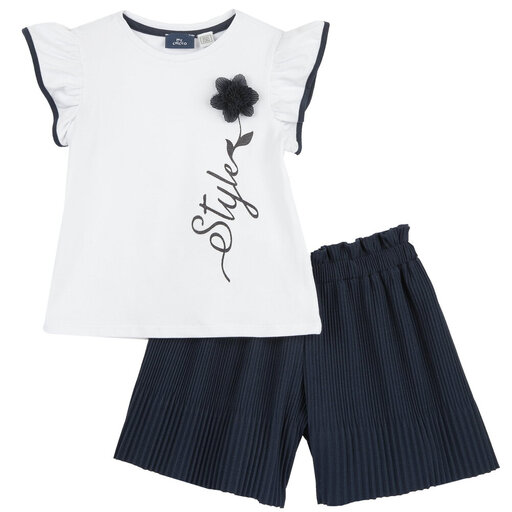
Why it suits this profile: A set makes it easy to coordinate outfits and includes two garments for a complete everyday look.
The product information specifies the size, colour, set contents and a material composition of 95% cotton and 5% elastane.
Two-piece set, dark blue colour, size 122 and a cotton-elastane blend according to the product details.
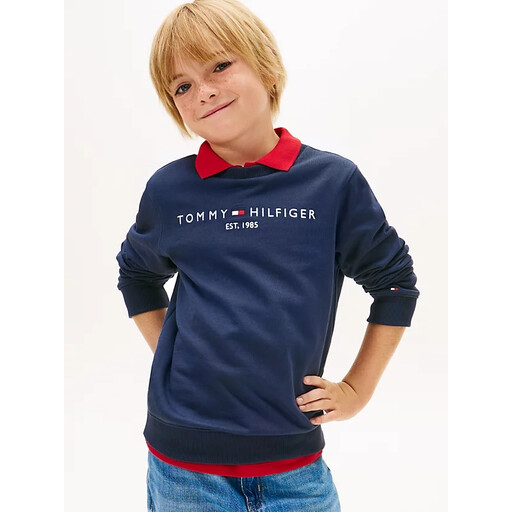
Why it suits this profile: This style has a gender-neutral cut and is suitable for school, weekends and everyday wear.
The product description mentions ribbed trims at the collar, cuffs and hem. These are specific, verifiable details alongside the style description.
Crew neck, organic cotton according to the product information, ribbed trims and sizes from 98 to 140 in this size range.
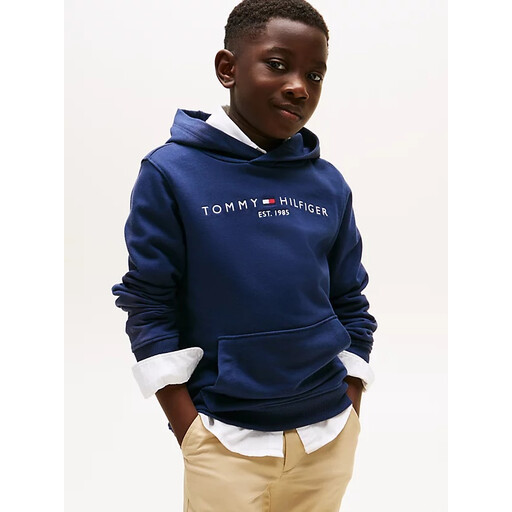
Why it suits this profile: A hoodie is ideal for children who need an extra layer on the way out, at school or during relaxed outdoor activities.
The features are described specifically: a kangaroo pocket, hood, ribbed cuffs and hem, plus a stated size range.
Kangaroo pocket, hood, gender-neutral design and organic cotton according to the product description.
We have put together a complete, up-to-date list of products that fully meet these strict selection criteria and the applicable European safety regulations.
Measure your child’s height and compare it with the size chart for the specific brand. For shirts and sweatshirts, also check the chest measurement. Do not automatically choose a larger size: extra room can be useful, but a garment that is too large may restrict freedom of movement.
This depends on the fabric, construction, intensity of use, how quickly your child grows and how the garment is cared for. Check the seams and trims before buying and follow the care label. A garment may still be in good condition technically, while your child has already grown out of it.
Not necessarily. Organic cotton may be preferable if the fibre and certification are important to you, but fit, thickness, care requirements and price also remain relevant. So compare the full product specification rather than focusing only on the material description.
Using this approach, you can compare girls’ clothing, boys’ clothing, baby clothes, children’s shirts, children’s underwear and gender-neutral styles based on specific criteria. Then check the product details and size chart before placing your order.
