
Vandaag of morgen in huis

Kwaliteit gegarandeerd

Welkomstaanbiedingen ontgrendelen: GRATIS bezorging | Tot 80% korting | Gratis 30 dagen JoyPlus-proefperiode
Download de app
Children’s clothing has to withstand a lot: playing at school, cycling in the rain, washing after an accident and growing at a rapid pace. Yet an item of clothing can sometimes look more appealing online than it proves to be in daily use. A low price or a well-known brand doesn’t automatically mean the fit and fabric composition will suit your child.
So pay particular attention to three common pitfalls:
For baby clothes and toddler clothes, the size often refers to the child’s height. Size 92, for example, typically corresponds to a child of around 92 centimetres. For older children, the fit can vary between brands.
If in doubt, measure:
Tommy Hilfiger uses sizes including 98, 104, 110, 116, 128, 140 and 152 in the size charts provided. The product page may show additional body measurements. Always check that information against the size your child normally wears.
Organic cotton children’s clothing can be of interest when you’re looking for a cotton garment. The Tommy Hilfiger models in this selection list organic cotton as the main material. According to the product description, the hoodies and sweaters are 100% organic cotton. That tells you something about the fibre, but not automatically about the fit, durability or how the fabric feels after washing.
Chicco uses a mix of 95% cotton and 5% elastane for several items. That composition is listed, among others, for the T-shirts, pyjamas, sets and bodysuits. Elastane can provide extra freedom of movement, which is practical when dressing, playing and crawling. A Chicco skirt model lists 80% cotton, 16% polyester and 4% elastane.
A children’s sweatshirt or children’s hoodie is useful when the details match how it will be used:
Also pay attention to care. The Tommy Hilfiger Essential Hoodie model in light grey lists washing at 30 °C, no tumble drying and ironing on a low temperature. For other items, the product information refers to the label. That label remains the definitive guide.
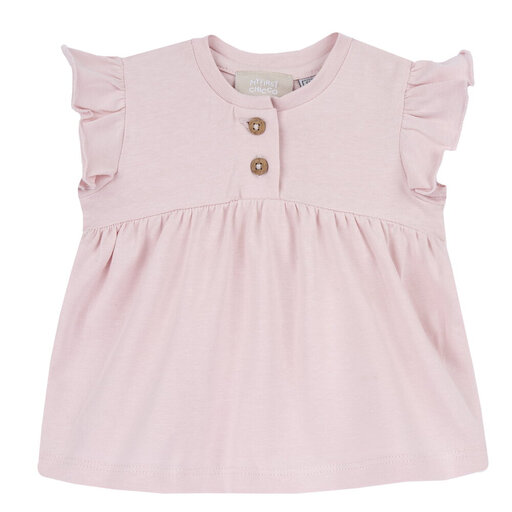
Why this fits the profile: This short-sleeved T-shirt is designed for girls around 18 months old and comes in size 86. The cotton-elastane mix makes it suitable as a daily basic piece.
The composition is clearly stated: 95% cotton and 5% elastane. The size and age are listed separately, so you don’t have to choose based on age alone.
Short sleeves, 95% cotton, 5% elastane and a size option for young children.
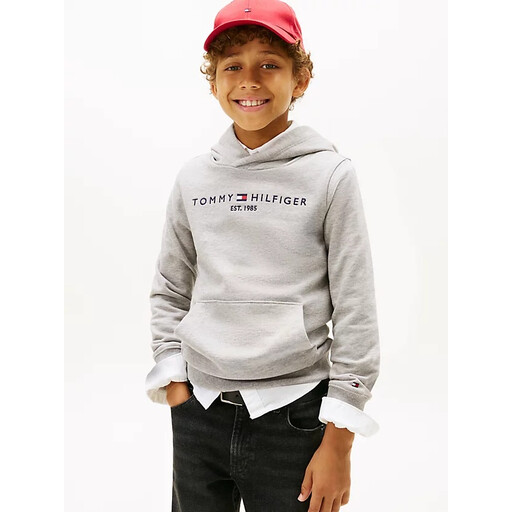
Why this fits the profile: The light grey children’s hoodie has a gender-neutral fit, a hood and a kangaroo pocket. According to the product description, the main material is 100% certified organic cotton.
The product specification mentions the material, the pocket, the cuffs and the care instructions. That means you don’t have to rely on general words like “warm” or “comfortable”.
100% organic cotton according to the product information, kangaroo pocket, hood and ribbed cuffs.
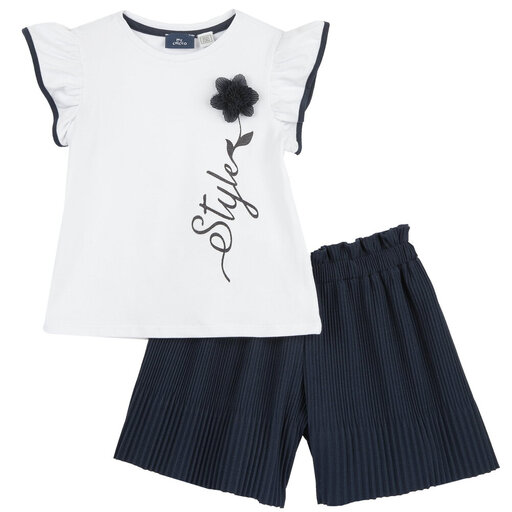
Why this fits the profile: This two-piece set consists of a T-shirt and shorts. Size 122 is linked to around 7 years in the product information, making it a practical choice for school, holidays or playing outside.
You buy two matching garments in one product. The composition of 95% cotton and 5% elastane is clearly stated.
Two-piece set, dark blue colour, 95% cotton and 5% elastane.
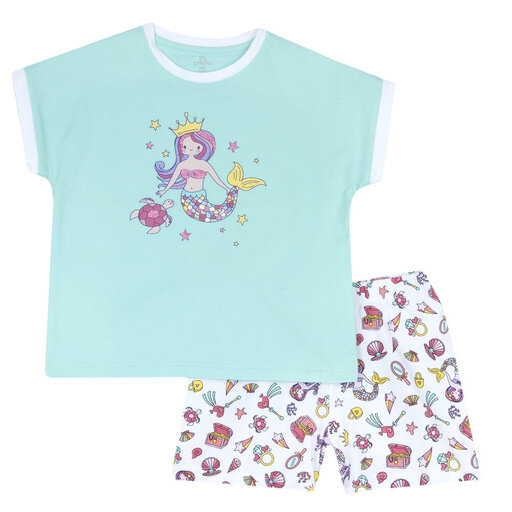
Why this fits the profile: This Chicco children’s pyjama with short sleeves is designed for size 74, linked to around 12 months. According to the product information, the fabric consists of 95% cotton and 5% elastane.
The size, age range and fabric composition are listed separately. This allows you to compare the choice with other baby clothes without looking only at the colour.
Short sleeves, light blue colour, 95% cotton and 5% elastane.
The labels girls’ clothing and boys’ clothing can help with filtering, but focus mainly on the actual fit and design. Gender-neutral children’s clothing, such as certain Tommy Hilfiger hoodies and sweaters, can be worn by multiple children. That’s practical when clothes are handed down within the family.
For babies, openings, poppers and a wide neck are often more important than brand or colour. For school-age children, freedom of movement, sturdy cuffs and easy washing matter more. Teenagers usually pay more attention to colour, logo and style. So tailor your choice to the situation in which the garment will be worn.
We’ve put together a full, up-to-date list of products that fully meet these strict selection criteria and current European safety regulations.
First measure the child’s height and compare it with the brand’s size chart. Use age only as an additional guide. If you’re unsure between two sizes, check the chest, waist and hip measurements. Take the style into account: a hoodie can be looser than a T-shirt.
That depends on growth, how often it’s worn, washing and the type of garment. Babies often grow out of a size quickly, whereas a children’s sweater can last longer if there’s enough room in the sleeves and body. Check regularly whether the seams are pulling, the cuffs are tight or the length is no longer suitable.
Not necessarily. Organic cotton can be a preference when you’re specifically looking for this material, but also consider fit, care and when it will be worn. For a stretchy T-shirt, a cotton-elastane mix can be more practical; for a children’s sweater, 100% organic cotton might match your material preference. Always compare the specific product specifications.
