
Vandaag of morgen in huis

Kwaliteit gegarandeerd

Welkomstaanbiedingen ontgrendelen: GRATIS bezorging | Tot 80% korting | Gratis 30 dagen JoyPlus-proefperiode
Download de app
Buying children's clothing seems simple until a jumper loses its shape after a few washes or a baby bodysuit does not fit properly. Marketing terms such as “sustainable”, “extra soft” and “premium” do not say much on their own. The product details provide more useful guidance.
In this guide, you will learn what to look for when choosing clothing for babies, toddlers and children up to around 16 years old. From baby bodysuits and long-sleeve T-shirts to children's jumpers, children's hoodies and boys' underwear, the right size, fabric and fit determine whether a garment remains practical for everyday use.
An age indication is a guideline, not a guarantee of the right fit. Two children of the same age can have different body proportions. Therefore, always check the size in centimetres and compare it with your child's measurements.
For some Tommy Hilfiger models, for example, the size range runs from EU 98 to 152, with age categories from 3–4 to 15–16 years. Chicco also uses baby and children's sizes such as 62, 74, 92 and 116. These systems cannot be compared directly without checking the details.
Organic cotton children's clothing can feel comfortable, but organic cotton does not mean that every garment can be washed or dried in the same way. According to the product information for various Tommy Hilfiger models, the fabric consists of 100% organic cotton. This tells you something about the fibre composition, but not automatically about the garment's lifespan, colourfastness or fit.
Therefore, check the care label. For example, the light grey Tommy Hilfiger Essential Hoodie states that it should be washed at 30 °C, not tumble-dried and ironed at a low temperature. Another product may have different instructions.
A prominent logo or trendy colour is not always practical for school, outdoor play or changing. When choosing a children's hoodie, pay attention to the hood, cuffs and pocket. For baby bodysuits, the fastenings and stretch are more important than decorative details. For boys' underwear, an elasticated waistband that does not feel restrictive is particularly important.
Ideally, measure the chest, waist and hips and compare them with the table on the product page. Do not automatically buy a larger size “to grow into”. Too much extra fabric can make moving, playing and getting dressed independently more difficult.
Intermediate sizes are important for babies. For example, a Chicco long-sleeve top is available in size 62, while other models go up to 116 or 152. Also check whether the product size refers to body height in centimetres or an age label.
The composition should be clearly stated on the product page or label. Examples from the range include:
According to information provided by the brands, certain materials can support comfort, softness or flexibility. Treat such claims as product information rather than a guaranteed result for every child.
For textiles in the European Union, the fibre composition should be clearly stated in accordance with the applicable labelling rules. If in doubt, also check the physical label when the item arrives.
Ribbed trims at the neck, cuffs and hem can help keep a sweatshirt or children's jumper in place. A kangaroo pocket is practical on a hoodie, but can add extra volume at the front for young children. With a long-sleeve T-shirt, a simple fit is often useful for layering under a cardigan or jacket.
Also pay attention to the washing instructions. A garment that cannot be tumble-dried requires more planning in a busy household. Wash new children's clothing according to the label before first use, and check seams, fastenings and elastics regularly.
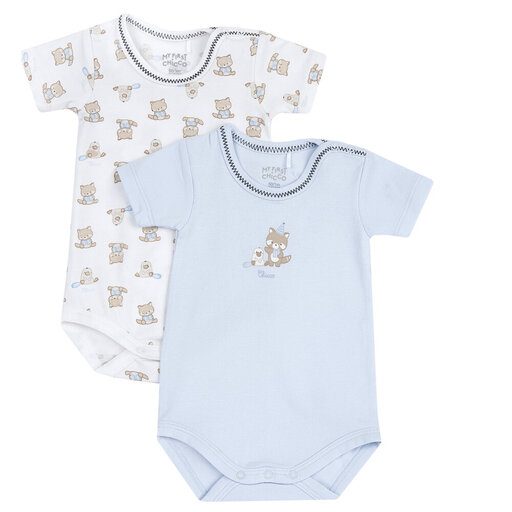
Why it suits this profile: This set contains two short-sleeve baby bodysuits in light blue. That is practical when you need several changes throughout the day. Size 092 is intended for an age range described in the product information as 92 - 24M.
The pack contains two bodysuits, so you do not need to reach for a new single one for every daily change. Do check the size chart before ordering.
2-pack; 95% cotton and 5% elastane; short sleeves for everyday wear.
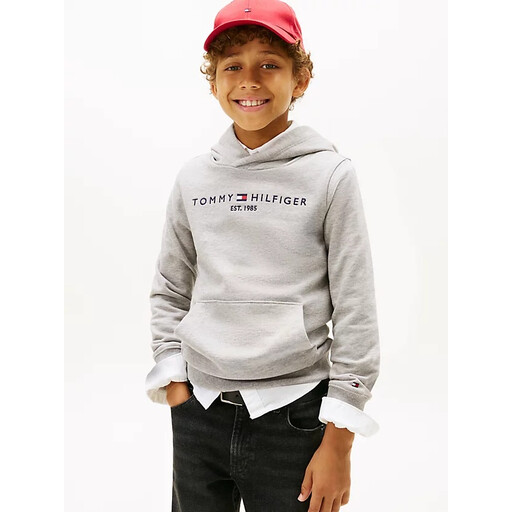
Why it suits this profile: The gender-neutral light grey colour works well with a range of outfits. According to the product information, the hoodie is made from 100% certified organic cotton and features a kangaroo pocket and ribbed trims.
The stated fibre composition is more specific than a general claim about softness. The label says to wash at 30 °C and not to tumble-dry.
100% organic cotton according to the product information; kangaroo pocket; hood; gender-neutral design.
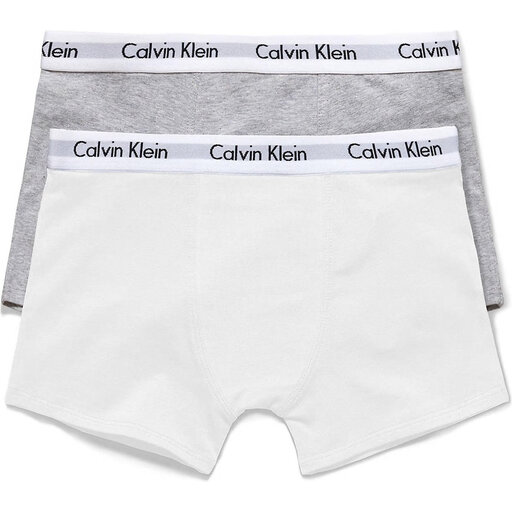
Why it suits this profile: For children who are active every day, briefs made from stretchy fabric with a medium-rise waistband are practical. This Calvin Klein set is designed for boys and comes as a 2-pack.
The fit is not indicated by age alone: the product information specifies a medium-rise waistband and a cotton–elastane blend. Check the stated size 128/134 before buying.
2-pack; 95% cotton and 5% elastane according to the product information; machine-washable at 30 °C; low tumble-dry setting permitted.
We have put together a complete, up-to-date list of products that fully meet these strict selection criteria and the applicable European safety regulations.
Start with the activity you need the clothing for:
Measure the chest, waist and hips and compare these measurements with the size chart for the specific product. Use age only as an additional indication. For babies, a difference of just a few centimetres can already affect the fit.
That depends on the material, use, washing frequency and how quickly a child grows. A garment may still be in good condition but become too small before it shows signs of wear. Follow the care label, avoid unnecessarily hot washes and check seams and elastics.
Not necessarily. According to information provided by brands, organic cotton can be part of their sustainability approach, but the overall lifespan also depends on construction, care and how often the garment is worn. Therefore, compare the fibre composition, washing instructions and fit before ordering.
