
Vandaag of morgen in huis

Kwaliteit gegarandeerd

Welkomstaanbiedingen ontgrendelen: GRATIS bezorging | Tot 80% korting | Gratis 30 dagen JoyPlus-proefperiode
Download de app
Putting together a new wardrobe sounds simple, until a T-shirt loses its shape after a few washes, a hoodie is too tight to pull over your child’s head or the size does not match your child’s age. When it comes to children’s clothing, making the right choice is about more than colour or brand. The fabric, sizing, fit and care instructions determine how practical a garment will be in everyday life.
Age indications are useful as a starting point, but children do not all grow at the same rate. A shirt for a 3-year-old may be loose on one child but tight on another. That is why you should pay particular attention to the EU size in centimetres, chest measurement and your child’s height.
This is especially important with baby clothes. Size 50 is intended for a smaller newborn, while size 56 is often used during the first few months. The product information may also include an age indication, but this should only be treated as a guide.
The term cotton does not automatically tell you anything about thickness, softness or durability. Check that the composition is clearly stated. For example, several Chicco T-shirts in the range list 100% cotton as the material. A Chicco T-shirt and shorts set is made from 95% cotton and 5% elastane. This difference may matter if you are looking for a set with a little extra stretch.
When buying children’s clothing made from organic cotton, you should also check exactly what is stated. Tommy Hilfiger sweatshirts and hoodies list organic cotton as the main material. This kind of product specification is more concrete than a general claim about sustainability.
Prints, logos and on-trend colours are appealing, but practical details often make the biggest difference. Look out for:
A hooded sweatshirt with a kangaroo pocket can be useful for older children, while a long-sleeve T-shirt is often easier to wear under a coat or cardigan for babies and toddlers.
Many parents choose cotton children’s clothing for everyday wear because of its familiar material properties and comfort. However, look beyond the word “cotton”. Check the percentage, whether elastane is included and whether the cotton is organic or conventional.
Examples from the range:
This information is based on the relevant product descriptions. It does not automatically indicate how a garment will feel after repeated washing. Always follow the care label and check the specific product page.
For children’s clothing in sizes 50 to 152, always check the size chart for the specific model. Size increments are not the same for every brand. For example, the Chicco size charts provided include sizes from 44 to 152 cm. Tommy Hilfiger lists sizes such as 98, 104, 110, 116, 128, 140 and 152 for various children’s hoodies and sweatshirts.
When comparing sizes, pay attention to:
Buying a size larger may seem appealing to allow for growth, but sleeves and shoulders that are too loose can actually be inconvenient. It is better to choose based on your child’s current measurements and the style you want.
Children’s T-shirts are suitable as a single layer in warmer weather or underneath a cardigan. Long-sleeve T-shirts for children provide more coverage on cooler days and can be worn under a coat. A sweatshirt generally has a thicker construction than a T-shirt. A hoodie adds a hood and often a kangaroo pocket.
For babies, simple designs and sets can save time. For school-age children, the key considerations are whether the garment coordinates well with other clothing and allows plenty of freedom of movement.
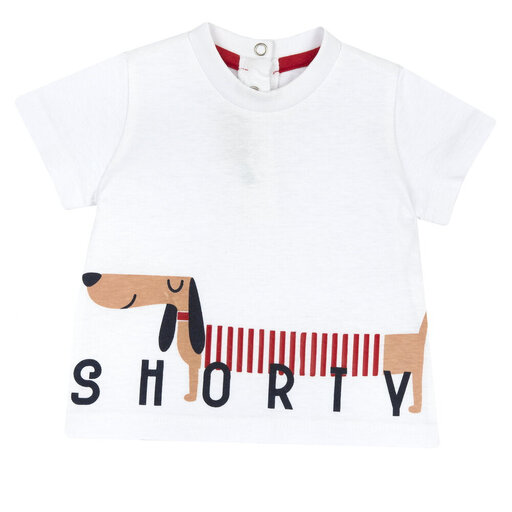
Why it suits this profile: A white short-sleeve T-shirt is easy to combine with other items and works well as a base layer for a baby in size 56.
The product information states size 056, an age indication of 0 to 3 months and 100% cotton. This allows you to compare more accurately than by age alone.
Short sleeves, white colour and a stated composition of 100% cotton.
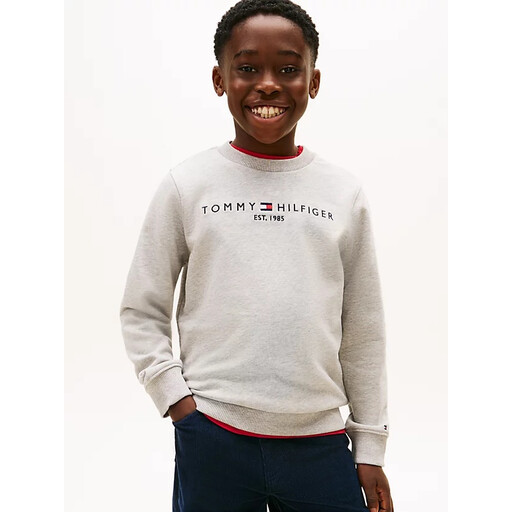
Why it suits this profile: This gender-neutral sweatshirt is designed for children aged 3 to 16 and is suitable for school, leisure time and layering.
The product description states organic cotton, a crew neck and ribbed trims. Check the size against the stated EU sizes 98 to 152.
Organic cotton as the main material, a crew neck and ribbed trims at the neck, cuffs and hem.
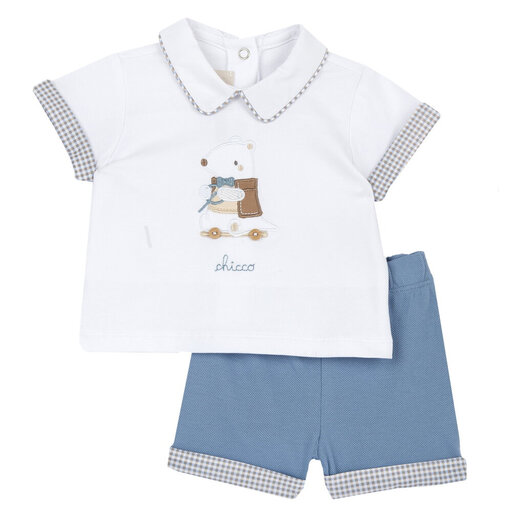
Why it suits this profile: A T-shirt and shorts set is practical for warm days, holidays and occasions when you want a complete outfit.
The set states the size 062 and composition of 95% cotton and 5% elastane separately. This makes the choice easy to verify.
Two-piece outfit, light blue colour and elastane in the composition.
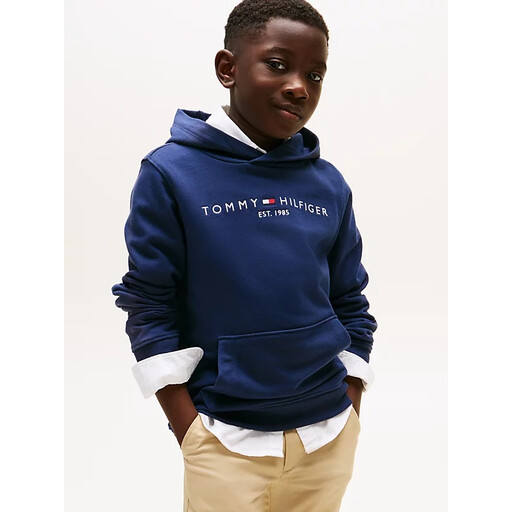
Why it suits this profile: The dark blue hoodie is suitable as an extra layer for school, playing outdoors and relaxed days.
The description mentions ribbed cuffs and hem, a hood and a kangaroo pocket. Check the available size before ordering.
Organic cotton as the main material, a hood and a kangaroo pocket.
We have put together a complete, up-to-date list of products that fully meet these strict selection criteria and the applicable European safety regulations.
A garment’s lifespan depends on its material, construction, use and care. Wash clothing according to the label and follow the recommended temperature, drying method and ironing instructions. Avoid using a tumble dryer when the label advises against it. Printed T-shirts are best washed inside out to reduce friction.
After washing, check the seams, neckband and cuffs. A garment that still fits well but shows minor signs of wear can often continue to be used as playwear or a spare outfit. With babies, it is sensible not to buy too many items in the same size, as the growth stage may be brief.
Measure your child’s height and chest circumference, then compare them with the brand’s size chart. Use age only as an additional indication. For baby clothes, sizes 50, 56, 62 and 68 may be needed in quick succession.
That depends on the specific composition and how the garment is cared for. The range includes 100% cotton models as well as sets made from 95% cotton and 5% elastane. Always check the product label and care instructions.
Choose a T-shirt as a base layer or for warmer days, a long-sleeve top for cooler conditions and a sweatshirt or hoodie as an extra layer. With hoodies, pay attention to the hood, cuffs and the amount of room around the neck.
