
Vandaag of morgen in huis

Kwaliteit gegarandeerd

Welkomstaanbiedingen ontgrendelen: GRATIS bezorging | Tot 80% korting | Gratis 30 dagen JoyPlus-proefperiode
Download de app
Children's clothing needs to withstand daily play, washing and growing. Yet when buying children's clothing, you often only find out at home whether the size is right, the fabric feels comfortable and the outfit is practical enough. A good-looking photo or familiar brand name does not tell you everything.
When choosing baby clothes and children's clothing, pay particular attention to three common pitfalls:
Children's clothing from size 50 to 152 covers a broad age range, from newborn babies to teenagers. Start by checking the child's height, then compare their chest, waist and hip measurements with the brand's size chart.
For babies, sizes 50, 56, 62, 68 and 74 are commonly used. Product information for various Chicco models links these sizes to approximate ages, such as size 56 for around 3 months or size 62 for around 6 months. These indications can vary from one child and model to another.
For older children, Tommy Hilfiger lists sizes such as 98, 104, 110, 116, 128, 140 and 152. If you are unsure, measure a well-fitting garment. Do not automatically buy a much larger size: sleeves that are too long or a loose neckline can make everyday wear less practical.
A cotton T-shirt for children is a sensible choice for everyday wear, but cotton can be used in different compositions:
A material name does not automatically tell you how thick, soft or hard-wearing a garment is. Also pay attention to the construction, seams, cuffs and care instructions. Always follow the sewn-in label when washing, drying and ironing.
A long-sleeved T-shirt for children works well as a layer under a cardigan or coat and is suitable for changeable temperatures. A short-sleeved T-shirt is ideal for warmer days or as a base layer. A children's sweatshirt without a hood is practical for school and indoors, while a children's hoodie provides extra coverage around the neck and head.
For babies, a children's T-shirt and shorts set can be useful because the top and bottom already coordinate. However, check that the waistband is soft and flexible enough, and that the set is suitable for the season.
The suggestions below are based on verifiable information from the product descriptions, including size, colour, material and garment type. Brand claims about comfort or durability are not presented as independently proven performance.
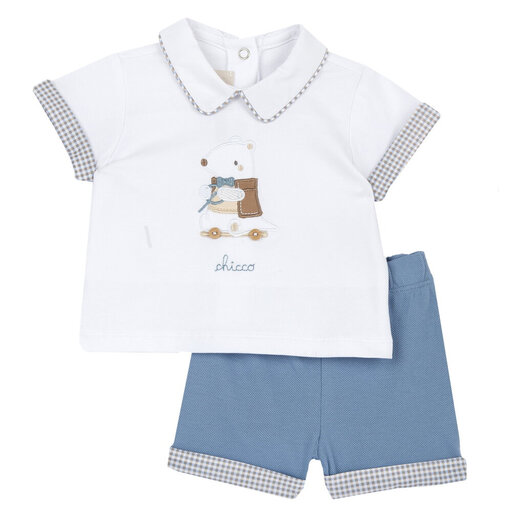
Why it suits this profile: A complete outfit makes mixing and matching easy. This version is size 62, intended for around 6 months according to the product information, and comes in light blue.
The size, colour and composition are clearly stated: 95% cotton and 5% elastane. This means you do not have to rely solely on a general age claim.
2-piece set, cotton blend with elastane and easy to mix and match for everyday wear.
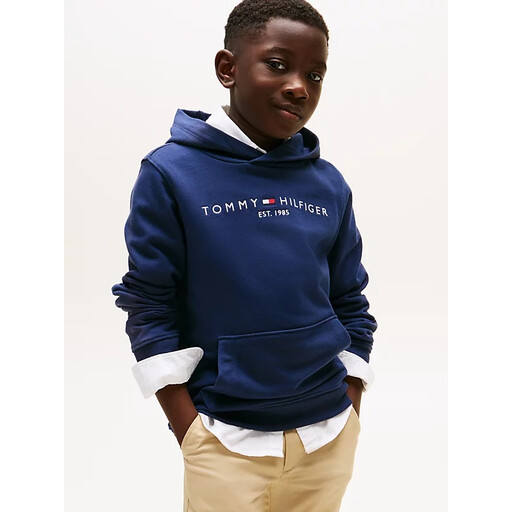
Why it suits this profile: This gender-neutral children's garment is intended for children aged approximately 3 to 16, with sizes from 98 to 152 and a dark blue colour.
The product information lists organic cotton, a hood, kangaroo pocket and ribbed cuffs. Check the latest size chart and label before buying.
Organic cotton according to the product information, a roomy kangaroo pocket and sizes up to 152.
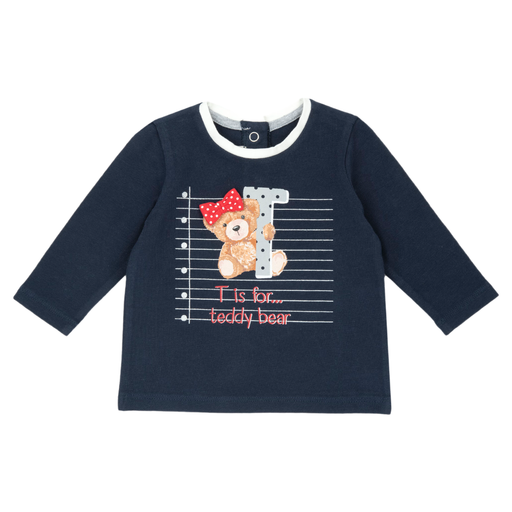
Why it suits this profile: A dark blue long-sleeved T-shirt is easy to wear over or under other clothing. The size chart runs from baby size 44 to children's sizes.
The size chart includes height and body measurements. This makes it easier to compare sizes than relying on an age indication alone.
Long sleeves, a wide range of sizes and suitability as an everyday base layer.
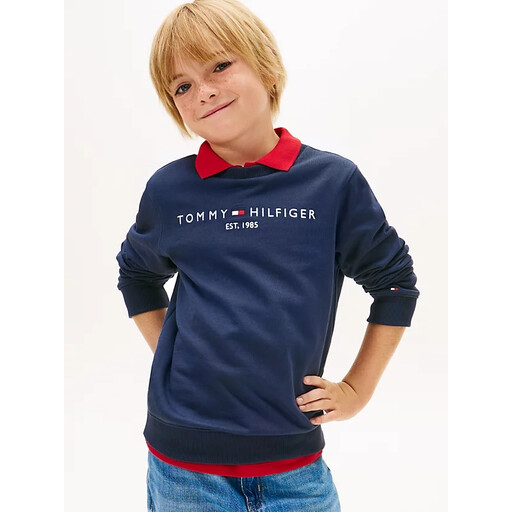
Why it suits this profile: The round neck and dark blue colour work well for school, leisure time and layering. According to the product information, the design is gender-inclusive.
The product information describes the fabric as organic cotton, and the sizes are listed by body height. The care instructions should always take priority.
Organic cotton according to the product information, a round neck and ribbed cuffs.
We have put together a complete, up-to-date list of products that fully meet these strict selection criteria and the applicable European safety regulations.
Measure the child's height and compare it with the size chart for the specific brand. Use age only as an additional indication. Children of the same age may need different sizes.
Cotton is often used for T-shirts, sets and other everyday clothing. Always check the exact composition, finish and care label. In a cotton blend, elastane can provide extra stretch, for example.
How long it lasts depends on the fit, rate of growth, frequency of wear and care. Wash according to the label, avoid unnecessarily high temperatures and check the seams and cuffs regularly. A neutral colour and a style that works well for layering can make your child's wardrobe more practical.
