
Vandaag of morgen in huis

Kwaliteit gegarandeerd

Welkomstaanbiedingen ontgrendelen: GRATIS bezorging | Tot 80% korting | Gratis 30 dagen JoyPlus-proefperiode
Download de app
Buying children’s clothing seems easy until a bodysuit is too tight, a jumper loses its shape after a few washes or a pair of trousers only looks good in the product photo. That is why parents and carers look not only at colour and brand, but also at size, material, fastenings and intended use.
As a Joybuy Product Recommendation Officer, I filter product information for practical details. This makes it easier to see which features are genuinely relevant and which marketing terms say little about everyday use.
Age ranges vary between brands and models. A size for 3–4 years may correspond to 98 cm from one brand but fit differently from another. So always check body height in centimetres, chest, waist and inside-leg measurements.
This is particularly important for baby clothing. Babies grow quickly, but a baby bodysuit that is too loose can be impractical, while a size that is too small restricts movement.
Cotton can feel comfortable, but the composition varies from product to product. For example, a blend of 95% cotton and 5% elastane offers more stretch than 100% cotton. This can be useful for a baby bodysuit, T-shirt or close-fitting leggings.
Also look out for terms such as organic cotton children’s clothing. According to Tommy Hilfiger’s product information, various sweatshirts and hoodies are made from organic cotton. Check the specific item to see which certification and material composition are actually listed. A brand’s sustainability claim is not a substitute for the product specifications.
A children’s hoodie is suitable for layering and outdoor play, but it is not always practical underneath a coat with narrow sleeves. A children’s sweatshirt without a hood may be more convenient for school. Ordinary children’s clothing is vulnerable to paint and glue during arts and crafts, so an art smock is a purpose-designed addition.
Ask yourself: will the garment mainly be used for sleeping, school, playing, sport or a special occasion? This will determine which fit, fastening and fabric make sense.
Measure your child while they are wearing a thin layer of clothing. Compare the measurements with the product’s size chart, rather than relying only on age. For example, some Tommy Hilfiger children’s size labels range from 98 to 152 cm. The stated body measurements may vary between models.
For babies, look for:
The same principle applies to girls’ clothing and boys’ clothing: fit and finishing matter more than how items are categorised in the webshop. Unisex children’s clothing can be a practical choice if you are looking for neutral colours and easy-to-match pieces.
Check the percentage of cotton, elastane, polyester and other fibres. Cotton children’s clothing is widely available, but the fabric may be lightweight, sturdy, stretchy or brushed. The product page should clearly state the composition.
For everyday use, sets and T-shirts are convenient when they are easy to mix and match. An organic cotton children’s sweatshirt may suit parents specifically looking for this material. According to Tommy Hilfiger’s product information, the sweatshirts and hoodies mentioned are made from organic cotton; check the exact sizing information and care label for each variant.
Check the label and care information before buying. Differences in washing temperature, drying and ironing affect how much work a garment requires. Baby clothing and children’s clothing for everyday use are washed particularly often.
A practical garment is not automatically suitable for tumble drying. Always follow the washing and care label. Also check whether prints, embroidery, ribbed trims and elasticated sections need extra care.
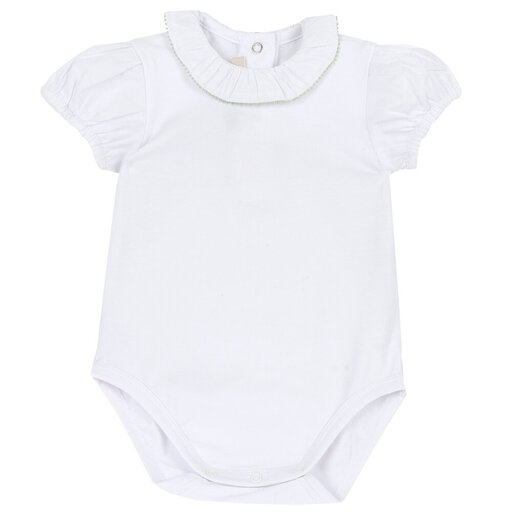
Why it suits this profile: This white Chicco baby bodysuit is a simple everyday essential for a baby measuring around 68 cm.
The size, age range and material composition are clearly stated, so you do not have to rely solely on the photo or colour.
95% cotton and 5% elastane; short sleeves; size 068 for 68–09M according to the product information.
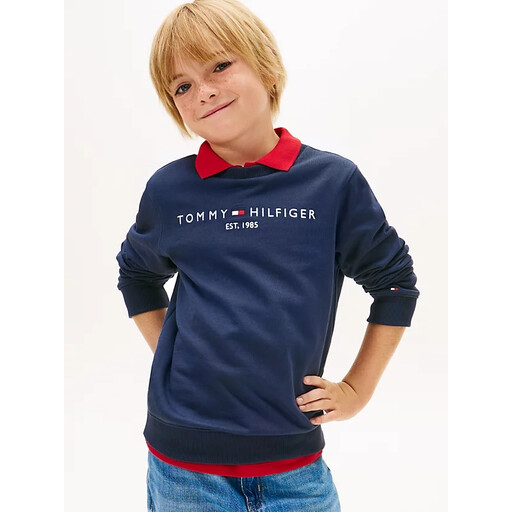
Why it suits this profile: The gender-neutral style is suitable for school, weekends and layering in a Dutch wardrobe.
The size chart lists EU sizes and body measurements, so your choice does not have to be based on the brand name alone.
According to the product information: organic cotton, crew neck and ribbed trims at the neck, cuffs and hem.
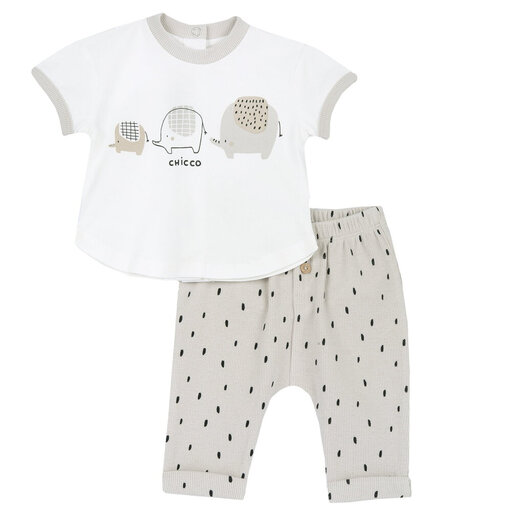
Why it suits this profile: This two-piece T-shirt and trousers set is a simple essential for children who need easy-to-coordinate clothing.
The product page states that this is a set and includes size 080 and an age range. This makes it clear what your purchase contains.
Unisex design; two-piece set; 95% cotton and 5% elastane according to the product specifications.
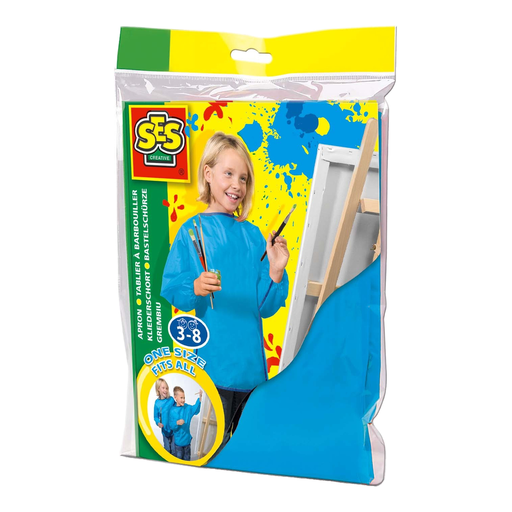
Why it suits this profile: This children’s art smock is designed for painting, colouring and gluing for children aged 3 to 8.
Instead of using ordinary clothing for creative activities, choose an accessory that is described as water-repellent and easy to clean.
One size for ages 3–8; elasticated cuffs; weight of 80 grams according to the product information.
We have put together a complete, up-to-date list of products that fully meet these strict selection criteria and the applicable European safety regulations.
For babies, bodysuits, soft T-shirts and practical sets are often the first essentials. Pay attention to the fastening and the size in centimetres. For toddlers, stretchy children’s trousers, leggings and children’s sets are useful for everyday play. From primary school age onwards, freedom of movement, layers and easy care become more important.
For older children up to 16 years, look for neutral sweatshirts, hoodies, T-shirts and trousers that work well together. Shoppers looking for specific brands will find Chicco children’s clothing and Tommy Hilfiger children’s clothing, among others. Even then, compare the composition, size and care instructions for each item.
Measure your child’s height and compare it with the size chart for the specific product. Use age only as a guide. For babies, also check chest, waist and the amount of room around the nappy.
Cotton is widely used in baby clothing, T-shirts, bodysuits and sets. Its suitability depends on the complete composition, the thickness of the fabric and the washing instructions. A percentage of elastane can provide extra stretch. Always check the product specifications and label.
Choose the right size, avoid washing at unnecessarily high temperatures and follow the care label. Wash clothing with delicate prints or embroidery according to the stated instructions. For arts and crafts and outdoor activities, a separate children’s art smock can help reduce wear on everyday clothing.
