
Vandaag of morgen in huis

Kwaliteit gegarandeerd

Welkomstaanbiedingen ontgrendelen: GRATIS bezorging | Tot 80% korting | Gratis 30 dagen JoyPlus-proefperiode
Download de app
Buying a children's bike seems straightforward, until you have to choose between a 12-inch, 14-inch, 16-inch, 18-inch, 20-inch or 24-inch children's bike. Terms such as “lightweight”, “grows with your child” and “safe design” do not always tell the full story either. The right choice mainly depends on your child's height, motor skills and how the bike will be used.
As a Joybuy Product Recommendation Officer, I filter product information based on verifiable points. So do not focus only on colour or accessories. Pay particular attention to wheel size, saddle height, weight, brakes and the environment in which the bike will be used.
Age recommendations are a guideline. Two children of the same age can differ considerably in height. A 14-inch children's bike may, according to the product information, be suitable for children aged 3 to 5, but the correct size is ultimately determined by inside leg length, saddle height and level of control.
A bike that is too large is difficult to steer and too heavy to lift safely. A bike that is too small restricts legroom and can quickly be outgrown.
A bike weighing 9 to 10 kg can feel heavy for a small child, particularly when turning, lifting it or falling off. So look at the weight of the complete bike, not just the frame. An aluminium frame can help keep the overall weight down, but accessories such as a basket, luggage rack or stabilisers also count.
A children's bike with a basket, bell or striking colour is appealing, but check the brakes, chain guard, steering limiter and adjustability first. A bike with stabilisers can help during the first rides, but it is not automatically suitable for every child. Some children learn to balance more easily first on a balance bike or run bike.
Use the sizes below as a starting point and always check the specific size chart for the model:
Ideally, measure both body height and inside leg length. When learning to cycle, your child should be able to reach the ground comfortably with both feet while seated. Their knees should not continually come into contact with the handlebars when pedalling.
A lightweight children's bike is particularly practical when your child is still learning to steer or when you regularly need to carry the bike upstairs. Aluminium is generally rust-resistant and lighter than steel. Steel, on the other hand, can feel sturdy, but the overall weight is often higher.
Also pay attention to the maximum load and the assembly. A product may be supplied partially assembled, but always check the wheel axles, stem, pedals and saddle clamp after assembly.
Check which braking system is fitted. A coaster brake works differently from a handbrake. For younger children, a simple system may be easier to understand; for older children, two handbrakes or disc brakes may be an option, depending on how the bike will be used.
Other practical points include:
According to the product information for some models, materials have been tested in accordance with standards such as EN 71. Check the current product page and safety documentation before making a purchase decision. A manufacturer's claim about sustainability or safety should be read as information from the manufacturer, not as a universal guarantee.
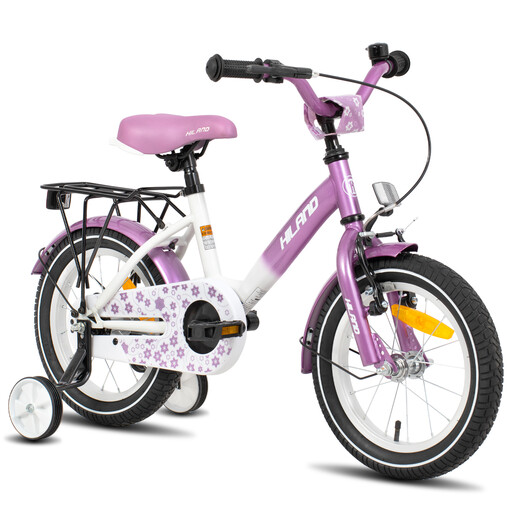
Why it suits this profile: According to the product information, this 12-inch bike is aimed at children aged around 2 to 4 and comes with stabilisers, a basket and assembly tools. This makes it practical for a child's first bike ride.
The size, recommended height of 80–105 cm and weight of approximately 9 kg are clearly stated. You therefore do not have to choose based solely on age or appearance.
Steel frame, single-speed gearing, wide 1.95-inch tyres, front V-brake and rear coaster brake.
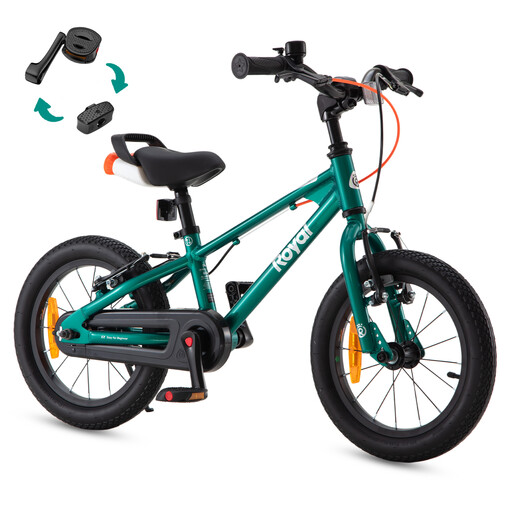
Why it suits this profile: This children's bike has an aluminium frame, a low step-through design and a saddle and handlebars that can be adjusted in height. This suits families who prioritise weight, adjustment and everyday use.
The manufacturer describes a 2-in-1 system that lets you switch between balance and pedal modes without tools. Before buying, however, check which version you will receive.
Aluminium frame, dual handbrakes, low step-through design and adjustable saddle and handlebars; the stated net weight is 7.4 kg.
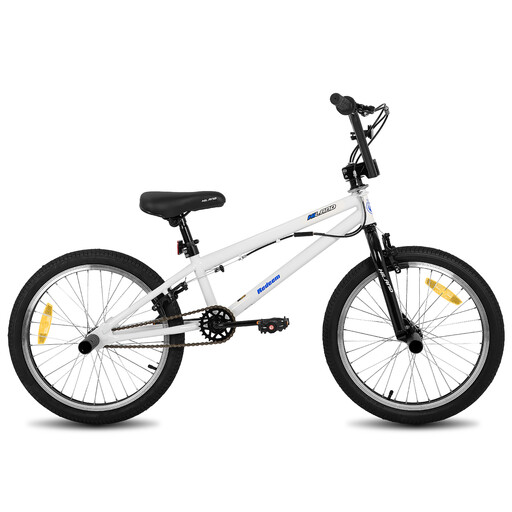
Why it suits this profile: For children specifically looking for a BMX bike for freestyle riding and simple tricks, this model features a 360° rotor, wide tyres and stunt pegs.
The product description explicitly states the intended use, brakes and the need to check the rotor, brake pads and bolts before every ride.
20-inch tyres measuring 2.35 inches, BMX U-brakes, a 360° rotor and five listed stunt pegs.

Why it suits this profile: According to the product information, this pedal-free run bike is intended for children aged 2 to 6. The adjustable saddle and handlebars can be adapted to suit different heights.
With no pedals, your child does not have to learn to balance, pedal and brake at the same time. The adjustability also reduces the chance of the model becoming too small too quickly.
No pedals, adjustable saddle and handlebars, puncture-proof tyres and a lightweight design for carrying and storage.
Always make sure your child wears a suitable helmet and use the bike under supervision in a flat, traffic-free area. The product information for the models mentioned also recommends protective clothing and warns against riding on public roads without the appropriate equipment.
Check before every ride:
Clean the bike with a soft, damp cloth. Avoid using a pressure washer near bearings, brake components and steering mechanisms. A children's bike will last longer if you spot wear in good time, but its service life varies according to the child, model and riding surface.
We have put together a complete, up-to-date list of products that fully meet these strict selection criteria and the applicable European safety regulations.
Start by looking at body height, inside leg length and saddle height. Use age only as an additional guideline. Your child should find the bike manageable and be able to get on and off safely.
Not always. A bike with stabilisers can provide extra stability, while a run bike or balance bike allows children to practise steering and balance first. The best option depends on your child's experience and confidence.
This varies according to the materials, adjustment, use and maintenance. An adjustable children's bike can remain suitable for longer, but buying a larger model “to grow into” only works if your child can already handle the bike properly. Check the brakes, tyres, bolts and signs of wear regularly.
