
Vandaag of morgen in huis

Kwaliteit gegarandeerd

Welkomstaanbiedingen ontgrendelen: GRATIS bezorging | Tot 80% korting | Gratis 30 dagen JoyPlus-proefperiode
Download de app
Buying a children’s bike seems straightforward, until you have to choose between a ride-on bike, balance bike, tricycle or bike with stabilisers. Age recommendations and cheerful designs do not tell the whole story. A bike that is too large, too heavy or difficult to adjust may end up unused in the shed after just a few weeks.
As a Joybuy Product Recommendation Officer, I filter product information for practical details. Below, you can find out what to look for in a children’s bike for ages 2 to 7, which features can be checked and which type is best suited to different situations.
A children’s bike for 2-year-olds, children’s bike for 3-year-olds or children’s bike for 5-year-olds is not automatically suitable for every child of that age. Height, inside leg measurement and riding experience can vary considerably. For example, a 12-inch bike may suit a child around 80 to 105 cm tall, while another child of the same age may already be better suited to a 14-inch model.
Use age as a guide only. Always check the recommended height, saddle height and whether the child can place both feet flat on the ground.
A steel children’s bike can be sturdy, but its weight can make lifting, steering and braking more difficult. You notice this particularly at kerbs, on bends and when a child has to park the bike independently. In such cases, a lightweight children’s bike made from aluminium may be more practical.
Do not look only at the frame material. Check the total product weight. A bike with a basket, luggage rack and stabilisers may be heavier than the basic version.
A bike with a bell, basket, rack and stabilisers may look appealing, but accessories cannot compensate for the wrong size. A 2-in-1 or 4-in-1 model is only useful if changing modes and making adjustments remain straightforward.
Before buying, check:
A toddler ride-on bike or children’s balance bike has no pedals. The child sits on the saddle and moves forwards by pushing along with their feet. This type is suitable for practising on flat, traffic-free surfaces such as a park, playground or quiet courtyard.
The most important measurement is the lowest saddle position. Both feet should be able to rest flat on the ground so that the child can slow the bike down independently. Adjustable handlebars and a lightweight frame make it easier to use.
A children’s tricycle offers greater stability and can be useful when a child has not yet developed good balance. A model with a push handle gives parents control during walks. Pay attention to the steering limiter, the height of the push handle and whether the pedals or footrests can be adjusted.
A 4-in-1 model can combine several riding modes, but check that the frame remains stable in every position and that the maximum load is clearly stated.
A children’s bike with stabilisers can be a first step towards pedalling. Stabilisers provide temporary support, but they must be secured properly and should never be considered a substitute for supervision. A low step-through frame makes getting on and off easier.
For a children’s bike for 4-year-olds, children’s bike for 5-year-olds or children’s bike for 6-year-olds, 12, 14 and 16 inches are common sizes. The right choice depends on the child’s height and saddle adjustment, not just their year of birth.
Ask the child to sit on the bike. They should be able to hold the handlebars securely, get on easily and have sufficient support when stationary.
A children’s bike may have a handbrake, coaster brake or both. A coaster brake works by pedalling backwards; a handbrake requires sufficient hand strength and reach. On some models, such as the Hiland Starry, the product information specifies a combination of a front V-brake and a rear coaster brake.
Before every use, check that the brakes respond properly, that the cables are securely attached and that the handlebars cannot move out of position. A fully enclosed chain guard and protected handlebar ends reduce contact with moving or hard components.
An aluminium frame is generally lighter than a steel frame. The product information for the RoyalBaby EZ Alien 20 inch, for example, gives a net weight of 6.9 kg and an aluminium frame. This makes the model particularly relevant for taller children who need a larger bike.
For ride-on bikes, maintenance-free puncture-resistant tyres are practical. According to the product information for Neuleb, the 12-inch models have airless or puncture-resistant tyres. However, check the tyres regularly for wear and tighten the fixing points securely after assembly.

Why it suits this profile: A simple first bike without pedals for children aged 2 to 6, with an adjustable saddle and handlebars.
The size is adjustable and the product information specifies puncture-resistant tyres, so you do not have to choose based solely on age.
12-inch wheels, adjustable saddle and handlebars, a soft seat and limited assembly according to the product description.
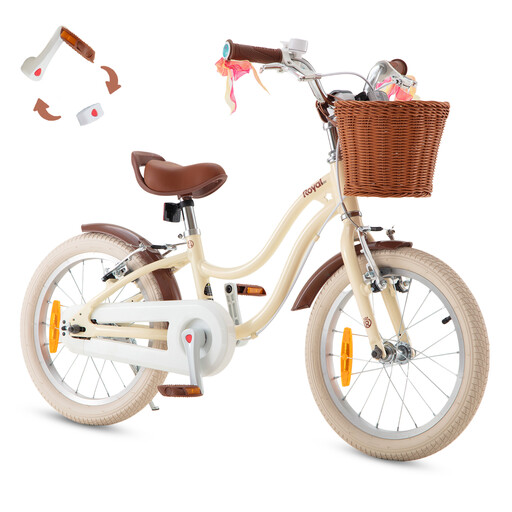
Why it suits this profile: For children who are ready for a pedal bike with a low step-through frame and adjustable components.
The product information specifies an aluminium frame, low step-through design and dual handbrakes. Check the size before ordering.
16-inch wheels, aluminium frame, low step-through frame, basket and a convertible 2-in-1 design according to the product description.
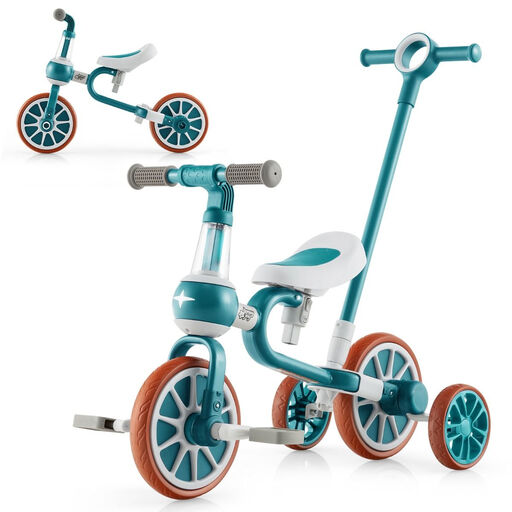
Why it suits this profile: For parents looking for a tricycle, push bike and first practice bike in one adjustable model.
The product description specifies four modes, an adjustable push handle and a 135-degree steering limiter. Check all locking mechanisms after assembly.
Saddle height of approximately 33–37 cm, push handle with four positions, EVA wheels and a stated maximum load of 30 kg.
We have put together a complete, up-to-date list of products that fully meet these strict selection criteria and the applicable European safety regulations.
Always make sure a child rides under adult supervision, on a flat, traffic-free surface. A helmet and suitable protective equipment are recommended in the product information for several models. Check the following before every ride:
Clean the frame with a damp cloth. Do not use a pressure washer around bearings or steering components. Store the bike in as dry a place as possible to help prevent rust and reduce wear.
This varies according to height and inside leg measurement. A 12-inch model often suits smaller beginners, while a 14-inch children’s bike may be a better fit for a taller child. Measure the child and check the model’s size chart.
A balance bike can be suitable if the child can place both feet flat on the ground. Choose a low, adjustable saddle and only use the bike on a safe, flat surface. The product information for several 12-inch balance bikes gives a recommended age range of 2 to 6 years.
Its lifespan depends on the size, adjustability, storage conditions and intensity of use. An adjustable saddle and handlebars can extend the period of use, but a bike that has become too small should be replaced, even if the frame is still in good condition.
