
Vandaag of morgen in huis

Kwaliteit gegarandeerd

Welkomstaanbiedingen ontgrendelen: GRATIS bezorging | Tot 80% korting | Gratis 30 dagen JoyPlus-proefperiode
Download de app
Buying a children’s bike sounds simple until you have to choose between wheel sizes, braking systems, materials and extras. A bike that looks attractive can be too heavy, not fit properly or be designed for a different type of use. As a result, parents sometimes pay for features their child doesn’t need while overlooking important details.
Joybuy Product Recommendation Officer filters the key product information and turns it into practical choices. That way, you compare a children’s bike on verifiable features rather than just colour, age guidance or marketing copy.
Age guidelines are just that: a guideline. Your child’s height, inside leg length and the saddle height determine whether a bike truly fits. A children’s bike 12 inch may be listed as suitable for ages 2 to 4 and a height of 80 to 105 cm, but always check whether your child can put their feet on the ground.
A bike that’s too big makes getting on and braking harder. One that’s too small limits the pedalling motion and may need replacing sooner.
An aluminium children’s bike often has a lighter frame than a steel model, but accessories count too. Stabilisers, a basket, rear rack, mudguards and wide tyres all add to the total weight. So look at the full weight of the built bike.
For comparison: the Hiland Starry 12 inch weighs about 9 kg according to the product information, including stabilisers and a basket. The RoyalBaby Aluminum Freestyle PRO 20 inch is listed with a net weight of 7,4 kg. That difference can be noticeable when lifting, turning and parking.
A children’s bike with a basket or a children’s bike with a rear rack is handy for toys or a school bag, but not every child needs those accessories. For a children’s bike for school, lights, brakes, mudguards, tyres and storage are more practical than a striking design.
A children’s BMX bike with a rotor and pegs is built for freestyle use. That setup isn’t automatically suitable for everyday journeys to and from school. Always check what the bike is designed for according to the product description.
Use wheel size as your first filter, then compare the recommended height and the adjustment range.
A toddler balance bike has no pedals and mainly teaches balance. A model like the Neuleb 12 Inch Toddler Balance Bike has an adjustable saddle height of about 32 to 39 cm according to the product information. That kind of range is useful when your child is growing quickly.
Hi-ten steel is generally strong but can increase the total weight. Aluminium is often chosen for a lighter build and corrosion resistance. Note that “light frame” doesn’t always mean “light complete bike”.
Low weight helps especially with:
Also check the adjustability of saddle and handlebar. A low step-over makes mounting easier, while an adjustable handlebar and saddle can extend the period of use.
A children’s bike with stabilisers for a beginner benefits from simple controls. The Hiland Starry 12 inch combines a front V-brake with a coaster brake according to the product description. The chain guard and grip protectors are additional construction features; after assembly, check that everything is properly secured.
On larger children’s bikes you’ll more often see two hand brakes, V-brakes or disc brakes. Watch for:
Brands may make additional claims about durability or safety. Don’t treat these as independently proven results. According to RoyalBaby’s own research, for example, the XCOOL line has undergone durability tests; the product information lists this as a brand claim. Also look at the concrete components, such as disc brakes, mudguards and tyres.
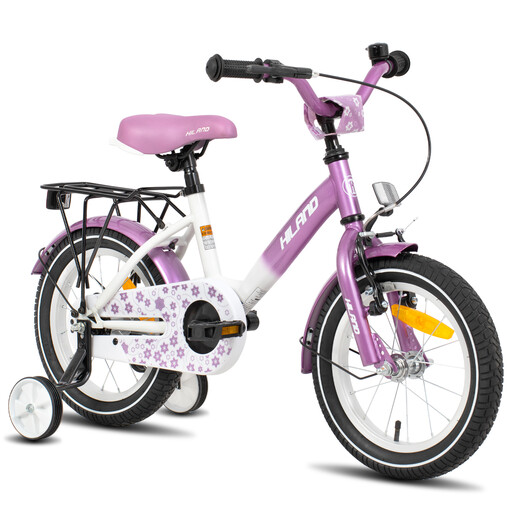
Why this suits the profile: This bike is aimed at young beginners of about 2 to 4 years and comes with stabilisers and a basket.
The recommended height, 12 inch tyres and the single-speed setup make the choice straightforward. The stated weight is around 9 kg.
Front V-brake, coaster brake, full chain guard, wide 1,95 inch tyres and roughly 90% pre-assembled.
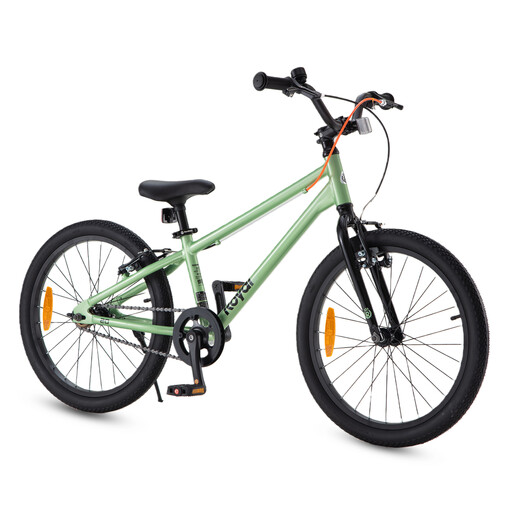
Why this suits the profile: An aluminium children’s bike for kids who ride without stabilisers and want a light model with broad everyday usability.
The stated net weight of 7,4 kg makes the advantage clear. Do check that 20 inch matches the child’s height.
Aluminium frame, dual V-brakes, adjustable water-repellent saddle, sealed bearings and all-terrain tyres.
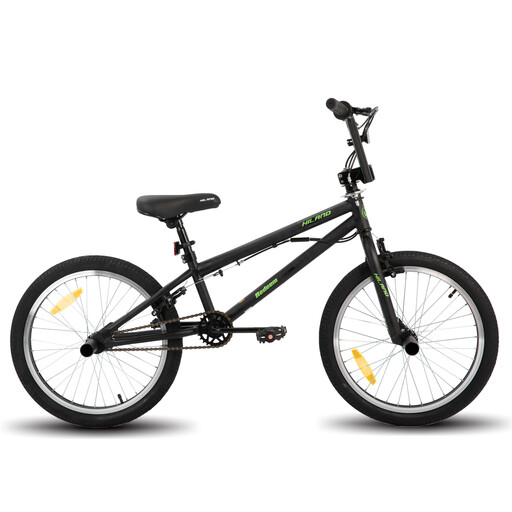
Why this suits the profile: For children and teens who value freestyle, jumps and BMX tricks more than carrying luggage or school rides.
The product information explicitly mentions freestyle use. That makes it clear the bike shouldn’t be chosen as a regular children’s bike for school.
20 x 2,35 inch tyres, 360-degree rotor, BMX U-brakes and four stunt pegs according to the listed product specifications.
We’ve compiled a complete, up-to-date list of products that fully meet these strict selection criteria and comply with current European safety regulations.
A children’s bike often arrives partially assembled. Before the first ride, check:
Wipe down the frame with a damp cloth and regularly check bolts, brake pads, tyres and chain. On a BMX bike, the rotor, pegs and U-brakes also deserve extra attention. Only allow young children to ride under supervision and use a suitable helmet and protective clothing.
For a toddler who still needs to learn balance, a toddler balance bike without pedals can be suitable. A children’s bike 12 inch with stabilisers is more appropriate for a child who already wants to learn to pedal. Focus on the saddle height and whether the child can get on and off independently.
The period of use depends on fit, material, maintenance and growth. An adjustable saddle and handlebar can extend the timeframe, but a bike shouldn’t be bought too big just to last longer. After a few months, reassess the riding position, brake operation and tyre wear.
With normal use, costs are usually limited to inflating the tyres, cleaning and possibly lubricating the chain. Wear parts such as brake pads, inner tubes or a chain may need replacing later. With daily school use, monthly checks are sensible, especially after wet rides.
