
Vandaag of morgen in huis

Kwaliteit gegarandeerd

Welkomstaanbiedingen ontgrendelen: GRATIS bezorging | Tot 80% korting | Gratis 30 dagen JoyPlus-proefperiode
Download de app
Buying a children’s bike seems straightforward, until you have to choose between a ride-on, balance bike, tricycle, bike with stabilisers or BMX. Age recommendations can help, but they don’t tell the whole story. Your child’s height, saddle height, the weight of the bike and how it will be used are just as important.
As Joybuy Product Recommendation Officer, I review product information for practical details. This makes it easier to see which children’s bike might suit a child aged around 2 to 7, and which marketing claims are worth checking before you order.
A 12-inch children’s bike might be described as suitable for children aged 2 to 4, while another model with the same wheel size may be a different fit. Height and inside leg measurement matter more than age alone. On a ride-on or a bike with a low saddle, your child should be able to place both feet firmly on the ground.
A sturdy steel frame may feel durable, but a heavy bike is harder to steer, lift and correct if your child makes an unexpected movement. So compare the bike’s weight with your child’s. A children’s bike weighing around 9 to 11.5 kg may be relatively heavy for a young child.
A children’s bike with stabilisers offers extra stability, but it’s no substitute for correct adjustment, supervision or protective equipment. Also check that the brakes are within reach, the chain is covered and there are no sharp edges. With a balance bike, balance and control matter more than extra wheels.
An adjustable saddle gives the bike more room to grow with your child, but always check its adjustment range. For example, the Neuleb 12 Inch Toddler Balance Bike has a stated saddle height of around 32 to 39 cm. The RoyalBaby Balance Bike also has an adjustable saddle and, according to the product information, is designed for children aged 3 to 5.
On a bike with pedals, your child should be able to reach the ground while seated when needed. At the same time, their knees shouldn’t come up too high as they pedal. Adjust the saddle again after assembly and check the quick-release clamps or bolts regularly.
Check the type of brakes on a children’s bike. According to the product description, the Hiland Starry models combine a front V-brake with a rear coaster brake. A fully enclosed chain and protected handlebar ends help reduce contact with moving or hard parts.
On a balance bike, a steering limiter can help restrict sudden handlebar movements. The RoyalBaby Balance Bike lists this feature. It’s a product feature, not a guarantee that falls will be prevented. Adult supervision is still needed.
EVA tyres are air-free, so they don’t need inflating. That’s handy for short rides and storage, but check that they’re suitable for the surfaces your child will ride on. Pneumatic tyres may need more adjustment, while wider tyres can offer extra grip.
Also check the frame weight and maximum load. The 4-in-1 children’s tricycle has a carbon steel frame and a maximum load capacity of 30 kg. According to the product information, the pedals, push handle and stabilisers are removable, allowing for several configurations.
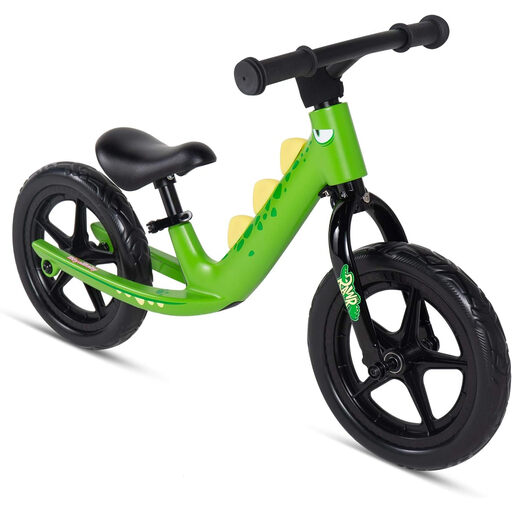
Why it suits this profile: This pedal-free model is easy to use and, according to the product description, is designed for children aged 3 to 5 who are practising their balance.
The adjustable saddle means you don’t have to choose based on age alone. The EVA tyres don’t need inflating.
Magnesium alloy, adjustable saddle, steering limiter and footrests; product weight around 2.77 kg.
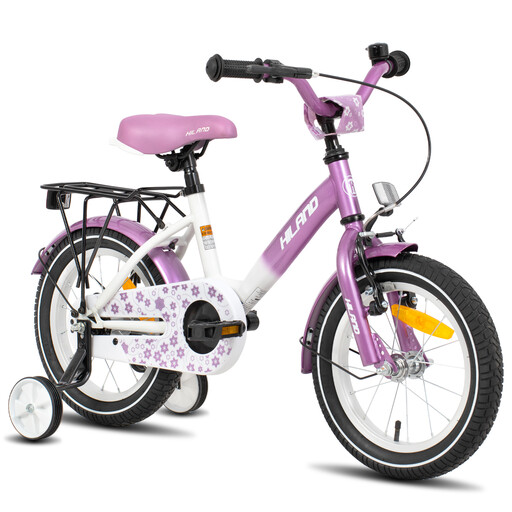
Why it suits this profile: According to the product information, this model is designed for children aged 4 to 7 and comes with brakes, a luggage rack and a kickstand.
The low step-through frame, adjustable saddle and two braking systems offer more control than a model chosen for looks alone.
16-inch wheels, front V-brake, rear coaster brake, chain guard and around 90% pre-assembled.
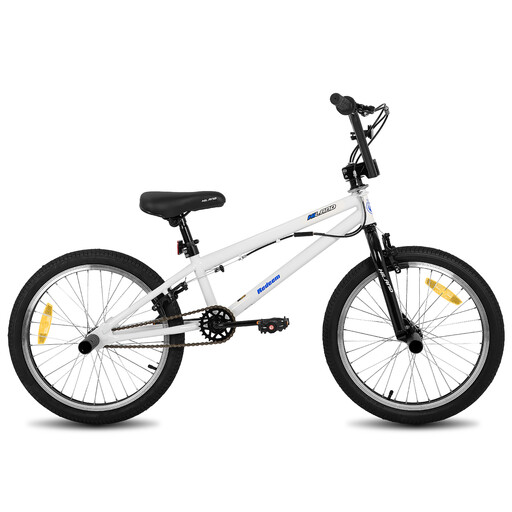
Why it suits this profile: For children specifically looking for a BMX for freestyle riding, jumps and tricks at a suitable location.
The product specifications clearly state that it’s intended for freestyle use, so you’re less likely to buy this model by mistake as an everyday town bike.
20-inch wheels, 360° rotor, wide 20 x 2.35 inch tyres and BMX U-brakes; some assembly required.
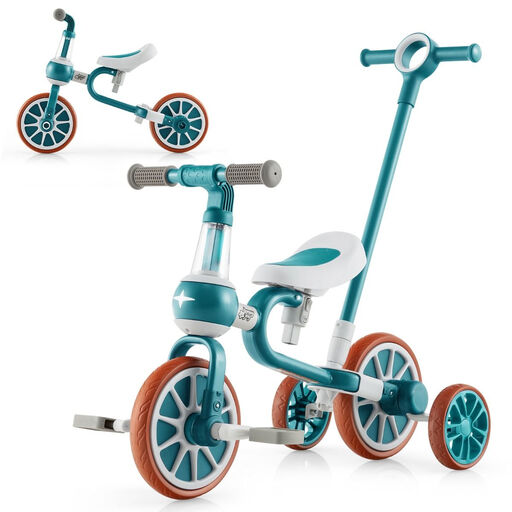
Why it suits this profile: Handy when a child switches between being pushed, riding, practising balance and pedalling during walks.
You don’t have to choose straight away between a tricycle and a balance bike: according to the product description, the components are removable.
Four modes, adjustable parent push handle, saddle height of 33–37 cm and a stated maximum load of 30 kg.
We’ve put together a full, up-to-date list of products that meet these strict selection criteria and the applicable European safety regulations.
Once your bike arrives, check that the frame, handlebars, saddle, pedals and wheels are assembled correctly. For models supplied partly pre-assembled, tighten all bolts according to the instructions. Then test the brakes and make sure the handlebars turn smoothly.
Children should only ride under adult supervision. Use a correctly fitting bike helmet and choose a flat, open area. Avoid public roads, steps, steep slopes and wet or uneven surfaces if the product warning advises against them. Before every ride, check the tyres, brakes, saddle attachment and handlebars.
It varies from child to child. A 12-inch model is often associated with children aged around 2 to 4, a 14-inch children’s bike with those aged around 3 to 6, and a 16-inch model with those aged around 4 to 7. Always measure your child’s height and check the recommended saddle height. A 20-inch children’s bike may suit taller children.
They help children practise different skills. A children’s balance bike focuses on balance and steering without pedals. A bike with stabilisers is mainly for learning to pedal. The right choice depends on what your child can already do and which type of movement they feel comfortable with.
Its lifespan depends on how it’s used, stored and maintained. An adjustable saddle can extend the time your child can use the bike, but a bike that’s too small is still unsuitable. Store it somewhere dry and regularly check the brakes, tyres, bolts and moving parts.
