
Vandaag of morgen in huis

Kwaliteit gegarandeerd

Welkomstaanbiedingen ontgrendelen: GRATIS bezorging | Tot 80% korting | Gratis 30 dagen JoyPlus-proefperiode
Download de app
A children’s protective gear set for skating may seem easy to choose: knee and elbow pads, wrist guards and perhaps a helmet. In practice, sets vary considerably in sizing, fastening and intended use. A set that fits well on the first ride may start to slip or feel too warm after a few weeks.
Children aged around 3 to 7 often need protection for several activities, including cycling, scooting, roller skating and skateboarding. Teenagers and adults also regularly look for a single protective set for skateboarding or protection for roller skating. Keep these points in mind to avoid buying something that ends up unused in a cupboard.
Age is a useful starting point, but it’s no substitute for checking the size. Children of the same age can have different head, arm and leg measurements. Always check the size guide and see whether the straps are adjustable.
An adjustable children’s helmet may last longer within its available size range, but it still needs to fit properly. A helmet that wobbles or slides backwards doesn’t fit well, even if the age range on the packaging seems right.
Not every set includes a helmet. Some offers contain only knee, elbow and wrist guards. So check that the packaging really includes all the parts you want. A child who cycles or scoots will often need a separate children’s cycling helmet or children’s skate helmet.
Pay attention to the fastenings, too. Elasticated straps with hook-and-loop fastenings are practical for young children because you can adjust the fit quickly. However, straps that are too long can catch on things or loosen while your child is moving.
Terms such as “impact-resistant” or “professional protection” don’t mean much on their own. Look for verifiable details such as the material, size, fastening and intended use. For a helmet for cycling, skating and scooting, EN1078 is a relevant standard for helmets for cyclists, skateboarders and roller skaters.
According to the product information, the ACTION PW-903 and PW-905 helmets have been tested to EN1078 and are CE-certified. That doesn’t mean a helmet can prevent every possible accident. It still needs to be adjusted correctly and replaced after a hard impact.
A well-fitting set stays in place without unnecessarily restricting movement. When checking a helmet, make sure that:
Knee and elbow pads should cover the joint with their hard shell without digging into the skin. Wrist guards for children should fit securely without pinching the fingers or thumb. A thumb hole can help keep the guard in place while your child is moving.
Many protectors combine a hard outer shell with foam on the inside. The products mentioned use materials such as ABS, PVC or polycarbonate for the outer shell, with EVA or EPS foam as an inner layer or lining.
A hard shell can help reduce wear on the outside, while a soft lining feels more comfortable against the skin. Ventilation is particularly important on longer rides. Look for ventilation holes in a helmet and breathable lining in pads. Comfort doesn’t replace protection, but it does make children more likely to wear their gear consistently.
Use a set only for its stated purpose. Protectors for skating, skateboarding, cycling or scooting aren’t automatically suitable for motorised sports. Before every ride, check that the straps are secure and look for cracks, loose stitching or misshapen parts.
Clean protectors with a damp cloth and leave them to air-dry completely. According to the product information, the OutdoorMaster set shouldn’t be machine-washed. Clean helmets with a soft, damp cloth and mild soap; harsh cleaning products can damage the materials.
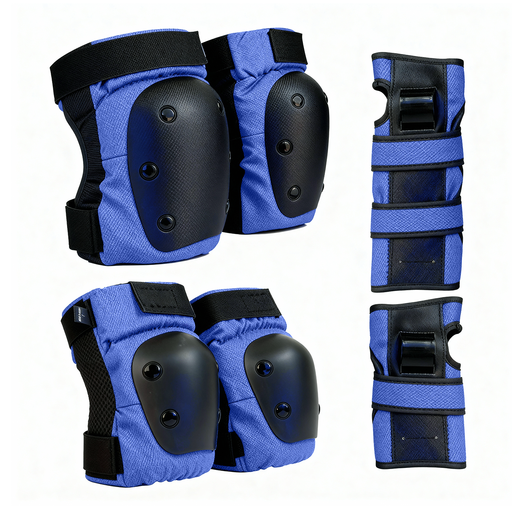
Why it suits this user: According to the product information, this set is designed for children aged 3 to 7 and includes two knee pads, two elbow pads and two wrist guards. It’s a good fit for young beginners trying out different activities.
The contents are clearly listed and the straps are adjustable. That means you don’t have to combine several separate protectors without knowing whether they’ll work well together.
PVC outer shells, breathable lining, and suitable for balance bikes, roller skating, skateboarding and scooting.

Why it suits this user: This helmet is designed for children who cycle, roller skate or scoot, and value good ventilation and a precise fit.
The product information lists a head adjustment system, seven ventilation holes and a quick-release buckle. This lets you check the fit, rather than relying on the age guidance alone.
PC outer shell, EPS inner layer, seven ventilation holes and, according to the product information, tested to EN1078 and CE-certified.
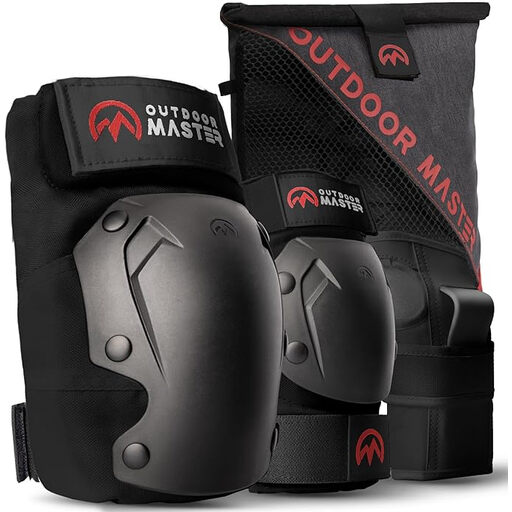
Why it suits this user: This set is designed for teenagers and adults looking for protection for skateboarding, inline skating, BMX, cycling or scooting.
The set includes all three types of protector mentioned, along with a carry bag. Adjustable nylon straps and extra-long hook-and-loop fastenings help keep the knee, elbow and wrist guards in place.
ABS outer shells, EVA foam, three sizes and a wrist guard with a thumb hole; according to the product information, suitable for adults and teenagers.
We’ve put together a complete, up-to-date list of products that meet these strict selection criteria and the applicable European safety requirements.
The rules can vary depending on the activity and location. Either way, a helmet is a practical choice for cycling, skating and scooting. Choose a model designed for the activity in question, check for EN1078 information and adjust the chin strap correctly.
Measure your child’s head circumference according to the manufacturer’s instructions. Place the helmet level on their head and adjust the dial so it doesn’t move noticeably when they move their head. The strap under the chin should be secure without feeling uncomfortably tight.
Replace a helmet after a significant impact, even if there’s no visible damage. Replace pads if the shell cracks, the lining comes loose, the straps no longer fasten securely or the protector keeps slipping while your child is moving. Check the set before every use.
