
Vandaag of morgen in huis

Kwaliteit gegarandeerd

Welkomstaanbiedingen ontgrendelen: GRATIS bezorging | Tot 80% korting | Gratis 30 dagen JoyPlus-proefperiode
Download de app
A children’s playhouse could be a doll’s house, play tent, LEGO playset or themed play environment. Choosing the right model is about more than looks. Your child’s age, the space available, small parts and the way they play all determine whether the toy will still hold their interest after a few weeks.
Parents and grandparents often encounter three pitfalls in this category:
So don’t use the product photo as your only guide. Check the specifications, warnings and dimensions before making a purchase.
A toy house suitable from age 2 should be designed for small hands. LEGO DUPLO, for example, uses larger bricks than classic LEGO sets. Even so, always check the warning on the product page. Various sets state that small parts are included and that they are not suitable for children under 3 years old.
For children aged 2 to 4, the following are generally suitable:
For children aged 5 to 8, you could consider a doll’s house with more rooms, a LEGO playhouse or more elaborate role-play toys. However, the manufacturer’s age recommendation should always take priority.
Measure the area where the toy will be used and stored. A compact portable playhouse is useful for visits to grandparents, holidays or playing in different rooms. When folded, the LEGO Friends Creative Dollhouse Suitcase is approximately 23 cm high, 30 cm wide and 13 cm deep. This means it can be carried like a suitcase.
A play tent requires less assembly, but needs a fixed amount of floor space. The Little Dutch Forest Friends Play Tent has a diameter of 105 cm and is 125 cm high. So check that there is enough space around it for children to get in and out safely.
A long list of accessories may sound appealing, but focus mainly on what children can do with them. Can the rooms be rearranged? Can the figures take on different roles? Is there space for your own LEGO bricks or other imaginative toys?
Points that can be checked objectively include:
Brands may mention developmental benefits. Don’t present these as guaranteed outcomes. According to a brand’s own research or product communications, a set may support creativity, social interaction or fine motor skills, for example. The actual play experience varies from child to child.
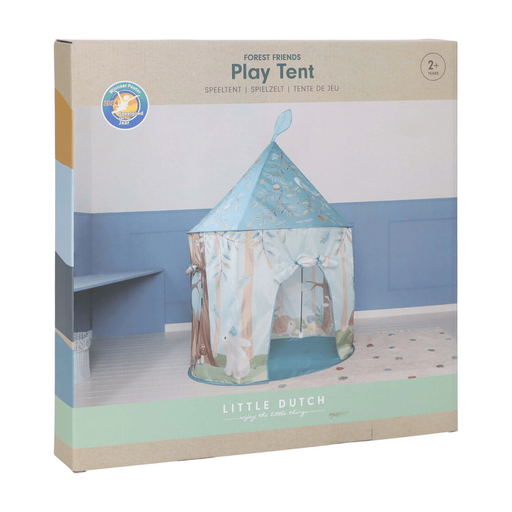
Why it suits this profile: A simple children’s play tent for ages 2 and over that can be used in a child’s bedroom without complicated assembly.
The product information clearly states that it is suitable from age 2 and gives the dimensions as 105 cm in diameter and 125 cm high.
Polyester construction, suitable for indoor use and easy to set up according to the product description.
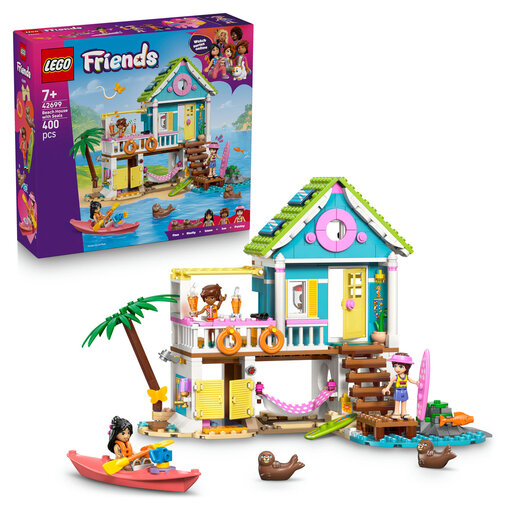
Why it suits this profile: For children aged 7 and over who want to combine building with stories about a beach house and animals.
The play value is not based on decoration alone: the set contains 400 parts, 3 Friends figures and 2 seal figures.
Beach house with kitchen, sleeping area with 3 beds, veranda and accessories such as a kayak, hammock and surfboard.
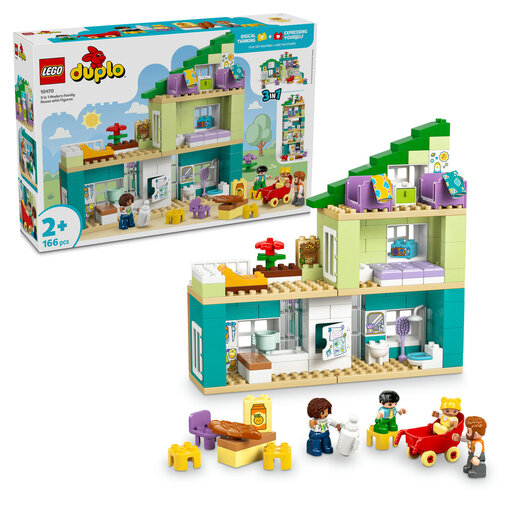
Why it suits this profile: For families with toddlers aged 2 and over who want to build together regularly and rearrange the house each time.
The set is not limited to one fixed design: the same 166 parts can be used to build 3 different houses.
Large DUPLO bricks, 4 figures and familiar accessories for everyday routines; suitable for building and role play.
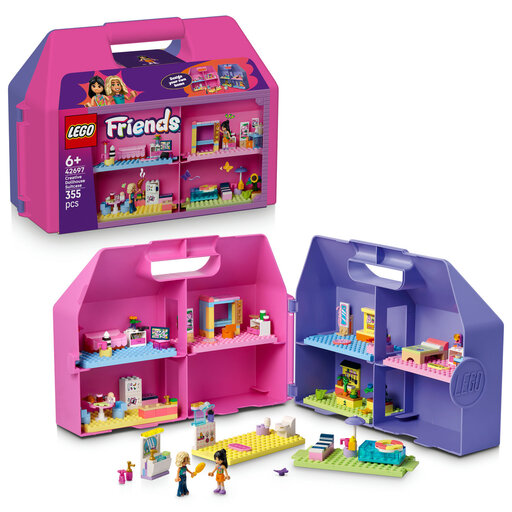
Why it suits this profile: For children aged 6 and over who want to take their doll’s house toy to family, on holiday or to another room.
The house folds down into a suitcase. This helps keep the included furniture and accessories together in a more organised way.
8 customisable rooms, 2 Friends mini-dolls and 355 parts; closed dimensions approximately 23 x 30 x 13 cm.
We’ve put together a complete, up-to-date list of products that fully meet these strict selection criteria and the applicable European safety regulations.
Choose a model with a clear age recommendation from 2 years and check that it contains no small parts. LEGO DUPLO 10467 Family House and LEGO DUPLO Town 10470 are examples of sets intended for children aged 2 and over according to the product information. Supervision is still advisable when accessories and building materials are involved.
This varies from product to product. Measure the full width, depth and height, and leave extra space around a tent opening, door or slide. A tent with a diameter of 105 cm requires more floor space than a foldable doll’s house. Also check where you will store the toy after use.
Its lifespan depends on the material, use and storage conditions. Plastic and building bricks are generally easy to wipe clean, while polyester tent fabric should be stored dry and clean. Check for loose, damaged or missing parts before each use. Store small accessories in a closed container, out of reach of younger children.
A doll’s house generally offers more detail for extended role play and can often be expanded with additional figures. A play tent mainly creates a space of its own and is suitable for calm imaginative play. For a child who enjoys building, a LEGO playhouse may offer more of a challenge. So start by considering their play style, age and the space available.
