
Vandaag of morgen in huis

Kwaliteit gegarandeerd

Welkomstaanbiedingen ontgrendelen: GRATIS bezorging | Tot 80% korting | Gratis 30 dagen JoyPlus-proefperiode
Download de app
Buying a children’s kick scooter seems straightforward, until you compare different wheel sizes, braking systems and age recommendations. A scooter that rides comfortably for a 6-year-old is not automatically suitable for a teenager or adult. Likewise, a model that looks sturdy may be awkward for everyday transport or unsuitable for tricks.
So don’t focus only on colour and price. The key differences lie in the construction, handlebars, wheels and intended use.
A stated load capacity of, for example, 220 lb, approximately 100 kg, does not mean that every user will ride equally comfortably. The handlebar height, deck length and wheel size also affect control. For a small child, an adult scooter may feel too large and heavy.
So check:
A kick scooter with LED wheels is highly visible and can appeal to children. However, wheel lighting is no substitute for a helmet, supervision or clearly visible clothing. Also check that the wheels turn smoothly and that the brake is easy to reach.
For young children, a 3-wheel children’s kick scooter with lean-to-steer controls may feel easier to use than a two-wheel model. Stability and steering technique vary from child to child. Always let a child practise calmly on a flat, dry surface.
A stunt scooter or freestyle scooter is designed for jumps and tricks. This type often has fixed handlebars, smaller wheels and a compact deck. That helps with manoeuvres, but makes it less suitable for longer rides on uneven Dutch cycle paths.
For recreational riding or transport, a folding scooter, adjustable handlebars and larger wheels are generally more practical.
Larger wheels, such as 205 mm polyurethane wheels, generally roll over small bumps more easily than compact stunt scooter wheels measuring 100 or 110 mm. This often makes an urban scooter suitable for recreational riding and short journeys.
Stunt scooters usually use solid wheels. These do not rely on tyre pressure, but offer a different riding experience from the larger wheels on urban scooters. For every model, check:
An adjustable scooter can grow with a child more effectively, but adjustability is not automatically better for stunt use. Freestyle scooters often have fixed handlebars to reduce play and limit the number of additional moving parts.
For a scooter for children aged 6 and over, adjustable handlebars are useful when several children will be using it. For teenagers and adults, the maximum handlebar height is particularly important. As well as age, consider the rider’s height and posture while riding.
A rear brake offers simple control over speed. Before every use, check that the brake springs back properly and does not rub against the wheel. An anti-slip deck helps keep feet in place, but it is no substitute for adjusting your speed or wearing protective equipment.
Aluminium is often used to keep the weight down. Steel or chromoly may be used for parts where extra strength is required. According to the product descriptions, the LEEYV models combine aluminium and steel, while the VOKUL models use, among other materials, 6061 aluminium and chromoly steel.
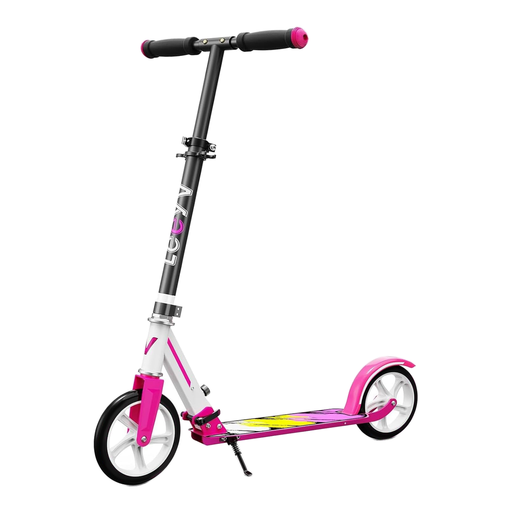
Why it suits this profile: A practical two-wheel scooter for children aged 6 and over, teenagers and adults who mainly ride recreationally or cover short distances.
The product description mentions adjustable handlebars, a folding design, a rear brake and 205 mm polyurethane wheels. However, check that the handlebar height is suitable before buying.
Two 205 mm wheels, adjustable handlebars, non-slip grips, a folding frame and a stated load capacity of 220 lb.
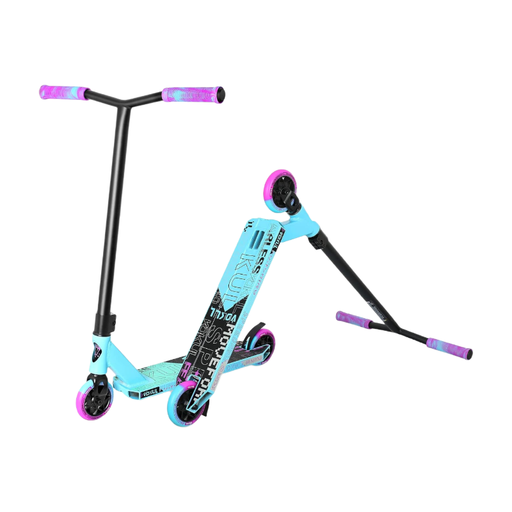
Why it suits this profile: A construction for riders aged 8 and over who are looking for a scooter for skatepark use and freestyle tricks.
According to the product details, this model has a T-6061 aluminium deck, a one-piece fork and a fixed stunt construction. This makes it more clearly suited to tricks than a folding urban scooter.
110 mm solid polyurethane wheels, ABEC-9 bearings, a non-slip deck, soft grips and a stated load capacity of 220 lb.
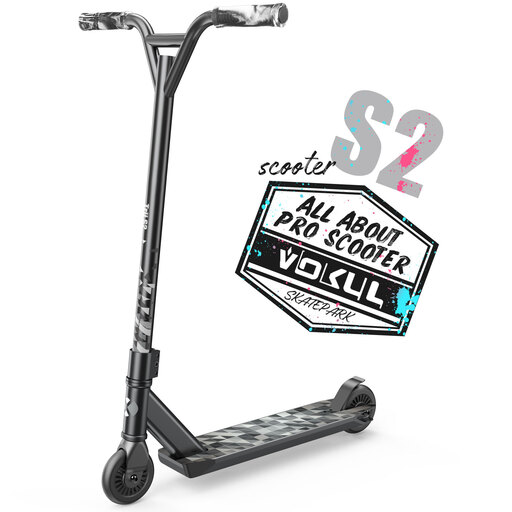
Why it suits this profile: Designed for young people aged 7 to 14 who want to learn basic tricks on the street or at the skatepark.
According to the specifications, the fixed batwing handlebar construction and triple clamp are designed for a stable stunt set-up. The model does not fold, making it less suitable for compact transport.
6061 aluminium frame, reinforced deck, 4130 chromoly handlebars, 100 mm solid wheels and a rear brake.
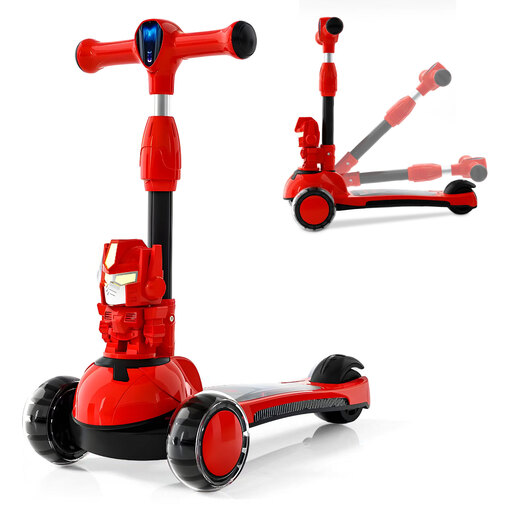
Why it suits this profile: According to the product title, it is intended for children aged 3 to 10, with a wide deck, adjustable handlebars and lean-to-steer controls.
The 3-wheel design and wide deck meet the need for an accessible beginner model. Always check the assembly and let the child practise at low speed first.
Three wheels, adjustable handlebars, a wide anti-slip deck and LED wheels according to the product description.
A scooter will last longer when you check it regularly. Pay particular attention to:
Wear a helmet and, when performing stunts, knee, elbow and wrist protection too. The warnings for the VOKUL models recommend riding on a dry, smooth surface and carrying out a check before every ride. Also always follow the manual and the age limit for the model you choose.
We have put together a complete, up-to-date list of products that fully meet these strict selection criteria and the applicable European safety regulations.
This varies by design. The range includes models for children aged 3 and over with three or four wheels, while some two-wheel scooters are listed as suitable from age 6. According to the product information provided, a stunt scooter is generally intended for children aged 7 or 8 and over. Always consider the age recommendation, the child’s height and their experience.
Yes, especially if you want to take the scooter in the car, store it away or carry it on public transport. A folding model such as the LEEYV LY205 or RV205 is designed for storage and transport. After unfolding it, check that the locking mechanism is fully secured before riding.
Most models do not require complicated maintenance. Wipe the frame clean with a damp cloth and regularly check the brake, wheels, bearings and bolts. With stunt scooters, checking the scooter before every ride is particularly important, as jumps and landings place greater strain on the components.
