
Vandaag of morgen in huis

Kwaliteit gegarandeerd

Welkomstaanbiedingen ontgrendelen: GRATIS bezorging | Tot 80% korting | Gratis 30 dagen JoyPlus-proefperiode
Download de app
A children’s helmet for cycling and skating needs to be more than a fun colour or a handy dial. Parents often only check the size, fit or certification after buying. As a result, a helmet may sit too loosely, quickly become uncomfortable or be unsuitable for the activity it was bought for.
In this guide, you’ll find out what to look for in a children’s cycling helmet, a skate helmet for a child or an inline skating helmet. We’ll also compare a few models for different uses.
A children’s helmet with an adjustable fit is practical, but an adjustment system won’t automatically make the wrong size fit. So, measure your child’s head circumference first with a flexible tape measure, about two fingers’ width above the eyebrows. Then check the size details in the product listing.
The helmet should:
Once you’ve adjusted it, ask your child to shake their head. If the helmet moves noticeably, the fit still isn’t right.
An animal print, bright colour or built-in light can encourage a child to wear their helmet. However, these features say nothing about the fit or protection. Check the construction, size, fastening and intended use first.
A children’s cycling helmet isn’t automatically suitable for every motorised activity. The models in this selection are designed for non-motorised sports such as cycling, skating, scootering and BMX.
For an EN1078 children’s helmet, EN1078 refers to the European standard for helmets for cyclists, skateboarders and roller skaters. The product information should clearly state what the helmet is intended for. A label such as ‘CE-certified children’s helmet’ isn’t a reason to skip checking the fit or reading the instructions.
According to the product information, various ACTION models have been tested to EN1078 and are CE-certified. This doesn’t mean a helmet can prevent every possible impact. Replace a helmet after a hard impact or if there’s visible damage, even if the outside still looks reasonably good.
Measure your child’s head circumference before choosing a size. Don’t rely on XS, S, M or L alone, as sizing can vary between manufacturers. A dial or another adjuster can help you fine-tune the fit.
Check the chin strap too. A quick-release buckle is handy for young children, but it should stay fastened without digging into the skin. Some models have a durable webbing strap.
Many children’s helmets have a hard outer shell made from PC, PVC or polycarbonate, with an EPS inner layer. EPS stands for expanded polystyrene and is often used as a shock-absorbing lining. In-mould construction bonds the outer and inner layers during manufacture.
Also check:
According to the product description, the ACTION PW-903-H has seven ventilation holes and a PC outer shell with an EPS lining. The ACTION PW-905 is listed as having a PVC outer shell with an EPS inner lining.
A lightweight standard helmet may be suitable for a gentle ride to school. For BMX, more intensive skating or riding on rough ground, you may want extra coverage. A full-face children’s helmet also covers the chin and face, but is usually heavier and warmer than an open-face model.
A helmet doesn’t replace supervision. When skating or scootering, you may also want to pair it with a skating protective gear set containing knee, elbow and wrist guards.
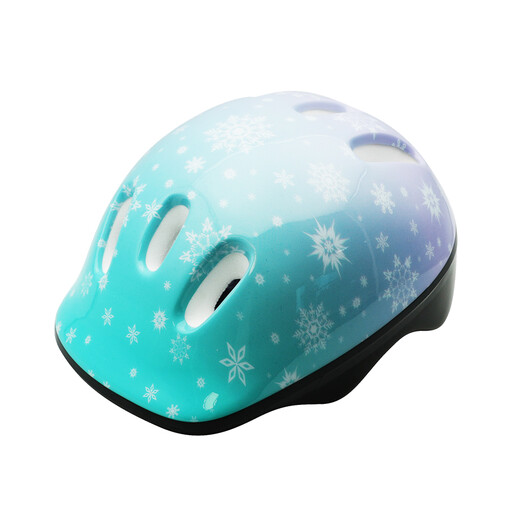
Why it suits this profile: A straightforward model for children getting started with cycling, skating or other wheeled sports. Size M is suitable if your child’s head circumference matches the size stated in the product listing.
The product information lists a built-in adjuster, chin strap and EN1078 testing, according to the manufacturer’s details. Be sure to check the size and fit yourself before use.
PVC outer shell, EPS inner lining, adjustable fit and a design for cycling and skating.
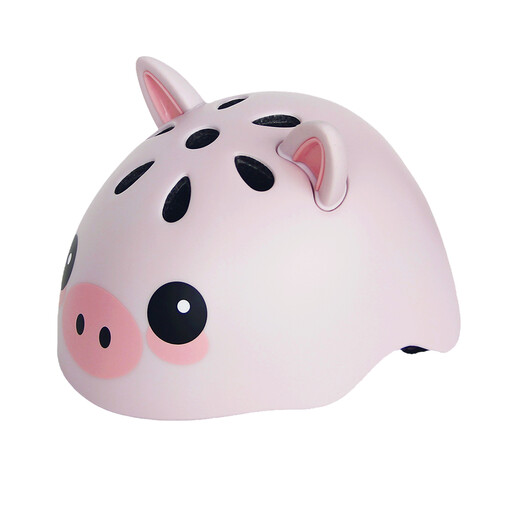
Why it suits this profile: An option for young children who like a distinctive design, without compromising on the practical features of a skate helmet.
The product information lists an adjustment mechanism, quick-release buckle and seven ventilation holes. These are useful for everyday wear, but the helmet still needs to be fitted correctly.
PC outer shell, EPS lining, seven ventilation holes and, according to the product details, tested to EN1078 and CE-certified.
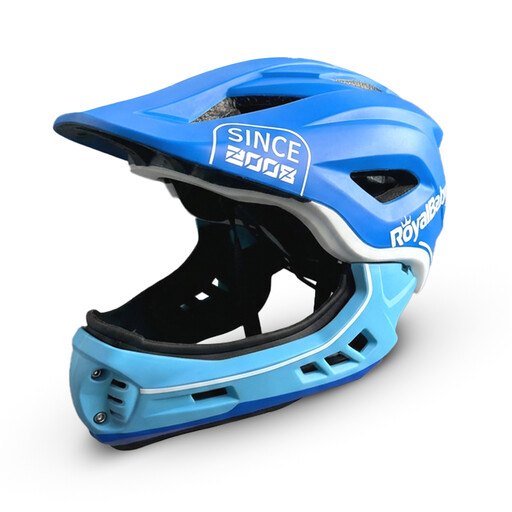
Why it suits this profile: Designed for children aged around 5 to 13 who ride BMX or mountain bikes, scoot or take part in more intensive outdoor sports. The chin guard can be removed to use it as a half helmet.
The 2-in-1 design makes its intended use clearer than that of a standard cycling helmet. Do bear in mind the stated size range of 20–23 inches and the extra weight of 0.75 kg.
Removable chin guard, adjustable size range of 20–23 inches, multiple ventilation holes and a removable, washable lining.
If you’re looking for knee protection, elbow protection and wrist guards as well as a helmet, the OutdoorMaster protective set for adults and young people includes one pair of each type, plus a carry bag. According to the product description, the set has an ABS outer shell, an EVA lining and adjustable nylon straps. Before use, check that all the fastenings are secure.
We’ve put together a complete, up-to-date list of products that meet these strict selection criteria and the applicable European safety regulations.
Position the helmet horizontally, about one to two fingers’ width above the eyebrows. Tighten the chin strap so there’s only a little room left, without causing pressure or pain. The helmet shouldn’t move when your child moves their head.
Replace the helmet straight away after a hard impact or if the shell, EPS lining, strap or fastening is damaged. Even without visible damage, an impact can reduce its protective performance. Check the helmet regularly and follow the manufacturer’s care instructions.
Knee, elbow and wrist guards can be a useful addition when roller or inline skating. Choose guards that fit well, don’t slip and are suitable for your child’s age and size. Adult supervision is important during more intensive use.
