
Vandaag of morgen in huis

Kwaliteit gegarandeerd

Welkomstaanbiedingen ontgrendelen: GRATIS bezorging | Tot 80% korting | Gratis 30 dagen JoyPlus-proefperiode
Download de app
A child car seat with ISOFIX may seem straightforward to choose at first. Yet parents often buy a model that doesn’t suit their child’s height, isn’t compatible with their car or proves impractical after a few months. So don’t focus only on a low price, a swivel function or soft padding. The fittings, height range and belt guides are just as important.
Age is only a guide. Children of the same age can differ considerably in height and build. With an i-Size car seat, the permitted height is usually the key factor. Always check the stated height range in centimetres and compare it with your child’s height.
A car seat for ages 0–12 may sound appealing because of its long usable life, but check each stage:
ISOFIX secures the car seat to the car’s anchor points. This often makes installation more straightforward, but it doesn’t mean that every ISOFIX seat will fit every car. Some models also use a support leg or Top Tether. So check the instructions for both the car seat and your car.
When installing the seat, check:
Terms such as ‘extra safe’, ‘professional protection’ or ‘200% thicker’ often come from a product description. According to the available product information, for example, Jovikids states that its seat cushion is 200% thicker. This is a product specification from the brand, not an independent comparison. So focus on things you can verify, such as the standard, measurements, installation and care instructions.
A child car seat certified to ECE R129 is approved under a European type-approval standard. For i-Size models, the categories are generally based on a child’s height. Check the product label or instructions to see which version of R129 and which height range apply.
Certification doesn’t replace correct installation. Always follow the manufacturer’s instructions and don’t use the car seat outside its stated height or weight range.
For children around 125 to 150 cm tall, there are compact booster seats and models with a backrest. A 125–150 cm car seat should position the three-point seat belt correctly across the shoulder and pelvis. The belt shouldn’t rest against the neck or be twisted.
An ISOFIX booster seat can keep the seat in place while your child gets in and out. However, protection while travelling also depends on using the three-point seat belt correctly. So ISOFIX doesn’t automatically replace the car’s seat belt on these models.
A swivel car seat for children can be handy when buckling your child in beside a tight parking space. Check that there’s enough room to swivel the seat in your car. For models for babies and toddlers, practical features to look for include adjustable recline positions and a newborn insert.
A washable child car seat is especially useful for everyday journeys. Check whether the cover comes off completely, whether it can be hand-washed or machine-washed, and how it should be dried. Never wash or remove parts in a way that isn’t described in the instructions.
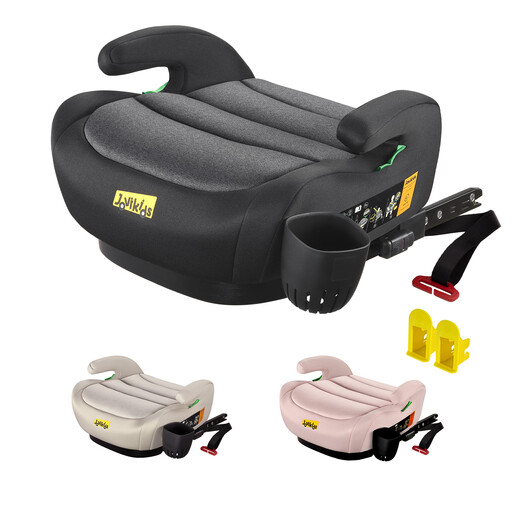
Why it suits this profile: This compact model is designed for children around 125–150 cm tall and offers straightforward ISOFIX installation for everyday school runs.
The height range is clearly stated. Before buying, check that 125–150 cm is right for your child and always use the belt guides provided, following the instructions.
i-Size according to the product information, removable and washable cover, a cup holder and a stated weight of around 3 kg.
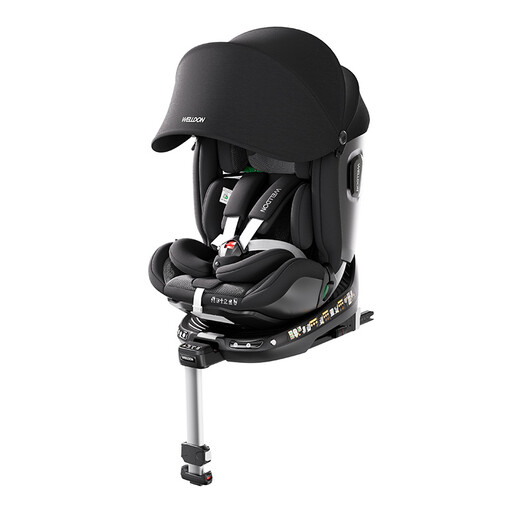
Why it suits this profile: Suitable for families looking for a single i-Size seat to use from 40 to 125 cm, with a swivel function and multiple recline positions.
The model lists ISOFIX, a support leg and installation indicators. Still, check the indicators and make sure it’s compatible with your car.
ECE R129/i-Size, 360° swivel, rear-facing travel according to the stated instructions, adjustable recline positions and a removable cover.
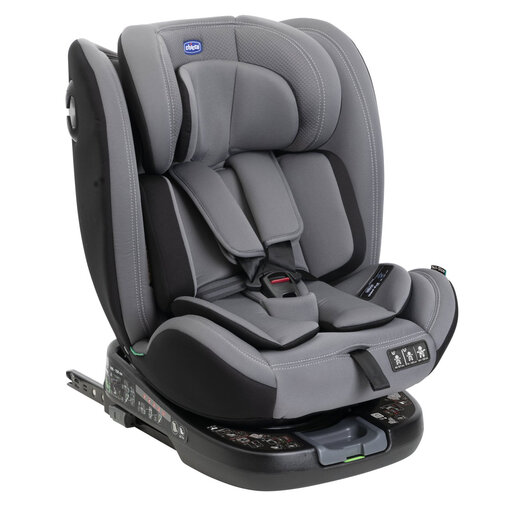
Why it suits this profile: A practical choice for families looking for a seat for several stages of growth, with different installation options as their child gets older.
The product information specifies ISOFIX, Top Tether or the three-point seat belt for each stage. This helps you avoid relying on the same installation method for years.
ECE R129/03 for 40–150 cm, 360° swivel function, five recline positions, five-point harness up to the stated limit and care instructions for the cover.
We’ve put together a complete, up-to-date list of products that meet these strict selection criteria and the applicable European safety regulations.
No, not every child car seat uses ISOFIX. Some booster seats are secured with the three-point seat belt; on certain models, ISOFIX attachments are optional. Always check the installation instructions and the fittings in your car.
That depends on the model, how often it’s used and the manufacturer’s instructions. More important than the number of years is whether the seat is still intact, hasn’t been involved in an accident and is the right fit for your child’s height. Also check the harness, buckles, cover and anchor points regularly.
Many models are designed for around 125–150 cm, but suitability varies by product. Check that the three-point seat belt is positioned correctly and that your child can sit upright throughout the journey. Always use the seat within its stated height range.
