
Workshop organiser with lots of portions of chicken
You need well-organised fridge space for several sealed containers, and want to be able to check the storage temperature during the workshop.


Start by making sure there’s enough usable fridge space for your sealed portions of chicken, and check the temperature with a thermometer. The stated capacity in litres won’t tell you exactly how many containers will fit. If you want to freeze portions for later, check that the freezer compartment is suitable, then compare the dimensions and energy consumption of models that will fit in your kitchen.
You need well-organised fridge space for several sealed containers, and want to be able to check the storage temperature during the workshop.
As well as fridge space, you need a freezer compartment suitable for freezing portions you’ve cooked and cooled yourself.
You’re balancing your need for fridge and freezer space against the room available and energy consumption. The stated capacity in litres doesn’t tell you how many containers will actually fit.
Choose based on the portions you’ll store and how you’ll use the appliance. The Netherlands Nutrition Centre advises storing leftovers in sealed containers, refrigerating them within two hours and eating refrigerated leftovers within two days. A set temperature or appliance feature doesn’t replace checking the actual temperature.
| What to consider | What to look for | Who it matters to |
|---|---|---|
| Temperature monitoring | Check whether you can set the fridge temperature, and measure it during use. A door alarm doesn’t measure the temperature of the chicken. | If I want to know whether the chicken is staying cold enough during the workshop, I need to be able to check the temperature. Around 36% of consumers put temperature monitoring at the top of their list when buying. |
| Usable fridge space | Compare the layout and dimensions of the fridge compartment with the containers you use. The stated capacity isn’t the same as the space available once drawers and shelves are taken into account. | When several sealed portions need to be chilled at once, I want to know whether my containers will actually fit. Around 29% of consumers give usable fridge space top priority. |
| Freezing portions yourself | Check whether the freezer compartment is suitable for freezing fresh food and whether it has enough room for your portions. The Dutch Consumers’ Association says you need a four-star freezer for this. | If I want to save cooled chicken for later, I need a freezer compartment that’s suitable for freezing those portions myself. Around 21% of consumers say freezing is their main concern when buying. |
| Space and energy consumption | Measure the space available and, for models that fit, compare the external dimensions and annual energy consumption shown on the energy label. | When my kitchen is short on space, I want a model that fits without choosing one larger than I need. Around 14% of consumers prioritise suitable dimensions and energy consumption. |
The Dutch Consumers’ Association explains that capacity for the energy label is measured without drawers, shelves or racks. So the stated volume won’t tell you exactly how many sealed containers you can fit inside.
Compare the layout and dimensions of the fridge compartment with the containers you’ll use during the workshop.
According to the Dutch Consumers’ Association, a freezer compartment with fewer than four stars is mainly intended for food that has already been frozen.
If you want to freeze portions you’ve prepared yourself, check the star rating and the amount of space in the freezer compartment.
No Frost or a door alarm doesn’t replace cooling food carefully, storing it in sealed containers and checking the temperature.
Plan how you’ll cool and pack the portions separately, and measure the temperature during use.
Freestanding fridge-freezers. The KGN362IBF is one example, with separate stated capacities for the fridge and freezer compartments.
Freestanding fridge-freezers, including the larger RB38C7B6AB1/EF model.
Freestanding fridge-freezers with a range of layouts. The CNdgc 5213 Pure NoFrost is one specific model.
Three-door fridge-freezer models with easy-to-access freezer drawers. The HTW5620CNMP is one specific example.
This selection features fridge-freezers for keeping workshop portions chilled and, where stated in the product specifications, freezing portions for later.
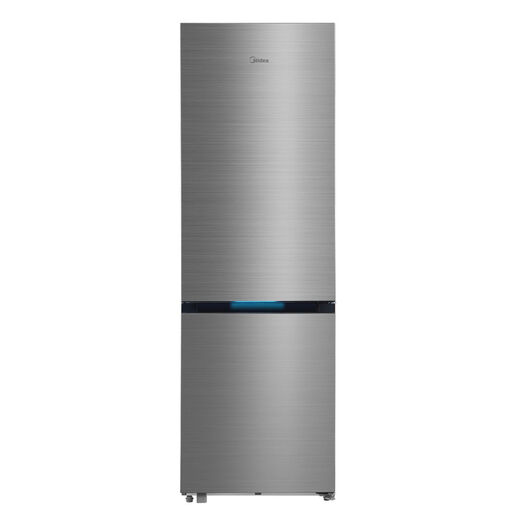 No image available
A fridge-freezer for anyone who needs to keep workshop portions chilled and use a separate freezer compartment.
Stated total capacity: 442 l; No Frost; energy class C; dimensions: 595 × 670 × 2010 mm.
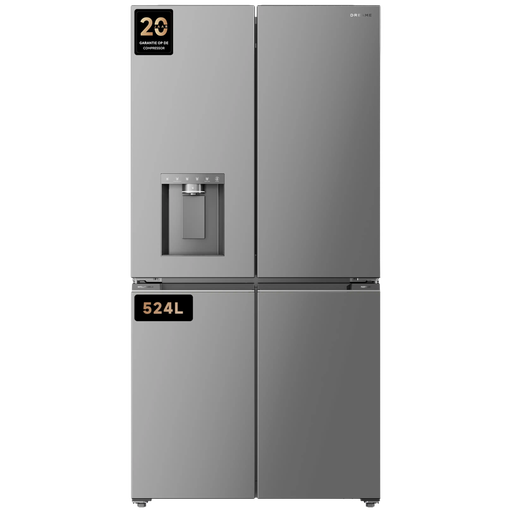 No image available
A model with separate fridge and freezer compartments for anyone who wants to store chilled portions and freeze portions too.
Fridge compartment: 308 l; freezer compartment: 203 l; four-star freezer compartment; energy class E; dimensions: 91,1 × 69,3 × 183 cm.
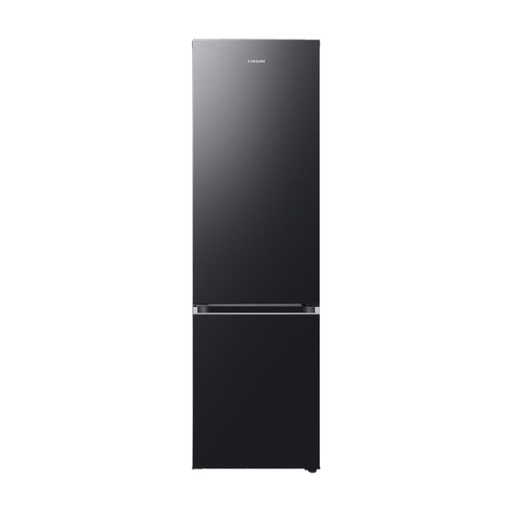 No image available
A fridge-freezer with a drawer described as being for meat and fish. Check the temperature of the chicken yourself.
Energy class A; stated consumption: 108 kWh; height: 2030 mm; Optimal Fresh+ drawer with two zones.
 No image available
A model with separate stated fridge and freezer capacities for anyone who wants to keep portions chilled and needs extra freezer space.
Fridge compartment: 187 l; freezer compartment: 73 l; stated fridge temperature range: 2–8 °C; width: 55 cm; energy class E.
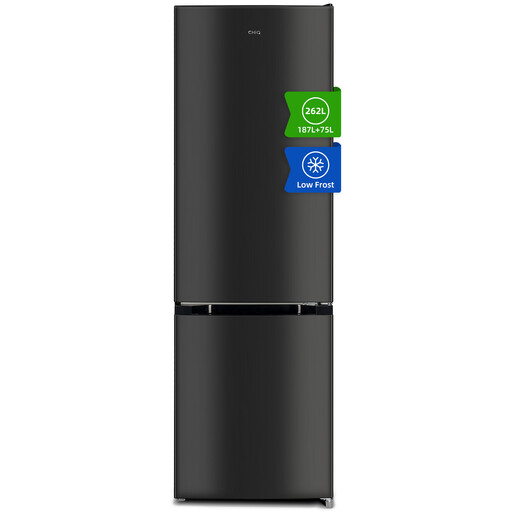 No image available
A fridge-freezer with a four-star freezer compartment for anyone who also wants to freeze portions they’ve prepared themselves.
Stated capacity: 262 l; Low Frost; four-star freezer compartment; noise level: 39 dB.
Let the portions cool, put them in sealed containers and place them in the fridge or freezer within two hours at the latest. The Netherlands Nutrition Centre advises keeping your fridge at 4 °C and eating refrigerated leftovers within two days. Check the temperature during use.
No. Check whether the freezer compartment is suitable for freezing fresh food. The Dutch Consumers’ Association says you need a four-star freezer for this; a compartment with fewer stars is mainly intended for food that has already been frozen.
It depends on whether the workshop is part of a business that prepares, processes or sells food. For businesses, the Netherlands Food and Consumer Product Safety Authority says you must work to an HACCP food safety plan or an applicable hygiene code. In this context, it says unpackaged perishable food should be kept chilled at 7 °C or below.