
Vandaag of morgen in huis

Kwaliteit gegarandeerd

Welkomstaanbiedingen ontgrendelen: GRATIS bezorging | Tot 80% korting | Gratis 30 dagen JoyPlus-proefperiode
Download de app
Chicken treats for dogs and cats are popular because chicken is often clearly listed on the label, and many pets readily accept the flavour. However, a picture of chicken tells you little about the actual composition, texture, or suitability for everyday use. A cheap bag might, for example, be mostly made up of grains, while a treat with a short ingredients list isn't automatically right for every dog or cat.
So, pay particular attention to these three common pitfalls:
First, choose a product that is clearly intended for dogs or cats. Cats have different nutritional needs to dogs. A cat treat like Churu cat treats is therefore not a logical choice for a dog, even if it contains chicken.
Then, look at the full ingredients list. For a straightforward choice, you can check for:
A short list doesn't automatically mean a product is suitable for every animal. If your dog or cat has a sensitive stomach, it's wise to give small amounts at first and, if problems persist, consult a vet.
For dog training treats, small, soft or easily breakable snacks are practical. This way, you can give multiple rewards without using a large piece each time. MeatyWay Chicken Tenders, according to the product information, contains 100% chicken and has a soft jerky texture that can be broken into pieces.
For older dogs, soft dog treats can be easier to eat. A semi-moist snack like PETSNACK Semi-Moist Chicken is described as having a soft texture. However, do check whether the composition suits your preferences: this product contains grains and 7% poultry meal, among other ingredients.
Cats often respond well to a spreadable or liquid texture. INABA Churu, according to the stated product specifications, has a moisture content of 91% and can be given straight from the tube, mixed into food, or used as an aid for giving medication. This makes it particularly suitable for cats that prefer licking to chewing.
Don't just look at the protein percentage. A dried treat often contains relatively high protein per 100g due to its low moisture content, whereas a liquid treat may have a lot of moisture and a lower energy density. The INABA Churu Chicken 50 pcs, for example, states 6 calories per treat and 91% moisture; always check the packaging for the current nutritional information.
Give treats as a supplement and keep the total daily energy intake in mind. A practical guideline found on many product packs is that treats should provide no more than about 10% of daily calories. The exact amount depends on your pet's weight, age, activity level and regular diet.
Also pay attention to shelf life:
Raw chicken feet for dogs and raw chicken parts are not the same as ready-to-eat dog treats. Products like Mooijer Chicken Feet are frozen items and require extra attention to hygiene, storage and supervision. Never give cooked chicken bones: they can splinter. If in doubt, choose a treat that is explicitly labelled as a complementary pet food for dogs.
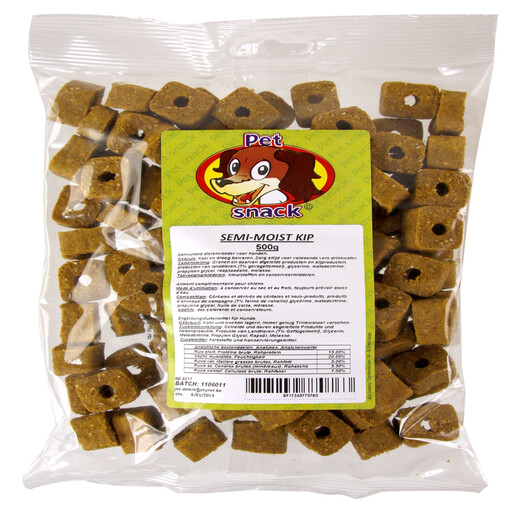
Why this fits the profile: The semi-moist texture is easy to give as a treat or reward. The pack contains 10 bags of 500g, which can be handy for households that use treats regularly.
The texture and target species are clearly described. However, do check the ingredients: alongside 7% poultry meal, the treat contains grains and vegetable by-products.
Soft semi-moist texture; suitable as a complementary snack for dogs, even when a hard treat is less practical.
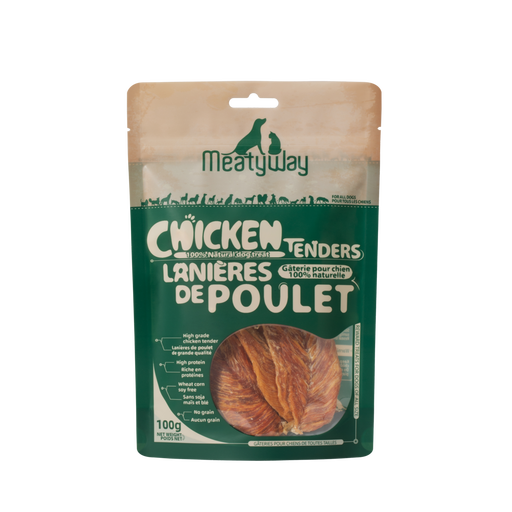
Why this fits the profile: According to the product information, this dog treat has just one ingredient: chicken. The soft jerky can be broken up for training or as a daily reward.
The ingredients list is short and, according to the product description, contains no grains, fillers or artificial additives. This makes comparison much easier.
100% chicken according to the label; minimum 70% crude protein per 100g; easy to portion.
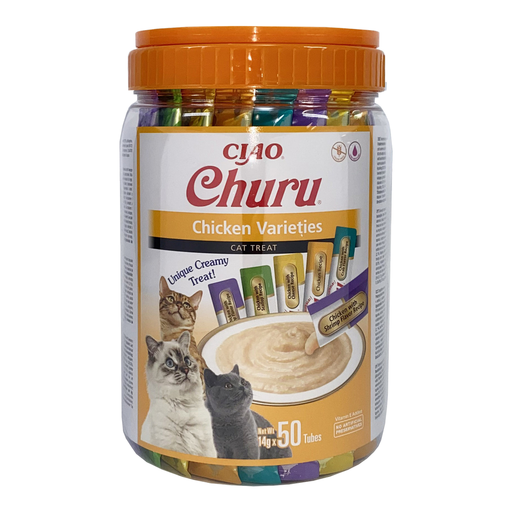
Why this fits the profile: This complementary cat food is designed for hand feeding, as a topping, or for hiding medication. The multipack suits daily use when you want to keep a close eye on portions.
The product is clearly labelled as cat food and provides portion guidance based on body weight. This helps you avoid using a dog treat for a cat.
91% moisture according to the product specifications; 50 portions; chicken and chicken broth listed as ingredients.
We've put together a full, up-to-date list of products that fully meet these strict selection criteria and comply with current European safety regulations.
No. Always check the target species, ingredients, age recommendation and feeding guidelines. If your pet has known allergies, is overweight, or is on a prescribed diet, it's wise to consult a vet. Introduce any new treat in small amounts.
That depends on the product, your pet's body weight, activity level and main diet. Follow the instructions on the packaging and ensure that treats together provide no more than about 10% of daily calorie intake. You may need to reduce their regular food if you're giving extra treats.
Choose a small, soft or breakable treat with a clear portion size. MeatyWay Chicken Tenders and similar chicken jerky for dogs can be divided up. For cats, a liquid reward like Churu can be more practical. With soft products, remember to factor in refrigeration and the limited shelf life after opening.
