
Same-day & Next-day Delivery

Quality Guaranteed

Unlock Your Welcome Offers: FREE Delivery | Up to 80% OFF | Free 30-day JoyPlus trial
Download the APP
Fancy Japanese dumplings with chicken, without making the dough yourself? With chicken gyoza, you can quickly serve up a snack, side dish or complete meal. However, frozen gyoza can vary considerably in size, filling, preparation method and packaging. That means an attractive price per box does not always tell you what you will ultimately pay for or use.
Pay particular attention to these three common pitfalls:
Do not just look at the product name; check the order of the ingredients too. Ingredients are generally listed from highest to lowest weight. In different products, the filling may consist of chicken combined with ingredients such as cabbage, onion, spring onion, carrot, sweetcorn, shiitake mushrooms or leek.
A product described as chicken and vegetable gyoza can therefore taste very different from a chicken and mushroom variety. FreshAsia Jumbo Dumpling Chicken Sweetcorn 600g lists 33% chicken and 13.1% sweetcorn, along with carrot and onion. According to the product information, the filling of Emperor’s Choice Chicken Gyoza 600g x 3 includes cabbage, chicken, onion and leek, among other ingredients.
Also look out for flavourings such as soya sauce, ginger, garlic, sesame oil and flavour enhancers. These are not automatically a mark of quality or a drawback; they mainly help you choose a product that suits your personal preferences.
Many gyoza contain wheat or gluten because of the dough wrapper. Soya is often found in soya sauce or textured soya protein. Sesame may be present in sesame oil. For example, KUNG FU FOOD Chicken & Mushroom Dumplings 400g lists wheat and soya as allergens, while the Ajinomoto Chicken & Vegetable varieties list wheat, soya and sesame.
Always check the current packaging before buying. Product information can change, and details about “may contain traces of” are not always included in full in a short online description.
Nutritional values are also useful when comparing products. Per 100 g, the stated values in this range vary from approximately 146 to 186 kcal, with different amounts of fat, carbohydrates, protein and salt. Compare like for like and do not look only at the brand’s stated serving size.
Most frozen gyoza can be prepared straight from the freezer. Defrosting is often unnecessary and can make the wrappers softer, meaning they are more likely to tear. Always follow the instructions on the packaging.
Common methods include:
For example, Khy Chicken Gyoza - 500 g gives a guideline of around five minutes of steaming, three minutes of deep-frying at 170–180 °C, or a combination of pan-frying and steaming. The exact instructions on your packaging take precedence.
Store the product frozen at the temperature stated on the label, often -18 °C or below. Once defrosted, the product should be stored in the fridge according to the product information and must not be refrozen.
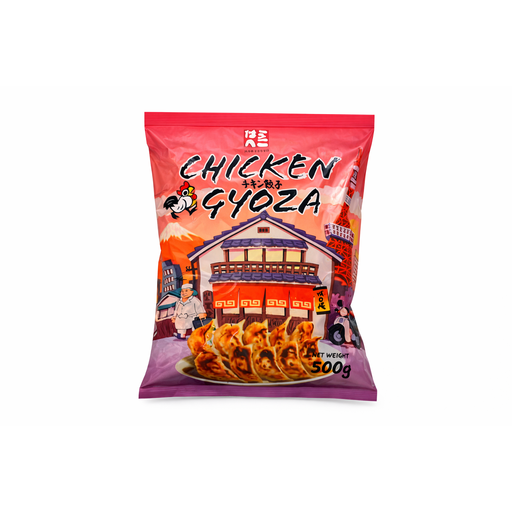
Why it suits this profile: The 500 g pack is a manageable choice for anyone who is preparing chicken gyoza at home for the first time and does not immediately need a large foodservice format.
The product page lists specific preparation methods for pan-frying, deep-frying and steaming, so “ready quickly” is not the only information provided.
500 g net quantity; can be prepared from frozen; ingredients and allergens such as wheat and soya are listed.
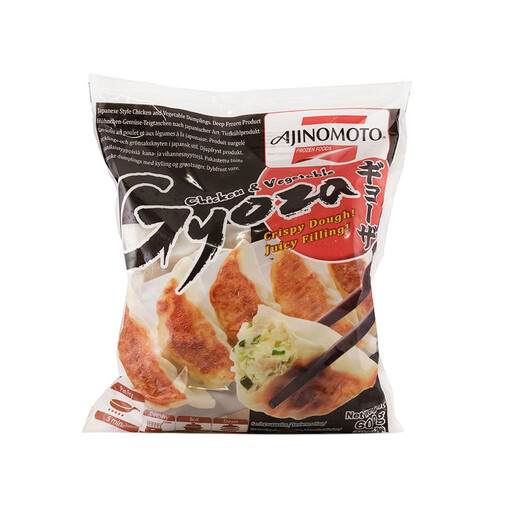
Why it suits this profile: A good choice if you value several preparation options and clear nutritional and ingredient information per 100 g.
The product information mentions pan-frying, steaming and boiling. Wheat, soya and sesame are also identified as allergens.
600 g pack; stated nutritional value of 146 kcal and 8.1 g of protein per 100 g; suitable as a snack, side dish or part of a meal.
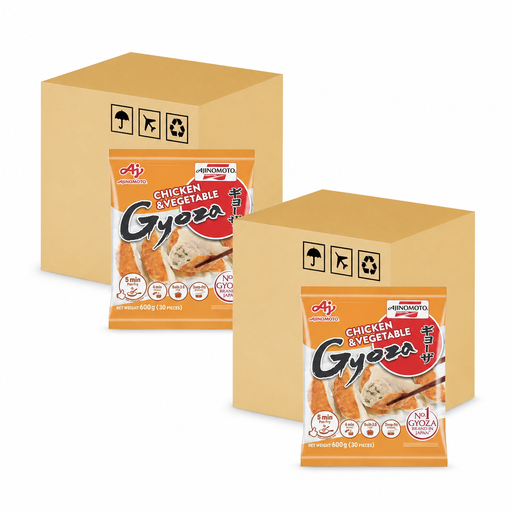
Why it suits this profile: The stated bulk format is aimed at restaurants, caterers, large households and anyone who regularly serves Asian dumplings.
The product listing makes the bulk format clear. Before ordering, however, check the exact number of inner packs and the freezer space available.
Large total quantity; preparation options such as pan-frying, steaming and boiling are described for each portion; practical for repeated use.
We have put together a complete, up-to-date list of products that fully meet these strict selection criteria and the applicable European safety regulations.
Heat a little oil, place the frozen gyoza in the pan and fry the base for a few minutes. Then carefully add the stated amount of water and cover the pan. Cook until the water has evaporated and check that the filling is piping hot throughout. Cooking times vary by brand, so always follow the label.
Yes. Many chicken dumplings are suitable for steaming and boiling. Steamed gyoza generally remain soft, while boiling is a simple option if you want to use little oil. Carefully place the frozen dumplings in the water or steamer basket and follow the cooking time stated on the packaging.
Store unopened gyoza in the freezer at the temperature stated on the packaging. Check the use-by date on the label. Once defrosted, the product must be stored in the fridge and used within the stated period. According to the product information provided, defrosted gyoza must not be refrozen.
