
Same-day & Next-day Delivery

Quality Guaranteed

Unlock Your Welcome Offers: FREE Delivery | Up to 80% OFF | Free 30-day JoyPlus trial
Download the APP
Chicken gyoza are a handy option for a quick meal, side dish or Asian snack. Today's frozen gyoza go straight from the freezer into the pan, steamer or deep fryer. However, there are a few points that online shoppers often check after purchase, when they would be better off checking them beforehand.
The product name alone doesn't tell you everything. Look at the pack size, ingredients, allergens, cooking method and storage instructions. This way, you can avoid buying a large batch that doesn't suit your household, or choosing chicken dumplings that you can't cook safely or practically.
A 1.5 kg pack might be appealing for a family or a fan of Japanese dumplings. However, for someone who just wants to prepare a snack occasionally, such a large batch takes up a lot of freezer space. So check not only the price, but also the weight per pack and how many portions you actually need.
The ratio of chicken, cabbage, onion and other ingredients varies by brand. What's more, chicken gyoza can also contain wheat, soya and sesame. Always check the current ingredients list on the packaging, especially if you have an allergy or intolerance. In the product information for some KHY and Ajinomoto variants, wheat and soya are listed as allergens.
Pan-frying gyoza is not the same as boiling ordinary dumplings. When cooking in a pan, the chicken dumplings are first briefly fried, then steamed with water and a lid. If you only fry them, you might get a crispy outside while the filling isn't hot enough. So follow the instructions on the label and generally cook frozen gyoza without defrosting them first.
For a small quantity, a 500 gram pack is manageable. If you regularly make a quick meal, you could consider a multi-pack. The Khy Chicken Gyoza, for example, is available as a 500 g pack and as a 3 x 500 g multi-pack. A multi-pack cuts down on repeat orders, but does require enough freezer space.
Pay attention to the filling and the dough. According to the product information, the ingredients list for Khy Chicken Gyoza includes wheat flour, cabbage, chicken, onion, leek, garlic and ginger. Textured soya protein, soya sauce and sesame oil are also mentioned. The allergens listed for this variant are wheat and soya.
For Ajinomoto Chicken & Veggie Gyoza, the product description states that chicken, cabbage, wheat flour, onion, garlic, spring onion, soya sauce and sesame oil are used. Gluten-containing cereals, soya and sesame are listed as allergens. Always check the label before purchase; recipes and packaging information can change.
Check whether the gyoza are suitable for your kitchen:
The exact time depends on your appliance, the quantity and the instructions on the packaging. Make sure the filling is piping hot before serving.
According to the product information provided, the stated nutritional values for Khy Chicken Gyoza are 147 kcal, 2.8 g fat, 21.9 g carbohydrates, 7.16 g protein and 1.1 g salt per 100 g. The stated values for Ajinomoto Chicken & Veggie Gyoza are 180 kcal, 7 g fat, 22 g carbohydrates, 7 g protein and 1.5 g salt per 100 g. Use these values for comparison and check the packaging on arrival for the most up-to-date information.
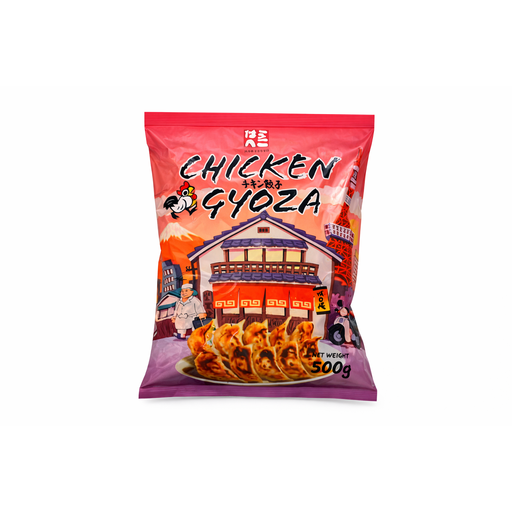
Why this fits: A practical quantity for a one-person household, a couple or anyone wanting to try chicken gyoza for the first time.
The 500 g pack reduces the risk of having too much stock and fits more easily into a standard freezer.
Pan-frying, steaming and deep-frying are all possible according to the product information; the allergens are clearly stated.
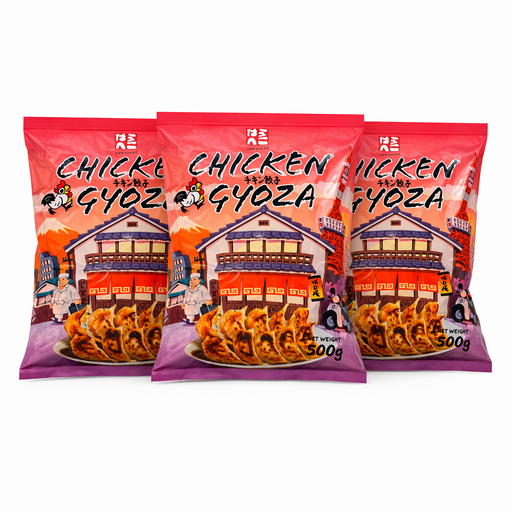
Why this fits: Suitable for families, regular eaters of Asian snacks or households that want to keep multiple portions in stock.
The total quantity is clear upfront: three 500 g packs rather than a vague bulk pack.
Chicken and vegetable filling; suitable for multiple cooking methods and storage in the freezer until use.
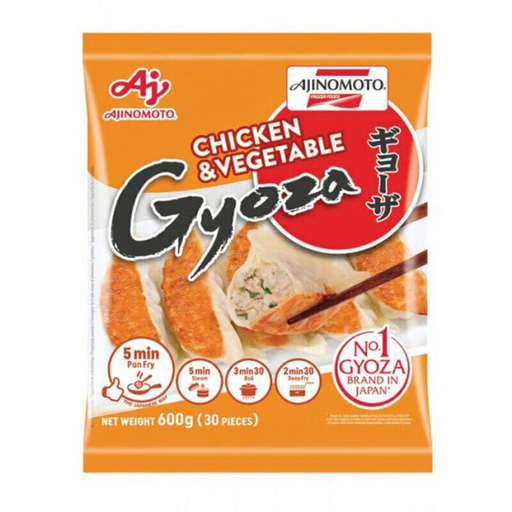
Why this fits: A medium-sized pack for anyone who wants to alternate between frying, steaming or boiling their chicken dumplings.
The product description explicitly mentions multiple cooking options, so you're not reliant on just a frying pan.
600 g pack; according to the label, suitable for pan-frying, steaming and boiling, with chicken and vegetables as the main ingredients.
Keep chicken gyoza frozen at the temperature stated on the packaging. According to the product information, the products mentioned are stored, packed and transported chilled. Check on delivery that the gyoza are still frozen.
Once defrosted, the dumplings should be kept chilled according to the instructions and eaten within the stated time. Do not refreeze a product once it has been defrosted. The best-before date and full usage instructions are on the label. So plan your order around the available space in your freezer and the day you want to eat the gyoza.
Browse the current Joybuy range and compare products based on pack size, ingredients, cooking method and use case.
Yes, the product information for Khy and Ajinomoto gives cooking methods where you don't need to defrost the gyoza first. When pan-frying, add water after the initial frying stage and cover the pan. Always follow the instructions on your packaging.
Follow the date and storage temperature on the packaging. The exact shelf life varies by product and batch. Once defrosted, they must be kept chilled and consumed within the stated period. Refreezing is not recommended.
That depends on the portion size and your menu. Gyoza are often eaten as a snack or side dish. For a quick meal, you could combine them with, for example, steamed vegetables, edamame, rice or a salad. When doing so, check the nutritional values and salt content per 100 grams on the label.
