
Vandaag of morgen in huis

Kwaliteit gegarandeerd

Welkomstaanbiedingen ontgrendelen: GRATIS bezorging | Tot 80% korting | Gratis 30 dagen JoyPlus-proefperiode
Download de app
Chicken dog food is available as dry food, wet food, puppy food and training treats. That makes choosing easier, but comparing products more difficult. Eye-catching packaging or a label such as “premium” does not automatically mean the food is right for your dog.
Most unsuitable purchases come down to three common pitfalls:
The packaging states whether the product is complete food or complementary food. Complete dog food is intended to be given as a daily meal in line with the feeding guidelines. A snack, topper or treat, on the other hand, does not necessarily contain all the nutrients needed for everyday use.
Examples from the range:
Give chicken treats in moderation. INABA Fun Bites states that treats should account for no more than 10% of a dog’s daily calorie intake. Adjust the main meal if you give rewards regularly.
Choose adult dog food if your dog has reached its full size. For a puppy, chicken puppy food is more suitable when its composition and feeding guidelines are tailored to growth. Senior dog food may suit older dogs, but the appropriate age range varies by brand and product.
A few clear examples:
Also consider your dog’s weight, daily exercise and body condition. The recommended amount shown on the bag or packaging is a starting point. An active dog may eat differently from a quiet house dog of the same weight.
An ingredients list shows which raw materials have been used. The analytical constituents include the levels of protein, fat, fibre, ash and moisture, among other things. Only compare products within the same product category: wet food naturally has different percentages from dry food because of its high moisture content.
For example:
Grain-free dog food is not automatically suitable for every dog. Grain-free mainly means that grains are not included in the recipe; on its own, it says nothing about whether the food is right for your pet overall. Always check the full ingredients list and nutritional information.
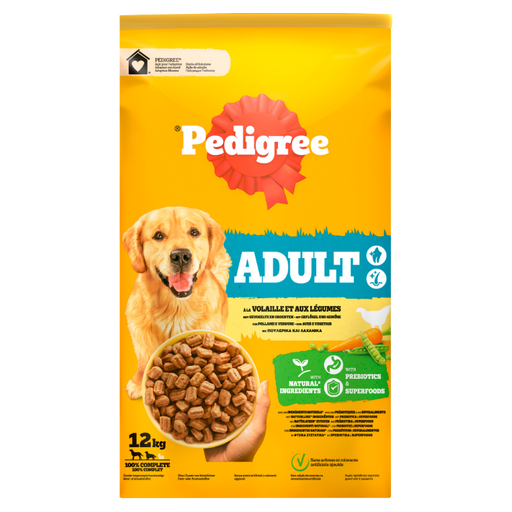
Why it suits this profile: A 12 kg bag is practical for households looking for dry food for an adult dog and wanting to reorder less often.
The product information describes it as a complete dry meal for adult dogs. However, check the current packaging for the exact composition and feeding amounts.
Large pack, dry food format and product information about fibre, protein, vitamin E and zinc.
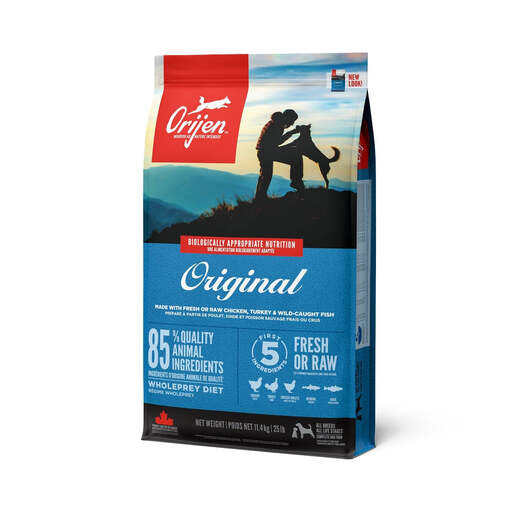
Why it suits this profile: Suitable for anyone looking for a recipe containing chicken, turkey, fish and egg, and wanting to compare the analytical values in detail beforehand.
The ingredients and analytical constituents are clearly listed. The food contains no grains, but it does contain pulses, so check whether it is suitable for your dog.
38% crude protein, 18% crude fat, 12% moisture and a listed fresh chicken content of 25%.

Why it suits this profile: Handy for training, adding variety between meals or as a small reward for dogs of different breeds and sizes.
It is clearly labelled as a snack. This makes it less likely that you will use a complementary treat as a main meal.
Multipack with four chicken varieties, small portions and 82% moisture according to the product information.
We have put together a complete, up-to-date list of products that fully meet these strict selection criteria and the applicable European safety regulations.
Chicken dry food is easy to measure and suitable as a daily meal when it is labelled as complete food. Store an opened bag tightly sealed in a dry place.
Wet dog food generally contains plenty of moisture and can be useful for dogs that prefer soft food. Once opened, a tin or tray should be kept refrigerated. Rosewood and CESAR state that it should be used within a maximum of 48 hours after opening. According to the product information, INABA Fun Bites Chicken with Sweet Potato should be used within 24 hours of opening when stored in the fridge.
Chicken dog treats are suitable for training, but count them towards your dog’s daily allowance. For a puppy, only use rewards that are suitable for its age and size.
Not automatically. Chicken can be part of a suitable diet, but check your dog’s age, size, activity level, ingredients and any known sensitivities. If symptoms persist or your dog is on a prescribed diet, it is advisable to consult a vet.
Mix the new food gradually with the current food over several days. Start with a small amount of the new food and increase it step by step. Follow the instructions on the packaging and keep an eye on your dog’s appetite and stools.
That depends on the brand, pack size and daily amount. Dry food contains little moisture and is often easy to portion by the gram. Wet food may require a larger daily volume because of its higher moisture content. So compare the cost per day, not just the price per tin, bag or multipack.
