
Vandaag of morgen in huis

Kwaliteit gegarandeerd

Welkomstaanbiedingen ontgrendelen: GRATIS bezorging | Tot 80% korting | Gratis 30 dagen JoyPlus-proefperiode
Download de app
A pair of Chicco sandals for boys seems like an easy purchase, until you have to choose between different sizes, styles and materials. For babies and toddlers, you also need to consider that their feet grow quickly and that sandals need to stay secure while they crawl, walk and play.
As a Joybuy Product Recommendation Officer, I focus on information you can check: size, age guidance, material, colour and care instructions. This helps you avoid choosing based only on an appealing photo or a general promise of comfort.
Age guidance is useful as a starting point, but it’s no substitute for measuring your child’s foot. For example, the range includes Chicco sandals in size 150 for 0–1 month, size 170 for 3–6 months and size 190 for 6–9 months. The actual fit can vary from child to child.
Measure your child’s foot while they’re standing, preferably at the end of the day. Then compare its length with the product’s size guide. Also check that the sandal doesn’t pinch their toes and that the heel stays securely in place.
Cotton, polyester and polyurethane each have different properties. A product with a cotton upper may feel soft, while a style with a polyurethane-coated backing will generally respond differently to dirt and moisture. None of these material descriptions alone proves that a sandal is suitable for long walks on hot days.
So check the full product specification. Look at the upper, lining and sole materials, as well as how the sandal fastens. An open design and an adjustable fastening may matter more in everyday use than a general marketing claim.
Dark blue Chicco sandals, grey styles and fuchsia styles may look similar at first glance, but the model number, size and material can differ. Always check the individual product page. Children’s shoes in particular may be available in the same colour in several sizes or versions.
When choosing children’s shoes by size, foot length is the most important place to start. Also look for:
Age labels aren’t shown consistently across the Chicco products. For example, some styles list a size alongside an age range, such as 240 – 24 months, while other versions show a range covering several years. Use age as additional guidance only.
The product information includes the following materials:
Follow the care label for each style. A surface that’s easy to wipe clean is handy for everyday use, but the product specification doesn’t automatically mean the sandals are machine washable. Don’t clean them with hot water or harsh products unless the care instructions say to.
For babies who mainly sit or crawl, a lightweight style with a soft textile element may be a good fit. For toddlers and young boys who spend a lot of time walking outdoors, a secure fastening, a suitable sole and easy care are often more important. If you’re looking for sandals for active play, it’s worth checking the construction and the materials used, rather than focusing on colour alone.
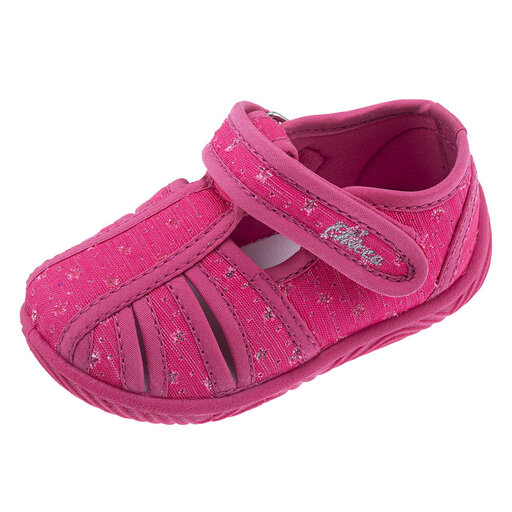
Why it suits this profile: A straightforward option for parents looking for a first pair of sandals for a baby aged around 6–9 months, with a preference for a bright fuchsia colour. The product information lists size 190 and 100% cotton.
The size and age are listed together, so you don’t have to rely solely on a general age category. Be sure to check your child’s foot length before buying.
Size 190, fuchsia colour and 100% cotton composition; follow the product label for care.
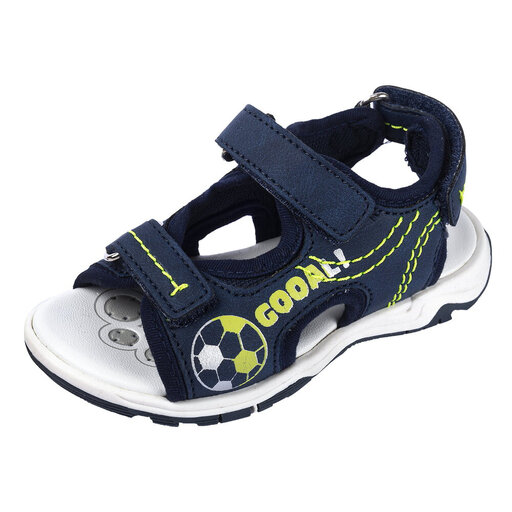
Why it suits this profile: A good choice for parents looking for dark blue sandals for a child around 24 months old who want to check the material details before buying.
The product specification explicitly lists a 100% polyurethane-coated backing. This lets you compare the material and colour separately, without relying on general claims about comfort.
Dark blue colour, size 230 and clearly specified material; follow the care instructions on the label.
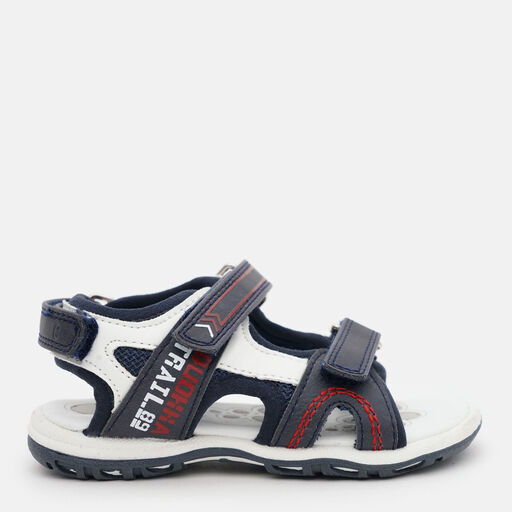
Why it suits this profile: An option for older children up to around 8 years old who need sandals for everyday outdoor wear and prefer a neutral dark blue colour.
Size 320 and the age guidance are clearly listed for the product. The material composition of 80% polyurethane-coated backing and 20% polyester makes it easier to compare with other styles.
Size 320, dark blue colour and a material composition clearly listed in the product details.
We’ve put together a complete, up-to-date list of products that meet these strict selection criteria and the applicable European safety regulations.
How long they last depends on use, fit, how quickly your child grows and how well they’re cared for. Check regularly that your child’s toes aren’t pressing against the front and that the fastening still fits securely. Let wet sandals air-dry and follow the care label. Store them somewhere dry and avoid prolonged exposure to direct heat, unless the manufacturer advises otherwise.
Use the age guidance as a starting point, but always measure both feet. Compare the longer foot with the size information on the product page. For example, size 190 is listed in the range for 6–9 months, while size 320 is listed for around 8 years. These are guidelines, not a guarantee of an individual fit.
There are styles for different age groups, including options for 0–1 month, 3–6 months, 6–9 months, 9–12 months, 12–18 months and toddlers. Check the size, construction and fastening for each product. For a child who’s just starting to walk, a good fit matters more than the colour or appearance alone.
Follow the care label for the style you’ve chosen. The available product information for Chicco sandals says to follow the label instructions. So don’t machine wash them or use harsh cleaning products unless this is specifically recommended. Remove dirt gently and leave the sandals to air-dry.
