
Vandaag of morgen in huis

Kwaliteit gegarandeerd

Welkomstaanbiedingen ontgrendelen: GRATIS bezorging | Tot 80% korting | Gratis 30 dagen JoyPlus-proefperiode
Download de app
Chicco sandals for boys may seem easy to choose at first. However, small differences in size, material and style can have a big impact on everyday wear. Sandals that are too small, difficult to clean or don’t fit well often end up left in the cupboard.
As a Joybuy Product Recommendation Officer, I’ve filtered the key product information based on verifiable specifications. This makes it easier to find Chicco sandals for boys to suit your child’s age, how they’ll be worn and your family’s budget.
Age labels are a useful guide, but children don’t all grow at the same pace. The range includes sizes from 190 to 320, for example, with age labels from around 6 months to 8 years. Always check your child’s foot length and the retailer’s size guide.
The product information links size 230 to around 24 months, while size 270 is listed for around 4 years. That doesn’t mean every child of that age will need the same size.
Cotton, polyester and polyurethane-coated material all have different properties. Cotton can feel comfortable, but may need more attention when it gets wet or stained. A synthetic blend may be easier to wipe clean, but will feel different from fabric.
The materials are clearly listed for the selected styles. Always follow the care label when washing or cleaning them. Don’t assume they’re “water-resistant” unless this is stated in the product information.
A little growing room is practical, but sandals that are too loose can move around as your child walks. When trying them on, check the space around the toes, the width and how well they fit around the foot. The sandals shouldn’t pinch, but they shouldn’t be loose either.
The available sandals in sizes 19 to 32 are listed using product sizes such as 190, 200, 220, 240 and 320. Before you buy, check:
For babies and toddlers, sandals for everyday wear are particularly practical when they’re easy to put on and take off. For older children, walking comfort, wear and care are also important.
The product details show clear differences:
These percentages tell you about the materials, but don’t automatically indicate the fit or how the sandals will feel to wear. Check the product photos, size and care instructions too. According to the product information provided, all the styles listed should be cared for in line with the care label.
Dark blue sandals for boys are easy to pair with everyday clothes, and dust may be less noticeable on them. Fuchsia sandals for boys stand out more and may suit a child who likes a bright colour. Colour is a personal choice and has no direct bearing on fit or comfort.
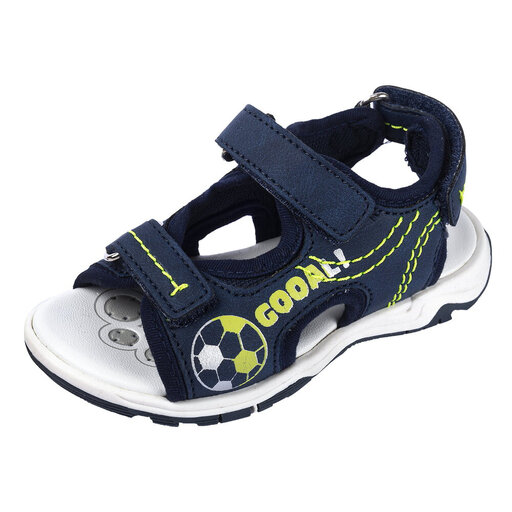
Why it suits this profile: This dark blue style has clear product details, size 230 and an age guide of around 24 months. That makes it easy to compare for a first purchase.
The size and materials are clearly listed, so you don’t have to choose based only on colour or age.
Dark blue colour, size 230 and 100% polyurethane-coated material according to the product information.
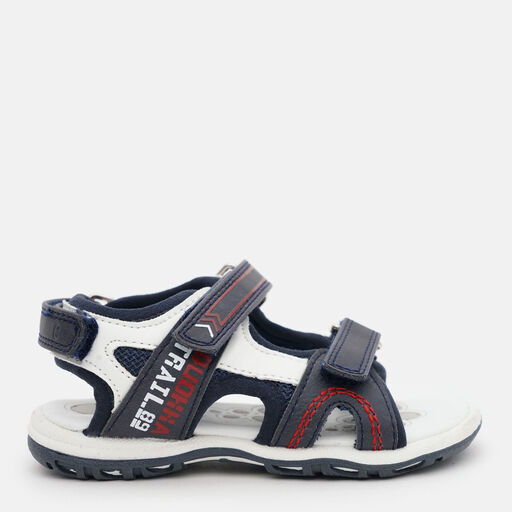
Why it suits this profile: The Conner range pairs a dark blue design with a material blend of 80% polyurethane-coated material and 20% polyester.
The material blend is clearly stated, so you can compare these sandals more easily with cotton or fully coated styles.
Chicco Conner sandals in size 260, with the listed age guide indicating they’re suitable for around 3 years.
Why it suits this profile: The product information links size 320 to around 8 years. This style may therefore suit older children who wear sandals every day.
The larger size helps you avoid choosing smaller sandals based on a general age guide. Always check your child’s foot size, though.
Size 320, dark blue design and 100% polyurethane-coated material according to the listed specifications.
We’ve put together a complete, up-to-date list of products that meet these strict selection criteria and the applicable European safety regulations.
Measure both feet while your child is standing, and use the longer foot as your guide. Compare it with the size chart on the product page. The age guide, such as 24 months, 3 years or 8 years, is just there to help.
The product information describes the styles listed as suitable for everyday wear. Before buying, check the material, size and care instructions in particular. If they’ll be worn frequently, it’s a good idea to check the stitching, fastening and sole regularly.
Always follow the care label. Gently remove dirt and avoid cleaning products that aren’t intended for the material specified. Leave the sandals to dry naturally, then check that the material and fastening are still in good condition.
