
Vandaag of morgen in huis

Kwaliteit gegarandeerd

Welkomstaanbiedingen ontgrendelen: GRATIS bezorging | Tot 80% korting | Gratis 30 dagen JoyPlus-proefperiode
Download de app
A pair of Chicco sandals for boys might seem easy to choose, until you compare different sizes, materials and colour options. For babies, toddlers and young boys, looks aren’t everything. The wrong size, tricky care or unclear product description can mean the sandals rarely get worn.
This guide helps you compare sandals for boys and children’s sandals using verifiable product details. That way, you can make an informed choice without relying on exaggerated marketing claims.
Age guidance is useful as a starting point, but children don’t all grow at the same rate. The range includes Chicco sandals with size codes such as 150, 170, 190, 230 and 320. The product information links these codes to age ranges, but fit is what matters most.
So measure your child’s foot according to the shop’s or manufacturer’s sizing instructions. Also check that the toes don’t press against the front and that the sandal stays secure around the heel.
Open sandals may feel more breathable, but that doesn’t tell you anything about the fit. Look at the shape of the front, the fastening and the support around the foot. A style that’s easy to put on but shifts around when walking is less practical for everyday wear.
For toddler sandals, an easily adjustable fastening is important. For older children, also consider whether the sandals are suitable for school, holidays, the playground or walks.
A material such as polyurethane or polyester tells you something about the composition, but it doesn’t automatically mean the sandals are water-resistant, breathable or hard-wearing. Always check the specific product details and care label.
The Chicco products in this selection use 100% polyurethane-coated support, a blend of 70% polyester and 30% polyurethane-coated support, or 80% polyurethane-coated support and 20% polyester. These are product specifications, not a guarantee of a particular lifespan.
First, check your child’s current foot length and compare it with the size chart. Use age only as additional guidance. Growing feet may need a little extra room, but too much space can reduce stability.
When the sandals arrive, check:
This selection ranges from small sizes for babies up to size 320 for children around the age stated in the product information. There are options for baby sandals, toddler sandals and boys’ footwear up to around eight years old.
Most of the selected Chicco sandals are made from synthetic materials. This can be practical for everyday wear, but follow the care instructions for each style. The product information for these models says: follow the washing and care instructions on the label.
Don’t use a harsh cleaner without checking the care advice first. After cleaning, leave the shoes to dry naturally and don’t place them directly on a radiator unless the manufacturer specifically allows it.
Navy sandals for boys are easy to pair with everyday clothes, and light surface marks are often less noticeable. Grey sandals for boys have a neutral look and work with both light and dark clothing.
Colour is a personal choice. What matters more is whether the material, size and fastening suit the activity. For energetic outdoor play, a secure fit and easy care are especially important.
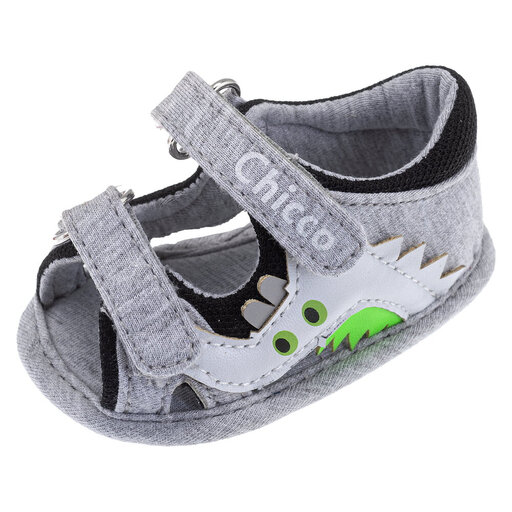
Why it suits this profile: The grey colour is neutral, and the product information gives size 170 as suitable for the indicated age range of 3 to 6 months. That makes it an easy-to-understand choice if you’re comparing baby sandals for the first time.
The size, colour and material composition are clearly stated. Before buying, though, check your child’s foot measurement and the available size chart.
Grey design; 70% polyester and 30% polyurethane-coated support; care according to the label.
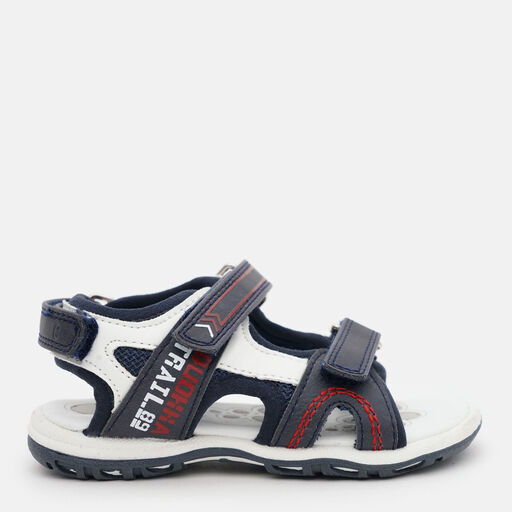
Why it suits this profile: This Conner style is a good option if you’re paying particular attention to the material composition and want a navy design for everyday wear.
The composition is clearly stated as 80% polyurethane-coated support and 20% polyester. This means you don’t have to rely on a general comfort claim alone.
Navy colour; size 230; material proportions and care information are provided.
Why it suits this profile: The product information links size 320 to children aged around eight. This style is therefore aimed at older boys who wear sandals for much of the day.
The product variant is clearly specified. For frequent wear, check the fit, fastening and condition of the sole when the sandals arrive.
Navy Conner design; size 320; 80% polyurethane-coated support and 20% polyester.
We’ve put together a complete, up-to-date list of products that meet these strict selection criteria and the applicable European safety regulations.
Measure both feet and use the longer measurement as your guide. Compare it with the official size chart. The codes 150, 170, 190, 230 and 320 are product sizes, so don’t rely on the age guidance alone.
The product descriptions present these styles as suitable for everyday wear. Whether a pair is right for your child depends on the fit, fastening, activity and care. Check the sandals when they arrive and follow the label for cleaning.
Both colours are neutral. Navy and grey are easy to pair with clothes. Choose based mainly on size, material and intended use. Colour alone doesn’t determine comfort or lifespan.
