
Vandaag of morgen in huis

Kwaliteit gegarandeerd

Welkomstaanbiedingen ontgrendelen: GRATIS bezorging | Tot 80% korting | Gratis 30 dagen JoyPlus-proefperiode
Download de app
Chicco dark blue sandals are practical for everyday wear, but a good product photo doesn’t tell you everything. Growing feet can make it especially easy to choose the wrong size, overlook unclear material details or end up with a pair that’s difficult to care for. So if you’re looking for Chicco dark blue boys’ sandals, it’s worth considering more than just the colour and brand.
In this buying guide, we look at the key things to consider when choosing Chicco children’s sandals, from baby sizes to styles for boys of around 8 years old. Then you’ll find a few recommendations for different uses.
Age guides such as ‘24 months’ or ‘4 years’ are just an indication. Children of the same age can have different foot lengths and widths. The Chicco styles listed here include size codes such as 220, 230, 240, 270, 290, 300 and 320.
Use the age guide as a starting point, but always check the product’s size chart. If you’re unsure, measure your child’s foot and compare it with the stated insole length. Don’t automatically buy a size up ‘to allow room to grow’: too much space can make the foot slide around.
The product details for these styles include polyurethane-coated support, while the Conner style is listed as a combination of 80% polyurethane-coated support and 20% polyester. This tells you about the materials used, but it doesn’t automatically mean the sandal is fully waterproof, breathable or suitable for extended water use.
So always check:
Children’s sandals come into contact with sand, mud and spilt drinks. However, not all styles are suitable for machine washing. For the Chicco sandals in this selection, the advice is to follow the instructions on the care label.
Wipe off dirt as soon as possible with a soft, slightly damp cloth. Leave the sandals to dry at room temperature and avoid putting them near a radiator or using a hairdryer. This helps reduce the risk of the sandals becoming misshapen or the coating getting damaged.
A good fit is especially important for baby boys’ sandals and sandals for toddlers, as young children can’t always tell you when something is rubbing or pinching. When trying them on, check:
Don’t convert product codes such as 220, 230 and 240 into European shoe sizes without checking. Use the size shown on the product page and check the size information provided.
If you’re looking for easy-care children’s sandals, consider synthetic materials such as polyurethane-coated support. According to the product descriptions, these materials are practical for everyday wear and easy to care for using the recommended cleaning method.
The Chicco Conner sandals are listed as 80% polyurethane-coated support and 20% polyester. The other dark blue Chicco sandals in this selection are listed as 100% polyurethane-coated support. These differences are clearly shown in the product details, but they don’t on their own determine which style is right for every child.
For nursery, school and days out, a neutral colour and easy care are often handy. Dark blue hides light marks better than some lighter colours, but sand and dried mud will still show. For more frequent everyday wear, a secure fastening and a good fit are particularly important.
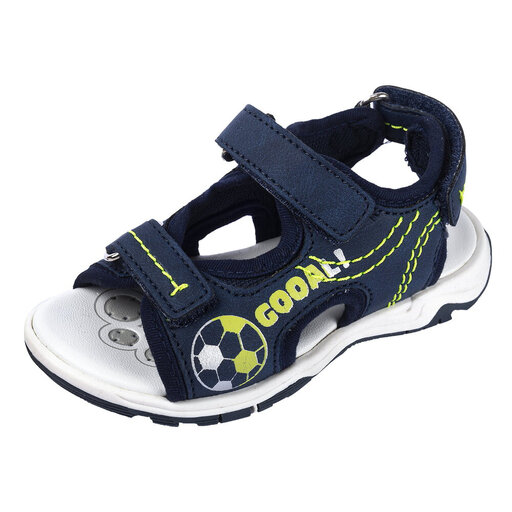
Why it suits this shopper: A straightforward choice for parents looking for a dark blue sandal for a child around the stated age of 24 months. This style makes it easy to compare the basic features of Chicco sandals without additional material variations.
The size code and age guide are clearly shown with the product. Always check your child’s foot length too, so you don’t order based on age alone.
Dark blue; 100% polyurethane-coated support according to the product specifications; care as directed on the label.
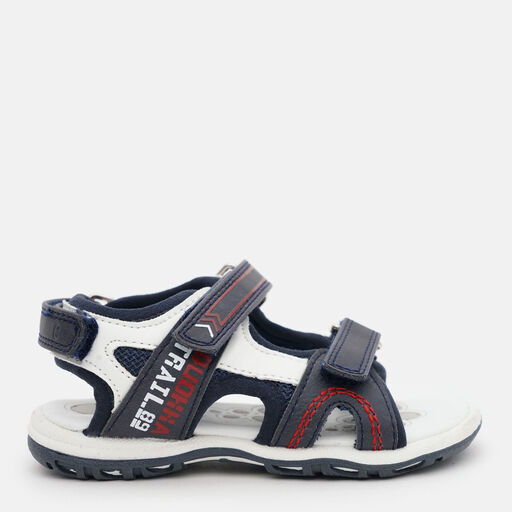
Why it suits this shopper: The Conner style is worth considering if, as well as colour and brand, you want to look at the material composition. The product page lists a combination of polyurethane-coated support and polyester.
The composition is clearly stated: 80% polyurethane-coated support and 20% polyester. That means you don’t have to interpret a vague claim about the materials.
Conner style; dark blue; clearly specified material combination; size 240 is linked to an age guide of 24 months.
Why it suits this shopper: According to the product information, this size is intended for boys up to around 8 years old. It could therefore suit school days, outdoor play and everyday wear, as long as the size and fit are right.
The product specifications state both size 320 and that the style is for boys. Still, check your child’s current foot length and the fastening before ordering.
Dark blue; 100% polyurethane-coated support according to the product details; style for everyday wear.
The product selection includes several sizes that broadly fall within the range of sizes 22 to 32. Note that the retailer lists these styles using codes such as 220, 230 and 320. Always check the specific product page rather than assuming the code itself is a standard European shoe size.
For toddlers, the Conner styles in sizes 230 or 240 are possible starting points to compare. For older children, sizes 290, 300 and 320 are available in this selection. The right choice depends on your child’s current foot length and width, as well as the room around the toes.
We’ve put together a complete, up-to-date list of products that meet these strict selection criteria and the applicable European safety regulations.
Measure your child’s foot and compare its length with the size chart on the product page you’ve chosen. Use the age guide only as a reference. Product codes 220, 230 and 320 aren’t automatically the same as European shoe sizes 22, 23 and 32.
According to their product descriptions, the styles listed are intended for everyday wear. Check the fastening, fit, materials and care instructions to make sure they suit your needs. The product information doesn’t give a general guarantee that they’re suitable for water or intensive sports activities.
Always follow the care label. In general, you can gently remove visible dirt with a soft, slightly damp cloth. Then leave the sandals to dry naturally and don’t use harsh cleaning products unless the manufacturer specifically recommends them.
