
Vandaag of morgen in huis

Kwaliteit gegarandeerd

Welkomstaanbiedingen ontgrendelen: GRATIS bezorging | Tot 80% korting | Gratis 30 dagen JoyPlus-proefperiode
Download de app
Looking for Chicco children’s clothing seems straightforward – until you have to choose between bodysuits, tops, baby sets, pyjamas and clothes for older children. A low price doesn’t automatically tell you about the fit or how long it will last. And a nice product photo doesn’t always show whether a garment is suitable for everyday life in the UK.
With this guide, you can compare Chicco baby clothes and Chicco children’s clothing on verifiable points: size, fabric, style and care. That way, you’ll avoid a bad purchase and make a more informed choice between Chicco long-sleeved tops, Chicco bodysuits and sets.
Age labels such as “6 months” or “3 years” are a guideline. Children don’t grow according to one fixed schedule. That’s why with Chicco clothing by size, you’ll often see a measurement in centimetres, for example 62, 68, 98, 110 or 128.
A top in size 110 might, according to the product information, fit around 5 years, but body measurements are more important than age. If in doubt, check the chest, waist and hip circumference.
“Cotton children’s clothing” can have different compositions. A product made from 100% cotton differs in properties from a garment with 95% cotton and 5% elastane or 60% cotton and 40% polyester.
Elastane can add stretch, while polyester can affect the composition, feel and care requirements. So always look at the full fabric percentage, not just the word “cotton”.
A baby set might consist of a top and trousers, a top and shorts, or several bodysuits. So check whether you’re actually getting two garments, which sizes are included, and whether the colour matches your expectations.
Terms like “boys”, “girls” and “unisex” also appear in some product titles. The practical fit and size are usually more important than this classification. Chicco unisex clothing, for example, can be a useful choice when you want to hand clothes down or are looking for neutral colours.
The available Chicco clothing ranges in the provided size guides from approximately 44 cm for newborns up to 152 cm for children around 11 to 12 years. For babies, sizes 50, 56, 62, 68, 74, 80 and 86 are common. For toddlers and children, you’ll see sizes like 92, 98, 104, 110, 116, 122 and 128.
Where possible, measure:
Don’t choose an extra-large size just because a child is growing quickly. Sleeves that are too roomy or a loose neckline can make daily dressing more difficult.
The product information shows various compositions:
These percentages describe the fibre composition, but they don’t tell you everything about the thickness, finish or fit. So also check the product photos, the type of garment and the washing instructions. Always follow the label for washing temperature, drying and ironing.
For layering in the British climate, Chicco long-sleeved tops are practical to combine with trousers, a cardigan or a jacket. A bodysuit remains handy for babies as a base layer, while a two- or three-piece set quickly creates a complete outfit.
Also consider the situation:
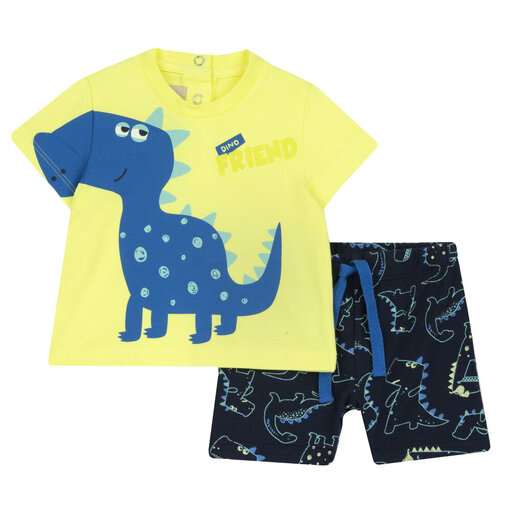
Why this fits the profile: This two-piece set consists of a top and shorts in size 68, intended for around 9 months. The unisex design can be practical for everyday use or for handing down later.
The contents are clearly specified as a 2-piece set. Do check whether size 68 matches your child’s current body measurements.
Two-piece design, unisex style and a fabric composition of 60% cotton and 40% polyester.
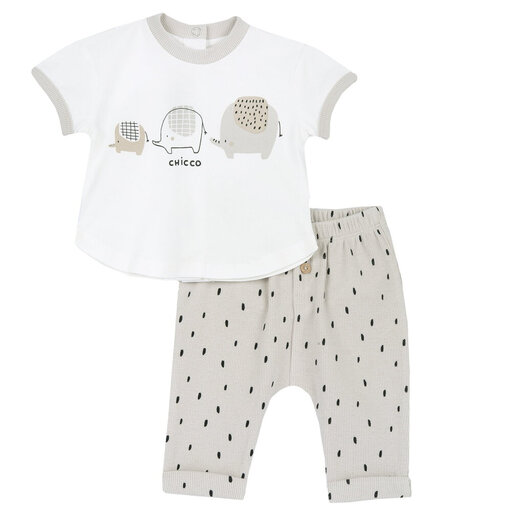
Why this fits the profile: The set combines a top and trousers in size 62 for around 6 months. The composition of 95% cotton and 5% elastane is clearly stated for parents who place great importance on fabric information.
You can see both the contents of the set and the fibre composition upfront. That means you don’t have to rely solely on general comfort claims.
Top and trousers set, unisex design and 95% cotton with 5% elastane.
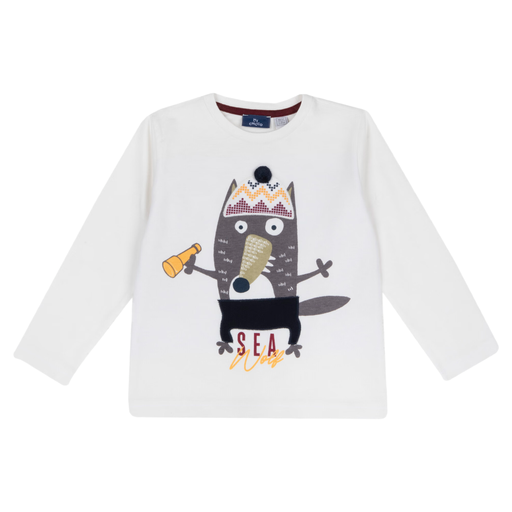
Why this fits the profile: This white long-sleeved top is available in size 110, linked to around 5 years. The style can be worn as a separate layer and combined with various trousers and cardigans.
The size guide includes both age and body length. Check the chest and waist circumference before buying, as the tables can vary between products.
Long sleeves, white colour and a size range that runs from baby to children’s sizes.
We’ve put together a full, up-to-date list of products that fully meet these strict selection criteria and current European safety regulations.
Use the age only as a first indicator. Measure your child’s body length and then compare it with the size guide for the specific product. A size 68, for example, corresponds to approximately 68 cm body length, but the associated age can vary from child to child.
Not every item has the same composition. The range includes products made from 100% cotton, but also garments with 95% cotton and 5% elastane, or 60% cotton and 40% polyester. So always check the product details and the washing label.
Follow the washing instructions on the label. The recommended temperature, drying method and ironing instructions can vary depending on the fabric and product. Wash new clothing according to the label and check after washing that the fit and fastenings still sit well.
