
Vandaag of morgen in huis

Kwaliteit gegarandeerd

Welkomstaanbiedingen ontgrendelen: GRATIS bezorging | Tot 80% korting | Gratis 30 dagen JoyPlus-proefperiode
Download de app
Chicco children’s clothing is available for different ages, body types and everyday situations. You’ll find Chicco baby clothes, bodysuits, T-shirts, leggings, skirts and two-piece sets, among other items. However, an appealing colour or low price alone isn’t enough to make a good purchase. The right size, fabric composition and care requirements determine how practical a garment remains in everyday use.
Age labels such as “3 months” or “3 years” are useful, but children don’t all grow in the same way. With Chicco, for example, sizes range from size 50 for approximately 1 month to size 152 for approximately 11 to 12 years. Always check the height in centimetres and, where necessary, compare it with the chest, waist and hip measurements.
According to the product information, a size 98 T-shirt is intended for approximately 3 years, but body measurements can vary from child to child. Buying a larger size isn’t automatically more practical either: sleeves that are too loose or a neckline that is too wide can actually make everyday wear more difficult.
“Cotton” doesn’t tell you everything about the fit or care requirements. The range includes items made from 100% cotton, as well as garments made from 95% cotton and 5% elastane. Elastane can provide extra stretch, while a cotton garment without elastane will feel different when worn.
Sets don’t always have the same composition either. One Chicco baby set may be made from 100% cotton, while another contains 60% cotton and 40% polyester. So check the full product specification rather than looking only at the name or colour.
Children’s clothing is washed frequently. The washing temperature, drying method and ironing instructions can affect its shape and appearance. The product information for several Chicco items refers to the care label. This label should always take priority, as the composition can vary between models.
Before buying, check that the care requirements suit your household. A garment that can only be washed carefully needs more attention than an everyday T-shirt that you plan to wash regularly.
Use the size as your first filter, but also check:
For babies, practical styles such as a Chicco bodysuit, vest or short-sleeved bodysuit are often easy to combine. For toddlers and school-age children, a Chicco long-sleeved T-shirt, short-sleeved T-shirt, jogging bottoms or leggings can work well as individual wardrobe essentials.
Pay attention to the exact percentages. Examples from the range include:
Cotton children’s clothing is often chosen for everyday outfits, but the right choice depends on the garment and the level of freedom of movement you want. Elastane can be useful in leggings or a close-fitting T-shirt. A polyester-blend set may have different care requirements from a garment made entirely of cotton.
First decide what you need the garment for:
Also check the target group in the product description. The range includes Chicco girls’ clothing, boys’ clothing and Chicco unisex clothing. The colour and cut are ultimately a matter of personal choice; the technical details remain more important when it comes to practical suitability.
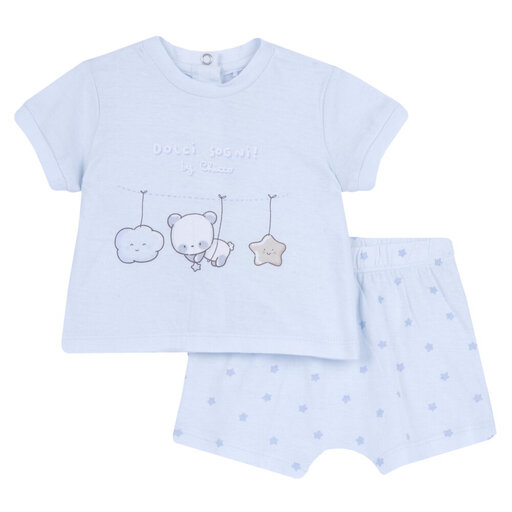
Why it suits this profile: This two-piece set combines a T-shirt with shorts and is available in size 50, for approximately 1 month. That makes it a straightforward starting point for a baby outfit.
The size and composition are clearly stated: size 50 and 100% cotton. However, always check the care label for washing and maintenance instructions.
Two-piece outfit, light blue colour and 100% cotton fabric composition.
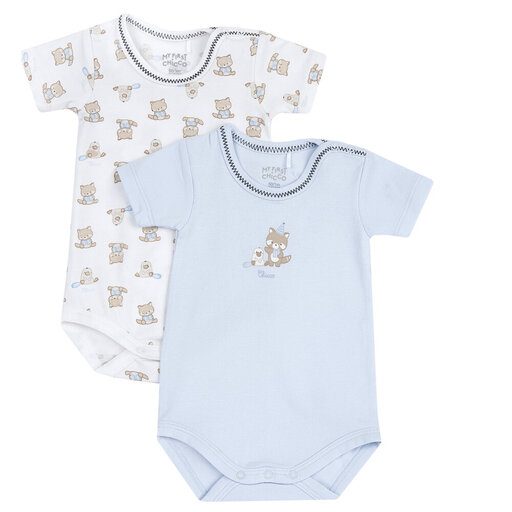
Why it suits this profile: A set of two bodysuits is practical when a child needs changing regularly. This model is size 92 and made from 95% cotton and 5% elastane.
The multipack means you don’t need a separate garment for every use. However, size 92 should be compared with the child’s current height.
Two pieces per pack and 5% elastane alongside cotton.
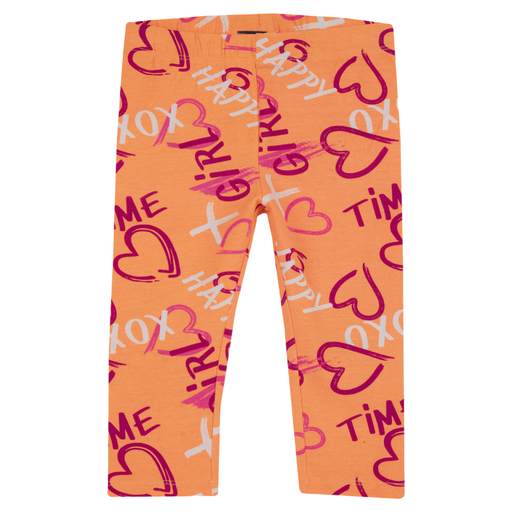
Why it suits this profile: These size 104 leggings are intended for children of around 4 years and are well suited to active everyday wear where freedom of movement is important.
The product information explicitly identifies it as leggings and states the size as 104. This lets you compare the style with the child’s body measurements rather than relying on age alone.
Orange colour with a print and a style specifically described as leggings.
We’ve put together a complete, up-to-date list of products that fully meet these strict selection criteria and the applicable European safety regulations.
Wash each garment according to the label and sort colours where necessary. For T-shirts, bodysuits and sets, check the recommended temperature. When dealing with elasticated fabrics, don’t use any treatment that isn’t stated on the label. Allow clothing to dry completely before checking the seams, fastenings and any prints.
Store clothing that is still too large separately from your everyday wardrobe. This helps prevent you from accidentally using the wrong size. For fast-growing children, it can be useful to compare one current size with the next size up, but don’t automatically buy several sizes in advance.
In the size charts provided, the range runs from size 44 to size 152. The range includes size 50 for babies, sizes 62 and 68 for young babies, and larger sizes such as 140 and 152 for children up to approximately 12 years. Check the specific availability and size indication for each product.
Many product descriptions state that the items are suitable for everyday use. The right choice depends on the model, fabric, size and care requirements. A cotton T-shirt, bodysuit or pair of leggings, possibly with elastane, may be suited to a different use from a polyester-blend set. Always check the product specifications and care label.
Choose long sleeves when you want an extra layer or more coverage for the arms. Short sleeves and tank tops are more suitable for warmer conditions or under a cardigan. For both styles, pay attention to the size, neckline, fabric composition and whether the garment can be washed according to the label.
