
Vandaag of morgen in huis

Kwaliteit gegarandeerd

Welkomstaanbiedingen ontgrendelen: GRATIS bezorging | Tot 80% korting | Gratis 30 dagen JoyPlus-proefperiode
Download de app
A pair of Chicco boys’ sandals may seem simple to choose, until you compare the size labels, materials and age indications side by side. A sandal that looks good in the photo may still prove impractical in everyday use if the size is wrong, the material is unsuitable or it requires more care than expected.
As a Joybuy Product Recommendation Officer, I mainly filter products using verifiable information from the product description. This helps you avoid choosing based solely on colour, brand name or general marketing copy.
Age is a useful indication, but it is not a substitute for choosing the right size. Within the Chicco collection, size indications range from 160 to 320, with age references from around 3 to 6 months up to 8 years. Children of the same age may have different foot sizes.
Use age as your initial filter, then always check the specific size on the product page. For example, size 190 may be listed for 6 to 9 months, while size 240 may be listed for 24 months on some models.
Chicco dark blue sandals, Chicco fuchsia sandals and Chicco grey sandals are not automatically made from the same material. The available product information states, for example:
Colour therefore says little about the construction. Check the material and model code before placing your order.
Words such as “comfortable” or “suitable for everyday use” provide some guidance, but they do not tell you everything about how the sandal will fit a child’s foot. Also consider the fastening, room around the toes, flexibility and whether the sandal feels tight when your child moves.
According to the product description, these models are intended for everyday use. This is not a medical or universal performance claim. Ultimately, suitability depends on the child’s foot shape, how the sandals are used and how well they fit.
The range includes sandals for babies, toddlers and boys up to around 8 years old. In the available variants, sizes range from 160 to 320. These include:
The age indication varies by model. For example, Chicco 01069020000000 BOYS GREY 160 is listed for 3 to 6 months, while Chicco 01069122000000 BOYS DARK BLUE 320 is indicated for 8 years. Always check the latest size information and compare it with your child’s foot measurement.
Do not automatically buy a larger size “to allow for growth”. Too much room can make a sandal less stable or cause your child to trip. A small amount of extra space can be practical, but the heel and instep should remain securely in place.
The material affects how you use and care for the sandals:
The country of origin also varies by variant. The product information lists China for several fuchsia and grey models and Bangladesh for the dark blue models. This is useful information when making a purchase, but it is not, by itself, an indication of fit or lifespan.
Check the product photo and product page to see how the sandal opens and fastens. For a toddler who often tries to put their own shoes on, a simple fastening may be more practical. For everyday use at nursery, school or the playground, these points are also important:
Not every detail, such as the exact sole thickness or fastening, is included in the supplied product information. Base your choice on what is actually stated on the product page and use the images as an additional check.
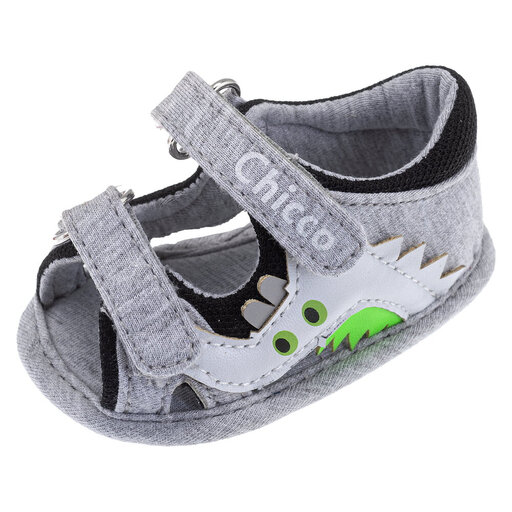
Why it suits this profile: According to the product information, size 160 is intended for 3 to 6 months. The grey colour is neutral and the material is clearly stated.
The size and age indication are clearly shown, so you do not have to rely solely on a general age category.
Grey design; 70% polyester and 30% polyurethane-coated support; size 160.
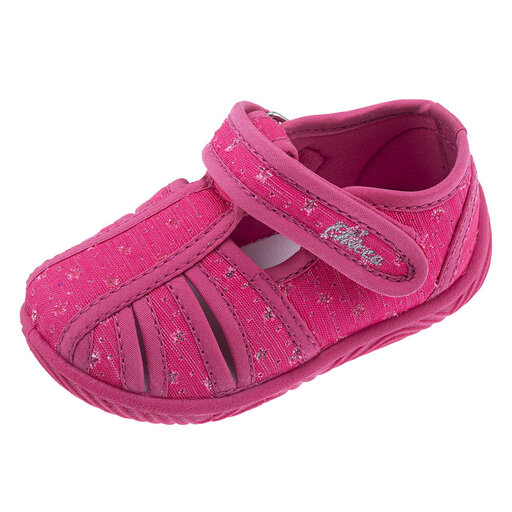
Why it suits this profile: Ideal for parents looking for a striking colour and clearly specified textile material for a toddler of around 24 months.
The composition is explicitly stated as 100% cotton. This allows you to compare the material instead of judging by the fuchsia colour alone.
Fuchsia design; 100% cotton according to the product information; size 240.
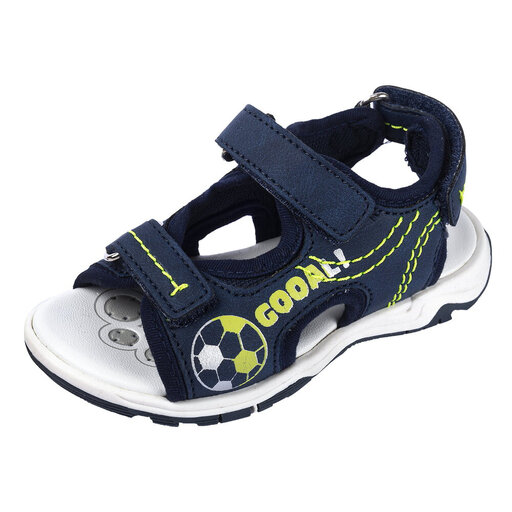
Why it suits this profile: Size 290 is listed for approximately 6 years. The dark blue design is easy to coordinate and features polyurethane-coated support according to the product details.
The size is linked to a specific age indication and the material is listed separately. Also check the care label for everyday use.
Dark blue colour; size 290; 100% polyurethane-coated support according to the product description.
First compare variants within the same size group. A fuchsia sandal in size 240 and a dark blue model in size 240 may differ in colour and material, even though the age indication may be the same. Consider the following order:
For babies and toddlers, lightweight sandals are often sufficient for short periods indoors or outdoors in dry weather. For older children who walk and play every day, the most important factors are whether the sandal stays securely in place and is easy to care for. The product information does not specify a fixed lifespan. Check the condition of the sole, seams and fastening regularly, and replace sandals when they show visible wear or no longer fit properly.
We have put together a complete, up-to-date list of products that fully meet these strict selection criteria and the applicable European safety regulations.
This depends on your child’s foot length and the specific model. The available collection includes sizes from 160 to 320. Use the age indication as a guide only and check the size details on the product page before ordering.
Some models have age indications from around 3 to 6 months, while other variants are intended for toddlers and children up to around 8 years old. Check the size, material and fit for each product. A sandal should fit securely without feeling tight.
Always follow the washing and care label for the model you choose. The available product information includes materials such as cotton, polyester and polyurethane-coated support. These materials do not necessarily require the same treatment. Do not use a general cleaning method without checking the label first.
