
Vandaag of morgen in huis

Kwaliteit gegarandeerd

Welkomstaanbiedingen ontgrendelen: GRATIS bezorging | Tot 80% korting | Gratis 30 dagen JoyPlus-proefperiode
Download de app
A pair of Chicco boys’ sandals might seem easy to choose, until you have to decide on the size, fastening, material and colour. For babies and toddlers in particular, the wrong choice can quickly lead to shoes that barely get worn. Children’s feet are also still growing, and sizes can vary between models.
So don’t just look at the appearance. Check the product details, compare the fit with your child’s current foot size and consider whether the material is suitable for how the sandals will be used. Below, you’ll find the key points to consider, along with some popular options from the Chicco children’s sandals range.
Age guides are useful as a starting point, but they’re no substitute for measuring. The range includes models with size codes from 150 to 320 and age indications from 00M-01M to 8 YEARS. This information varies by model, so always check the size guide and your child’s foot length.
When choosing sandals in sizes 19 to 32, it’s especially important to read the sizing information carefully. Don’t automatically assume that a product code such as 230, 260 or 320 corresponds to a standard European shoe size without checking the accompanying size information.
Navy boys’ sandals are easy to coordinate, while grey boys’ sandals go with a wide range of outfits. A fuchsia pair, on the other hand, can stand out and be easy to recognise. However, colour tells you nothing about the fit, lining or care requirements.
As well as the colour, check the material and construction. The available models use a range of materials, including polyester, cotton and polyurethane-coated support material. These are different compositions, each with its own care instructions.
According to the product descriptions, these models are designed for comfortable everyday wear. That doesn’t mean every model will feel the same on every child’s foot. Fit, width, heel space and fastening all play a part in whether your child finds the sandals comfortable.
When they arrive, check that there’s enough room for your child’s toes to move, that the heel stays in place and that no hard edges press against the skin. If irritation occurs, stop wearing the sandals and check the fit again.
Use age only as a supplementary guide. Measure both feet, preferably at the end of the day, and compare the longer foot with the size guide. Allow for socks if your child will wear them with the sandals.
The range includes:
The age information in product listings isn’t always written consistently. You may see, for example, “24M”, “3 YEARS” and “09M-12M”. So use the specific size and current size guide as your main checks.
The material affects the look and flexibility of the sandals, as well as how you should care for them. Product specifications include:
Always follow the washing and care label. Don’t wash or dry the sandals in a way that isn’t recommended by the manufacturer. Depending on the model, the product information lists China or Bangladesh as the place of dispatch or origin. The manufacturer is listed as Artsana S.p.A. in Italy.
For short outings, nursery or everyday wear, a low-maintenance model can be a practical choice. For more intensive use, such as lots of walking outdoors, a good fit and secure fastening matter more than simply choosing the lowest price.
When trying them on, check for:
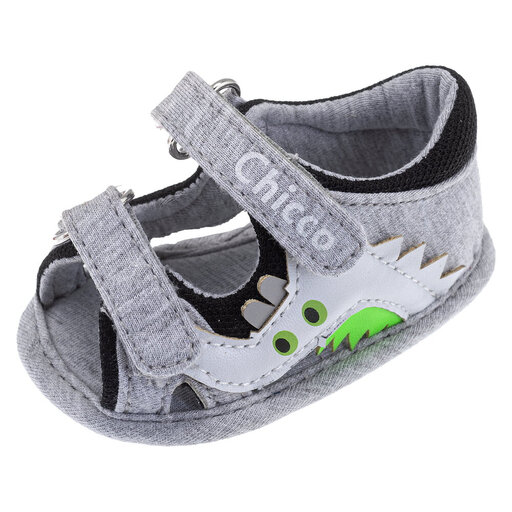
Why it suits this profile: The grey version has a neutral colour and, according to the product information, is intended for ages 03M-06M. This makes it a straightforward option if you’re looking for a first pair of baby sandals.
The product page lists both size 170 and a composition of 70% polyester and 30% polyurethane-coated support material. This lets you check the age, size and material details side by side.
Neutral grey colour; clearly listed composition; care according to the label.
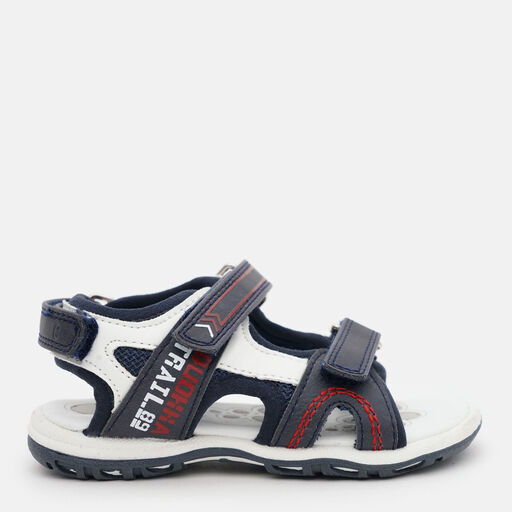
Why it suits this profile: The Chicco Conner sandals combine size 260 with a navy colour and a composition of 80% polyurethane-coated support material and 20% polyester.
This choice is based on verifiable product details, rather than colour or age alone. Be sure to check the fit and size guide before buying.
Conner model; navy colour; size 260; material composition clearly listed.
Why it suits this profile: This Conner model is available in size 320, with an age indication of up to 8 years. The navy colour makes it easy to pair with everyday outfits.
The size 320 and composition are clearly listed. This means you can compare the model with your child’s measured foot length and how they’re likely to use it.
Size 320; Conner model; 80% polyurethane-coated support material and 20% polyester.
We’ve put together a complete, up-to-date list of products that meet these strict selection criteria and the applicable European safety regulations.
Measure both feet and use the longer measurement with the size guide. The age indication can help you narrow down your options, but it won’t determine the right size on its own. Also check that the sandal gives your child enough room without their foot slipping around.
The product descriptions say the models are suitable for comfortable everyday wear. How suitable they are in practice depends on the fit, the surface, how long they’re worn and how they’re cared for. Check regularly that the sandals still fit well, especially if your child is growing quickly.
Follow the care label for the specific model. Materials vary between versions: some models contain polyester and polyurethane-coated support material, while others are listed as 100% cotton. So don’t automatically use the same cleaning method for every pair of Chicco children’s sandals.
