
Vandaag of morgen in huis

Kwaliteit gegarandeerd

Welkomstaanbiedingen ontgrendelen: GRATIS bezorging | Tot 80% korting | Gratis 30 dagen JoyPlus-proefperiode
Download de app
Buying a pair of Chicco boys’ sandals seems straightforward until you compare size codes, age guides and materials. A sandal that looks right in the photo may not fit as expected in practice, or may not be suitable for the use you have in mind.
As a Joybuy Product Recommendation Officer, I filter product information using details you can check. This helps you quickly see which features matter and which marketing claims to take with a pinch of salt.
Age is a useful guide, but it doesn’t replace checking the size. For example, the product information lists Chicco baby sandals in size 150 for ages 0–1 month, size 170 for 3–6 months and size 190 for 6–9 months. However, every child’s feet are different.
So measure your child’s feet and compare the results with the size guide on the product page. Also consider the shape of their feet and how much room there is around the toes.
Chicco sandals in dark blue, fuchsia and grey differ in colour, but colour doesn’t tell you anything about the fit, material or care requirements. A fuchsia style may have the same practical features as a grey one, while the materials can still vary between product ranges.
Check the material details first, then choose a colour to suit your child’s clothes or everyday needs.
A brand name doesn’t automatically mean that every style will suit every child. Check the product category, size, age guide, materials and washing instructions for each item. According to the available product information, several styles are intended for everyday use, but that doesn’t guarantee they’ll suit every foot or activity.
The product details use codes such as 150, 170, 190, 230, 290 and 320. These codes are linked to age ranges in the listing, but don’t treat them as a universal measure of foot length. Examples from the range:
When choosing sandals for baby boys, it’s especially important to check foot length carefully. Measure both feet and use the larger measurement as your guide. Also check that the style is adjustable enough and that your child’s foot doesn’t slide forwards.
The materials vary by style:
These details can help you compare texture, care requirements and suitability for everyday use. They don’t prove that a style will be comfortable for every child. Always follow the washing and care label, and check the seams, fastenings and sole regularly.
For babies who aren’t walking much yet, a lightweight style for short periods is a different choice from sandals for an active child who is several years old. For older children, grip, fastenings and parts prone to wear are especially worth considering.
The product information describes these styles as sandals for everyday use. Check for yourself whether the construction is suitable for wearing indoors, outdoor play, holidays or occasional use.
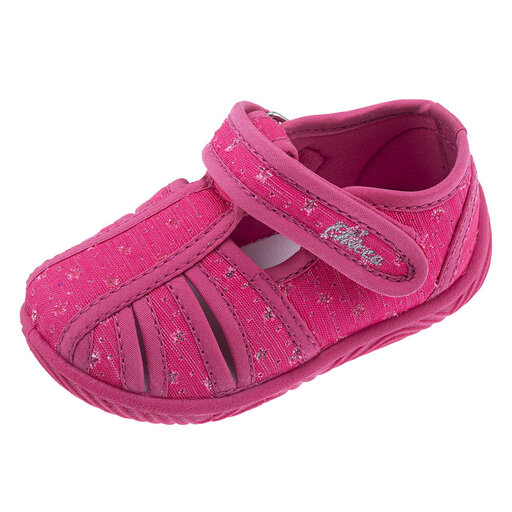
Why it suits this profile: According to the product information, this style is intended for boys aged around 6 to 9 months and is made from 100% cotton. It’s a straightforward option for parents who want to compare styles for everyday use.
The size and age range are clearly stated, so you don’t have to rely on the colour or product photo alone.
Fuchsia colour, size 190 and a listed composition of 100% cotton; follow the care label.
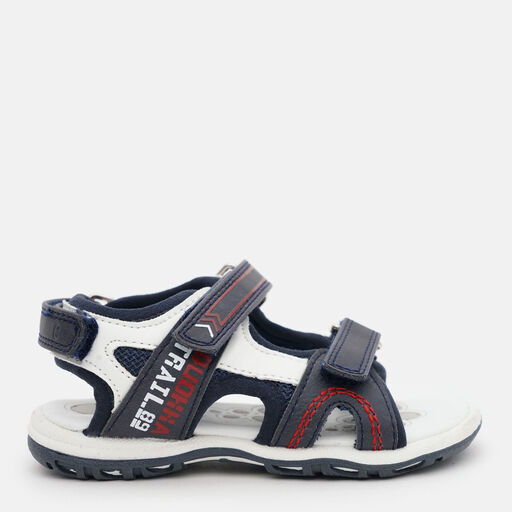
Why it suits this profile: This Chicco Conner style is listed for around 24 months. Its combination of 80% polyurethane-coated material and 20% polyester is useful for buyers who want to compare materials.
The product name, size, age range and material proportions are listed separately. That makes it easier to compare than choosing by brand name alone.
Dark blue colour, Conner style, size 230 and a clearly stated material percentage.
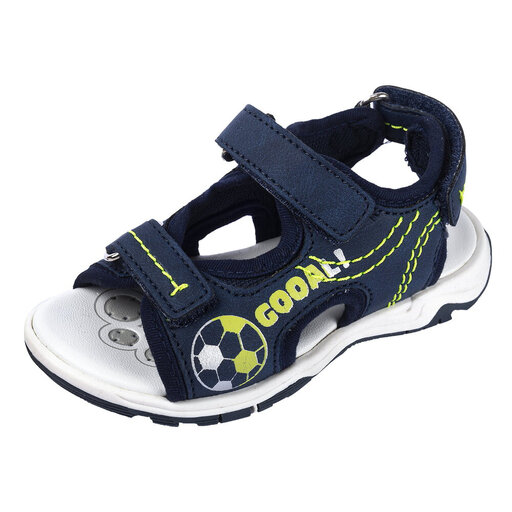
Why it suits this profile: This dark blue style is listed for boys aged around 6 years. According to the product information, its polyurethane-coated support makes it worth considering when comparing sandals for older children’s everyday use.
The age guide helps you avoid choosing baby sandals for an older child. Also check their current foot size and the fastening before you buy.
Dark blue, size 290, listed for around 6 years and made from 100% polyurethane-coated material according to the listing.
We’ve put together a complete, up-to-date list of products that meet these strict selection criteria and the applicable European safety regulations.
As well as sandals, parents often look for Chicco baby clothes, such as cotton T-shirts and two-piece sets. Check the size code, age guide and stated fibre composition in particular. A 100% cotton T-shirt can be practical for everyday wear, but always follow the washing instructions on the label.
There are also other baby products for use at home, such as a Chicco baby bouncer or a bedside cot. For example, the product information for an electric baby bouncer lists a suitable weight range from birth up to 9 kg, two recline positions, a five-point harness and battery or mains operation. Always supervise your baby in a bouncer and place it on a flat, stable surface.
It depends on your baby’s measured foot length and the age guide. The range includes sizes 150, 170 and 190 for young babies. Use the size guide on the product page rather than relying on age in months alone.
How long they last depends on growth, how often they’re worn, the surface they’re used on and how they’re cared for. Check the sole, seams and fastenings regularly. Replace the pair when the size is no longer right or any parts are damaged.
Prices can vary by style, size, material and stock availability. Colour alone doesn’t determine the price. Compare the same product range and size, and check the current product page before ordering.
