
Vandaag of morgen in huis

Kwaliteit gegarandeerd

Welkomstaanbiedingen ontgrendelen: GRATIS bezorging | Tot 80% korting | Gratis 30 dagen JoyPlus-proefperiode
Download de app
A pair of Chicco boys’ sandals may seem straightforward to choose, but product information can be confusing. Sizes, for example, are shown as 230, 240 or 280, while parents often search for boys’ sandals in sizes 23 to 32. Terms such as “comfortable” or “easy care” also say little on their own about fit, materials or care.
As a Joybuy Product Recommendation Officer, I focus on the most important information, based on verifiable product specifications. This helps you avoid choosing based only on colour, brand name or an attractive product photo.
The models on offer have codes such as 230, 250 and 290. The product information links these to age guides, such as 24 months, 3 years or 6 years. This is a useful guide, but it doesn’t replace checking your child’s foot size.
Children don’t all grow at the same rate. Measure your child’s foot, then check how the relevant product page lists the size before ordering. Don’t assume that size 230 is exactly equivalent to a particular Dutch shoe size.
Navy boys’ sandals are easy to pair with other clothes, but colour tells you nothing about construction or care. The dark blue Chicco models differ in their materials and model names. For example, Chicco Conner sandals are available with 80% polyurethane-coated support material and 20% polyester, as well as models made from 100% polyurethane-coated support material.
A sandal containing cotton isn’t automatically suitable for every use. The product details list 100% cotton for some models, while other Chicco children’s sandals contain polyester and polyurethane-coated support material. As a result, their properties, feel and care requirements may differ.
The manufacturer advises following the washing and care instructions on the label. Use these as your guide, and don’t expect every model to be cleaned in the same way.
First, check your child’s current foot length. Then look at the size shown on the product page. The available options range from small sizes for babies and toddlers to larger sizes for children up to around 8 years old.
Pay particular attention to:
A sandal that’s too small can quickly become unusable. One that’s too large may feel less stable. For baby and toddler sandals, a secure fastening is especially important, as young children can’t always position their feet clearly.
Check the exact material composition rather than relying on descriptions such as “soft” or “breathable”. The range includes:
These percentages describe the stated composition. They aren’t medical or health claims, and they don’t guarantee the same wearing experience for every child.
For everyday wear at home, out and about or on trips, easy care is practical. Always check the label before washing or cleaning the sandals. The available product information doesn’t specify one washing method that’s suitable for every model.
Also think about how the sandals will be used:
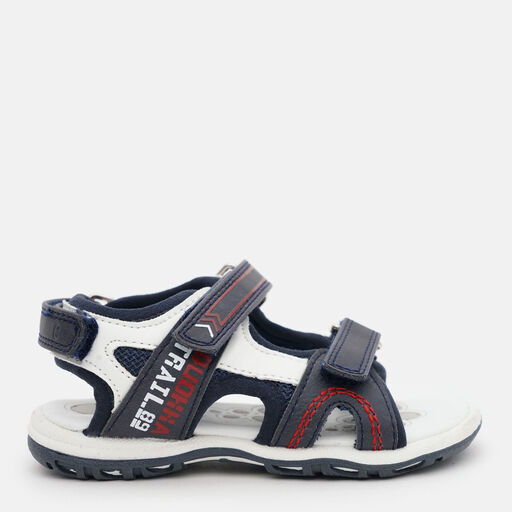
Why it suits this profile: This dark blue Conner model is a straightforward choice for parents who want to compare a practical size and neutral colour first.
The product page lists size 230, an age guide of 24 months and the full material composition, so you don’t have to judge by the photo alone.
Dark blue; Conner model; 80% polyurethane-coated support material and 20% polyester.
Why it suits this profile: Parents of a pre-schooler looking for a neutral sandal for everyday wear can compare this larger Conner option with other sizes.
Size 280 and the age guide of 5 years are listed separately. This helps you avoid treating the size and age as the same piece of information.
Dark blue; Conner model; 80% polyurethane-coated support material and 20% polyester.
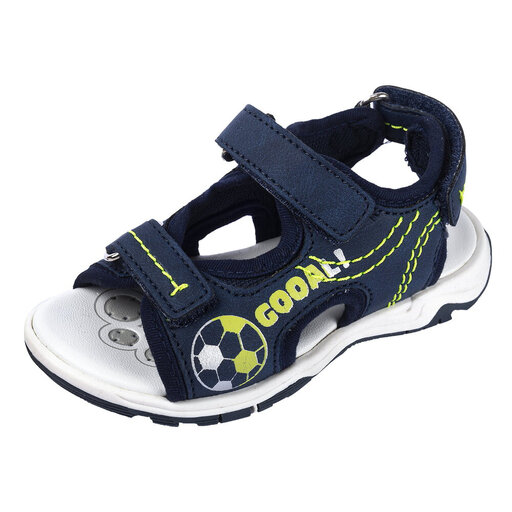
Why it suits this profile: For an older child who needs a larger size, this sandal comes in dark blue and has a clearly stated material composition.
The product information lists size 290, an age guide of 6 years and 100% polyurethane-coated support material. Always check your child’s current foot size too.
Size 290; dark blue; according to the product details, made from 100% polyurethane-coated support material.
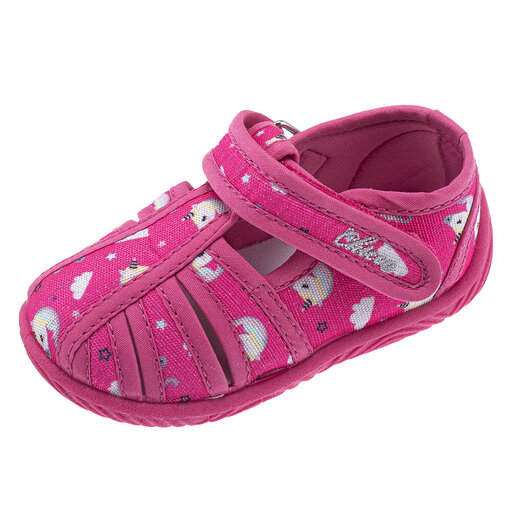
Why it suits this profile: This model is worth considering if you’re specifically looking for 100% cotton and care more about the composition than the colour.
The product details specifically state 100% cotton and size 210. This lets you compare the material directly instead of relying on general descriptions.
100% cotton according to the product information; size 210; care as directed on the label.
We’ve put together a complete, up-to-date list of products that meet these strict selection criteria and the applicable European safety requirements.
Measure both feet and use the longer foot as your guide. Compare it with the sizing information on the product page. Don’t assume codes such as 230, 250 and 290 correspond to a Dutch shoe size without checking.
Some models have age guides starting at around 0 to 1 month, 3 to 6 months, 12 to 18 months and 24 months. Always check the exact size, fastening and product information. Age is only a guide.
Follow the washing and care instructions on the label for your chosen model. The material composition varies from pair to pair, from cotton to polyester and polyurethane-coated support material. Don’t assume the same cleaning method will work for every sandal.
