
Vandaag of morgen in huis

Kwaliteit gegarandeerd

Welkomstaanbiedingen ontgrendelen: GRATIS bezorging | Tot 80% korting | Gratis 30 dagen JoyPlus-proefperiode
Download de app
A pair of sandals for a baby, toddler or young boy needs to fit well, be practical and stand up to everyday wear. Yet it can be difficult to compare styles fairly online. A cheerful colour tells you little about the fit, and an age guide is no substitute for checking your child’s foot size.
In this guide to Chicco sandals for boys, we focus on product details you can check: size, material, colour, style and care. That way, you can find Chicco boys’ sandals more easily, without relying solely on marketing claims.
Age guides such as 03M-06M, 24M or 3 YEARS are useful as a starting point, but children don’t all grow at the same rate. For example, the product details list size 170 for 03M-06M and size 230 for 24M. Always check the size chart and compare it with your child’s foot.
Dark blue boys’ sandals are often easy to match with other clothes and may show dirt less readily. Grey boys’ sandals go with lots of outfits and are a subtle choice. Fuchsia boys’ sandals stand out more. However, colour alone doesn’t determine how suitable a sandal is for walking, nursery or holidays.
A product may look sturdy in a photo, while its material composition varies considerably. The range includes polyester, polyurethane-coated support and cotton. Check the washing and care label, too. The product information says to follow the care instructions on the label.
The range includes small sizes for babies and larger sizes for young children. You’ll find sandals in sizes 170 to 320, including:
These age and size details come from the product information. If you’re unsure, measure your child’s foot and check the inside length, width and fastening. Sandals that are too small won’t leave enough room, while a pair that’s too loose may slip as your child walks.
The dark blue Chicco Conner sandals are listed as 80% polyurethane-coated support and 20% polyester. Other grey Chicco sandals contain 70% polyester and 30% polyurethane-coated support. The fuchsia styles are listed as 100% cotton in the available product information.
Material percentages don’t tell you everything about how a sandal will feel to wear, but they do help you compare styles objectively. Also check whether the product page gives details about the sole, fastening and footbed. If this information isn’t available, don’t draw conclusions that aren’t supported by the product specifications.
Easy care is useful for baby sandals and toddler sandals. Check whether you can wipe off dirt with a cloth and whether the product can be washed according to the label. Don’t use a harsh cleaner unless the manufacturer recommends it. Leave wet sandals to dry naturally and follow the care instructions for the style.
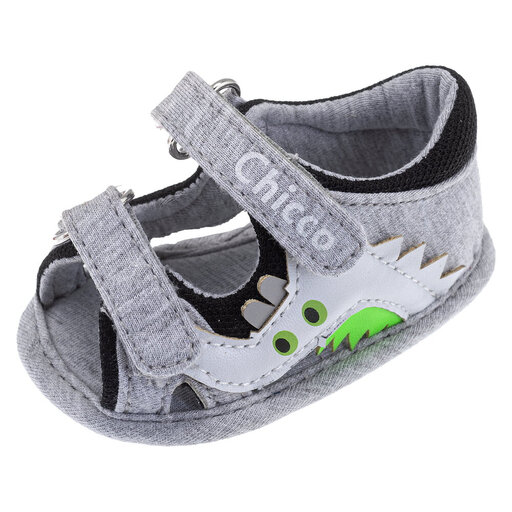
Why it suits this profile: This grey style is a straightforward choice if you’re looking for a small size with clear information about its size and materials.
The product page lists size 170, the colour grey and a specific composition of 70% polyester and 30% polyurethane-coated support.
Grey colour; size 170; material composition and care instructions provided.
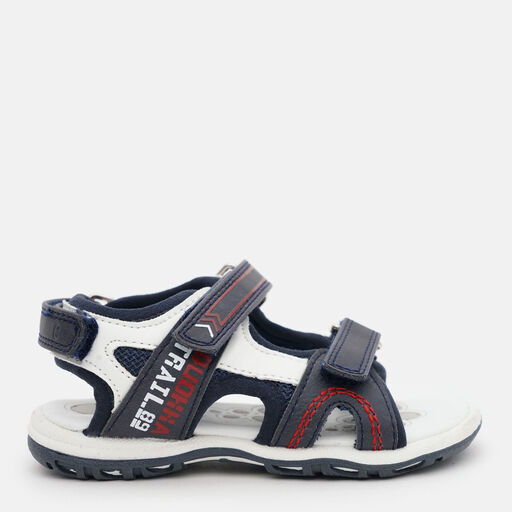
Why it suits this profile: The dark blue Chicco Conner sandal is a good option for parents who want to compare the style, size and material composition side by side.
Size 230 and the 24M age guide are clearly listed, so you’re less likely to buy based on a general age recommendation alone.
Chicco Conner style; dark blue; 80% polyurethane-coated support and 20% polyester.
Why it suits this profile: This larger Conner style is intended for children for whom size 320 and the listed age of 8 YEARS are relevant.
Size 320 is specifically listed. Still, check your child’s foot length so you don’t assume the larger size will automatically fit.
Size 320; dark blue colour; polyurethane-coated support with polyester.
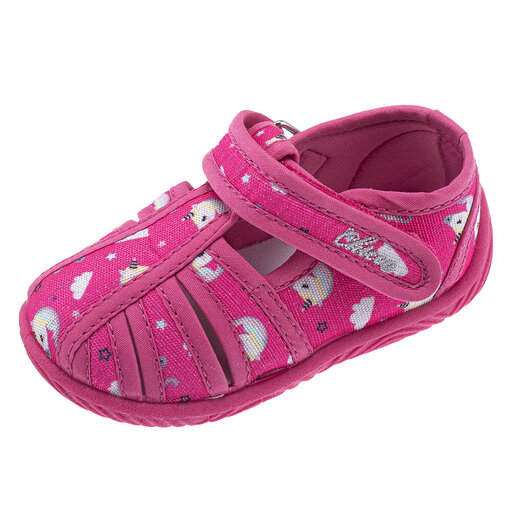
Why it suits this profile: This fuchsia style is a good choice for parents who want to compare a striking colour as well as size and material.
Colour isn’t treated as proof of quality: size 200, the 09M-12M age guide and the 100% cotton material are listed separately.
Fuchsia colour; size 200; 100% cotton according to the product information.
We’ve put together a complete, up-to-date list of products that meet these strict selection criteria and the applicable European safety regulations.
Use the age guide as a starting point only. Measure your child’s foot and compare the result with the size chart for the product you’ve chosen. Also check the shape of the sandal and the room around the toes. The product details may link sizes 230 or 240 to 24M, but the actual fit depends on your child’s foot.
The range includes styles in small sizes such as 170, 190, 200 and 210, as well as larger sizes up to 320. This means there are options for baby sandals, toddler sandals and young boys. To decide whether a particular style is suitable, check its size, fastening, material and current product information.
How long they last depends on how quickly your child grows, how often they wear them, the surfaces they walk on and how well the sandals are cared for. Check regularly that your child’s toes aren’t touching the front, the fastening works properly and the sole isn’t visibly worn. Clean and dry the sandals according to the label. Replace them when they no longer fit properly or any parts become damaged.
