
Vandaag of morgen in huis

Kwaliteit gegarandeerd

Welkomstaanbiedingen ontgrendelen: GRATIS bezorging | Tot 80% korting | Gratis 30 dagen JoyPlus-proefperiode
Download de app
A pair of Chicco boys’ sandals might seem simple to choose – until you start comparing different sizes, colours and material descriptions side by side. For babies and toddlers, it’s not just about looks. A sandal needs to fit the foot, suit daily use and match how you plan to care for it.
Pay particular attention to three common pitfalls:
Below, you’ll find what to look for when choosing Chicco sandals for boys, and which styles might suit different situations.
The available models range from approximately size 19 to 31 in the product details. However, the size notation on the product page may differ from the European shoe size you’re used to. For example, you’ll see values such as 190, 200, 230, 250, 260, 270, 290, 300 and 310.
So don’t rely solely on the age guide. Measure your child’s foot while they are standing and compare the measurement with the size chart for the specific product. Also check:
With Chicco baby sandals, a small size can quickly become too small. For a toddler or older child, the combination of foot length, instep height and fastening is particularly important.
The material details vary from model to model. The dark blue Chicco sandals are described as 100% polyurethane-coated support material. The fuchsia models list 100% cotton, while the grey boys’ sandals are made from 70% polyester and 30% polyurethane-coated support material.
That doesn’t automatically mean one material is better for every child. Think about how you plan to use them:
According to the product information, the models mentioned are intended for everyday use and easy care. That’s a product description, not a guarantee of a specific lifespan or fit.
Always follow the washing and care label. Not every material can be cleaned in the same way. Also check how the sandal fastens before you buy. An adjustable fastening can be useful when your child’s foot falls between two sizes, but you’ll need to check this on the product page for each model.
For everyday use in the UK, sandals that can be quickly checked and cleaned are often more practical than models with complicated details. Also look at the seams, edges and footbed. These parts shouldn’t create any visible pressure points when your child walks.
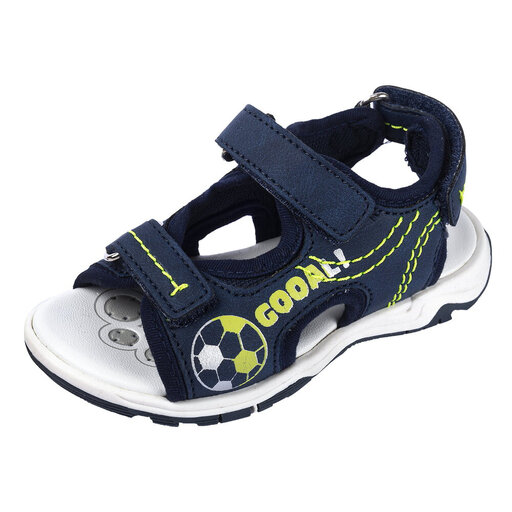
Why this fits the profile: The dark blue colour is easy to match, and the product details mention a version suitable for approximately 24 months. Do check the size against the foot length, though.
The product page states the material clearly: 100% polyurethane-coated support material. So you don’t have to rely solely on vague comfort claims.
Dark blue colour; material and care instructions are clearly stated.
Why this fits the profile: This size variant is linked in the product information to an age guide of up to approximately 8 years. That makes it relevant for older boys, provided the foot measurement matches.
The choice is based on verifiable details: model number, size 310, dark blue colour and material description.
Suitable if a larger size is available; polyurethane-coated support material; easy to match.
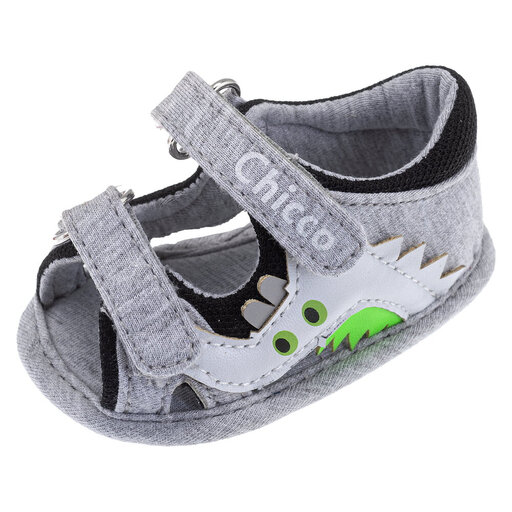
Why this fits the profile: According to the product details, these grey boys’ sandals are intended for a younger baby of around 6 to 9 months. They could suit parents looking for a neutral colour.
The composition is specified as 70% polyester and 30% polyurethane-coated support material. Check before buying whether this suits your intended use.
Neutral grey colour; size 190; fibre composition is clearly stated on the product page.
Dark blue boys’ sandals are easy to match with denim, shorts and light T-shirts. Fuchsia is more eye-catching and could appeal to parents who want a colourful accent. The available fuchsia models are listed in sizes 190, 200 and 250, with age guides from approximately 6 months to 3 years.
Grey boys’ sandals are neutral and go with lots of outfits. The Chicco models in grey are listed in the product information in sizes 170 and 190. Check the size extra carefully here, as the age guides vary between versions.
If you’re putting together a complete outfit, you can combine sandals with Chicco boys’ T-shirts, Chicco boys’ shorts or a set with a T-shirt and shorts. When choosing clothing, also look at the fibre composition and care label. For babies, a soft cotton T-shirt can be practical, while a set is handy if you want colours to match.
We’ve put together a full, up-to-date list of products that fully meet these strict selection criteria and comply with current European safety regulations.
Measure both feet and use the larger measurement. Compare it with the size chart for the specific model. Don’t assume that values like 190, 230 or 310 on the product page directly correspond to an age or standard size without checking.
That depends on growth, use, surface, care and fit. Check regularly whether the toes are touching the front, whether the fastening still works properly and whether the material has any sharp or peeling edges. The product information doesn’t give a fixed lifespan.
Some versions are linked in the product details to babies from around 3 to 6 months. That doesn’t mean every model is suitable for every baby. Consider the child’s development, foot size and how they’ll be used. Only choose a pair whose product information and fit match your situation.
