
Vandaag of morgen in huis

Kwaliteit gegarandeerd

Welkomstaanbiedingen ontgrendelen: GRATIS bezorging | Tot 80% korting | Gratis 30 dagen JoyPlus-proefperiode
Download de app
A pair of Chicco boys’ sandals might seem simple to choose, but in practice, size, material and intended use make a big difference. A sandal for a baby of a few months needs different features from a model for a child of seven or eight. Colour and model name can also be confusing: the same Chicco line, for example, comes in fuchsia, dark blue and grey, with different size codes.
As a Joybuy Product Recommendation Officer, I filter the most important product information by practical points. This way, you avoid relying solely on looks or an appealing product description.
Age recommendations are handy as a first guide, but children don’t all grow at the same rate. The range includes size codes from 170 to 320, linked to age recommendations from around 3 months to 8 years. So always check the size chart and foot length before you order.
A sandal that seems to fit based on age can, in practice, be too narrow, too short or too roomy.
Chicco sandals in fuchsia, Chicco sandals in dark blue and Chicco sandals in grey don’t just differ in colour. The product details also show different material compositions:
So a colour preference doesn’t automatically tell you about the construction. When comparing, always look at the full product description.
Words like “comfortable”, “durable” or “suitable for active children” are not a measurable guarantee in themselves. The product descriptions provided mention everyday use. That indicates the intended purpose, but it doesn’t say how long a sandal will last with heavy use.
So focus on verifiable details such as material, closure, size, care instructions and the expected use situation.
Chicco baby and children’s sandals come in size codes such as 170, 180, 190, 200, 210, 230, 240, 250, 260, 270, 290, 300, 310 and 320. The product information links these codes to age ranges, for example:
Use these indications as a guide, not as a substitute for measuring. Measure both feet while your child is standing and compare the longest foot with the size information on the product page. Also pay attention to the width and the space around the toes. Too much extra room can make a sandal less stable; too little room can quickly pinch.
For boys’ sandals, the material matters because of ventilation, care and how the sandal feels. According to the product details, the fuchsia Chicco models are made from 100% cotton. The grey models consist of polyester with polyurethane-coated support material. The dark blue line uses 100% polyurethane-coated support material.
This information allows an objective comparison, but it doesn’t constitute a medical or health claim. Always check the label for stains, washing and drying. The product information for these models states: follow the washing and care instructions on the label.
For everyday use, a good fit and a practical construction are more important than just the appearance. Think ahead about the situation:
For younger children, baby and children’s sandals are available in smaller sizes. For older children, dark blue models in sizes 270 to 320 are included.
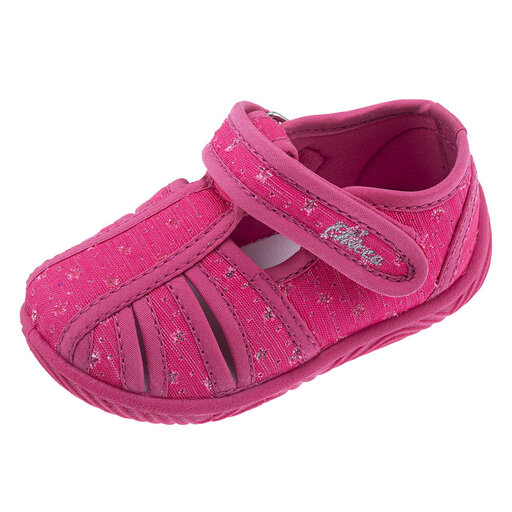
Why this fits the profile: This model is a straightforward choice for parents looking for a small sandal who want to compare the basics first. Size code 190 is linked to approximately 6–9 months and the material is 100% cotton according to the product details.
The product page lists the size, age indication, colour and material separately. This means you don’t have to rely only on the fuchsia colour or a general age claim.
Size 190, fuchsia colour and 100% cotton according to the product specification. Care: follow the label.
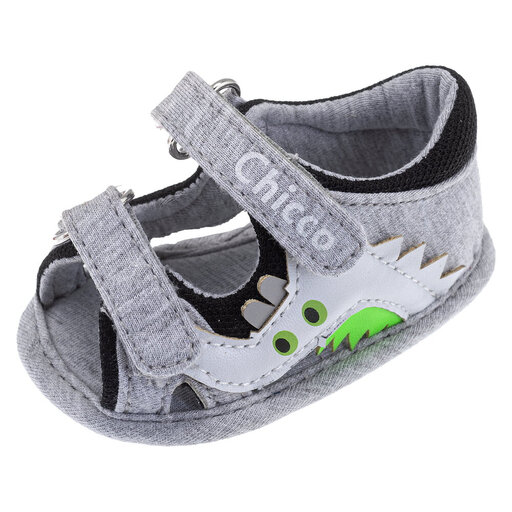
Why this fits the profile: This grey model suits parents who first look at the material composition and a neutral colour. Size 180 is intended for approximately 6–9 months according to the product information.
The composition is clearly stated: 70% polyester and 30% polyurethane-coated support material. This prevents you from using a colour or a general comfort claim as your only selection criterion.
Grey finish, size 180 and clearly stated material composition. Care according to the instructions on the label.
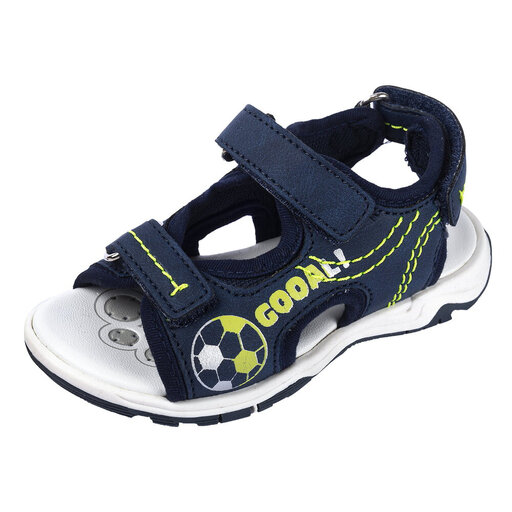
Why this fits the profile: This dark blue model is aimed at a larger size: 300, with an age recommendation of approximately 7 years. It suits parents looking for sandals for everyday use for an older child.
The choice is based on the concrete size code, age indication and material listing, not on unproven claims about lifespan or performance.
Dark blue colour, size 300 and 100% polyurethane-coated support material according to the product specification.
We’ve put together a full, up-to-date list of products that fully meet these strict selection criteria and comply with current European safety regulations.
Measure your child’s foot and compare the result with the size information on the product page. The size codes in the available range run from 170 to 320. Age is only an indication; foot length and fit are what really matter.
The product descriptions describe these models as intended for everyday use. That is a product aim and not a guarantee of a specific lifespan. For heavy outdoor use, it’s wise to check the material, care label and fit extra carefully.
Always follow the care label on the specific pair. The product information provided instructs you to follow the label instructions. Do not use any cleaning method that isn’t recommended for the material, especially not on cotton or polyurethane-coated support material.
