
Vandaag of morgen in huis

Kwaliteit gegarandeerd

Welkomstaanbiedingen ontgrendelen: GRATIS bezorging | Tot 80% korting | Gratis 30 dagen JoyPlus-proefperiode
Download de app
Buying a pair of Chicco boys’ sandals seems straightforward until you have to choose between sizes, materials, colours and styles. A sandal that looks lovely may prove too roomy, be awkward to fasten or quickly become unsuitable as your child’s feet grow.
So don’t rely solely on the age shown on the product page. Check the listed size, the material details and what the sandals are designed for. Below, you’ll find the key things to consider, along with some suitable options for babies, toddlers and young boys.
Age ranges are a guide, not a substitute for checking the fit. For example, the range includes Chicco sandals in sizes 190, 200, 220 and 230, with different age ranges listed. Your child’s foot length and individual fit should always be the deciding factors.
Children of the same age can have different foot lengths and widths. Always check the size information and compare it with your child’s feet before you order.
A little growing room can be practical, but sandals that are too loose may slip around as your child walks. This can be particularly awkward for active toddlers. Look for an adjustable fastening, enough room around the toes and a heel that doesn’t keep slipping out of the sandal.
Dark blue boys’ sandals are easy to coordinate and often show dirt less quickly. Fuchsia stands out, while grey styles go with lots of outfits. However, colour doesn’t tell you anything about fit, material or care. Compare these features separately before deciding what to buy.
The range includes Chicco sandals in sizes 19 to 32, with product data showing sizes as 190 to 320. Listings may vary from one product to another. For example, some styles are for babies aged around 6 to 9 months, while others are for children up to 8 years old.
Use the age guide as a starting point, then check:
Sandals shouldn’t pinch, but they shouldn’t be so roomy that your child’s foot slides forwards with every step either.
The material varies by style:
These details can help you compare the look, care requirements and suitability for everyday use. On their own, they don’t prove that a sandal is right for every foot or activity. Always follow the washing and care label, and check that the material suits your preferences.
The features you need for short walks, nursery or everyday wear may differ from those you need for holidays or lots of outdoor play. Consider:
Also check for differences between products in the same colour. A standard dark blue style isn’t necessarily the same as a dark blue Conner sandal.
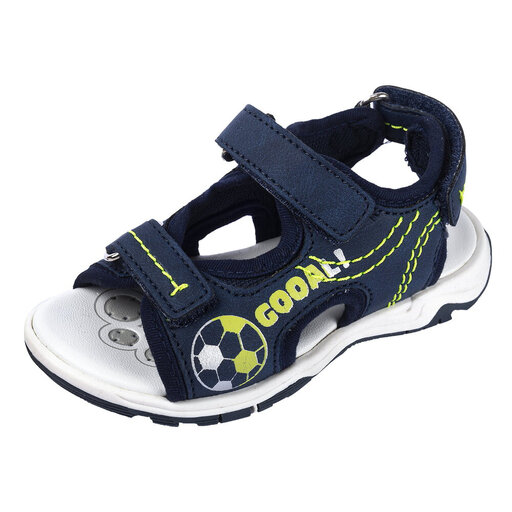
Why it suits this profile: According to the product information, this dark blue style is designed for boys aged around 18 to 24 months and is made from 100% polyurethane-coated material.
The size and age range are clearly listed, so you don’t have to choose based only on colour or a general age guide.
Dark blue colour, product size 220 and care advice on the label.
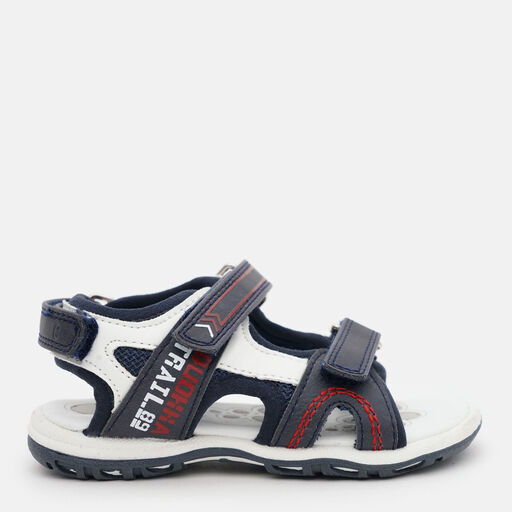
Why it suits this profile: The Conner style pairs a dark blue colour with a composition of 80% polyurethane-coated material and 20% polyester.
The product specifications list the style, composition and size separately. This makes it easier to compare options than relying on a general style name.
Conner style, size 240 and a material composition clearly listed on the product page.
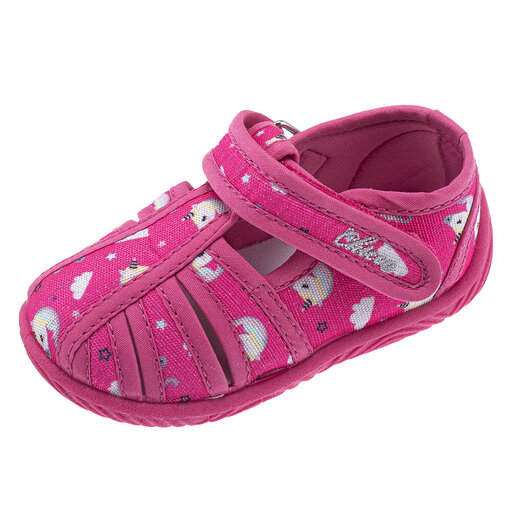
Why it suits this profile: According to the product details, this fuchsia style is for children aged around 3 and is made from 100% cotton. Its standout colour can be handy if you’re looking for sandals that are easy to spot.
The composition is clearly listed. Check the care label, though, as cotton may need different care from a coated material.
Fuchsia colour, size 260 and a clear 100% cotton listing in the product specifications.
Your choice of colour will mostly depend on your child’s clothes, how the sandals will be used and how easy they are to care for:
You can also look for Chicco baby sandals. For toddlers, toddler sandals with a suitable fastening and a good fit matter more than colour alone. Always check that your chosen style is available in the size you need.
We’ve put together a complete, up-to-date list of products that meet these strict selection criteria and the applicable European safety requirements.
Measure both feet while your child is standing, and use the larger measurement as your guide. Compare it with the size information on the product page. An age range, such as 18 to 24 months or 3 years, is only a guide.
The listed styles are described as suitable for everyday wear. Whether a pair is right for your child depends on the fit, fastening, foot shape and activity. Also check the material and care instructions.
How long they last depends on your child, how often they wear them, the surfaces they walk on and how quickly their feet grow. Check regularly that their toes aren’t touching the front, the straps still fasten securely and the material shows no visible damage. If their feet have a noticeable growth spurt, they may need a new pair before the old ones look worn out.
